
Chopta – Chandrashila with Deoriatal

Region
Uttarakhand

Duration
3 days

Max. Altitude
12500 ft

Trek Distance
12 kms

Grade
Easy to Moderate
Fixed Departures
November -2026
- 1 Nov - 5 Nov
- Open
- 6 Nov - 10 Nov
- Open
- 11 Nov - 15 Nov
- Open
- 16 Nov - 20 Nov
- Open
- 22 Nov - 26 Nov
- Open
- 27 Nov - 1 Dec
- Open
December -2026
- 3 Dec - 7 Dec
- Open
- 8 Dec - 12 Dec
- Open
- 13 Dec - 17 Dec
- Open
- 18 Dec - 22 Dec
- Open
- 23 Dec - 27 Dec
- Open
- 29 Dec - 2 Jan
- Open
January - 2027
- 4 Jan - 8 Jan
- Open
- 9 Jan - 13 Jan
- Open
- 14 Jan - 18 Jan
- Open
- 19 Jan - 23 Jan
- Open
- 25 Jan - 29 Jan
- Open
February - 2027
- 1 Feb - 5 Feb
- Open
- 6 Feb - 10 Feb
- Open
- 11 Feb - 15 Feb
- Open
- 16 Feb - 20 Feb
- Open
- 21 Feb - 25 Feb
- Open
- 26 Feb - 2 March
- Open
March - 2027
- 5 March - 9 March
- Open
- 10 March - 14 March
- Open
- 15 March - 19 March
- Open
- 20 March - 24 March
- Open
- 25 March - 29 March
- Open
₹7,300
+5% GST / Person
Highlights
- Services from: Chopta to Sari
- Base Camp Accommodation : Guest house stay with attached washroom
- Pickup & Drop Location : Nainital Bank Near Holy Shivana Tapovan, Rishikesh
- Pickup : 07:30 AM | Drop: 06:30 PM–07:30 PM (weather/road dependent) Keep a buffer day and arrive a day early to avoid delays.
Add-ons
- Transport
- Rs 1700/- Per Person
- Offload
- Rs 1100/- Per Person
Add on information
- Insurance is mandatory.
- It is available for Indian citizens only.
- Non-Indians have to take insurance on their own.
- The cancellation policy will be implemented in accordance with the trek cancellation policy.
- Transportation: Rishikesh to Chopta & return is optional.
- Choose add-ons during booking. If missed, you can contact us to book the same.
- Book transportation at least 10 days before the trek.
- Cancellation 6 or more days before the start of the trip results in a 100% cash refund.
- Cancellation less than 4 days from the start of the trip results in a 50% cash refund.
- Cancellations made on the trip date are not eligible for a refund.
- Backpack offload is optional.
- Choose add-ons during booking. If missed, you can contact us to book the same.
- Book off-load at least 10 days before the trek.
- For offline bookings at the base camp, a variable convenience fee may apply. (It differs from trek to trek)
- Offload can't weigh more than 10kg. Offload should have a waterproof cover. Suitcases/trolleys will not be allowed.
- In the event that you choose to cancel your trek prior to the departure date, you will receive a full refund.
- Note : The bag weight should not exceed 10 kg.
Chopta Chandrashila Trek with Deoriatal Trek Overview
- Trek Name : Chopta Chandrashila Trek with Deoriatal
- Days : 3
- Adventure : Trekking
- Base Camp : Chopta village
- Season : Spring | Summer | Autumn | Winter
- Months : January | February | March | April | May | June | September | October | November | December |
- Country : India
- Altitude : 12500 ft
- Grade : Easy
- Rail Head : Rishikesh
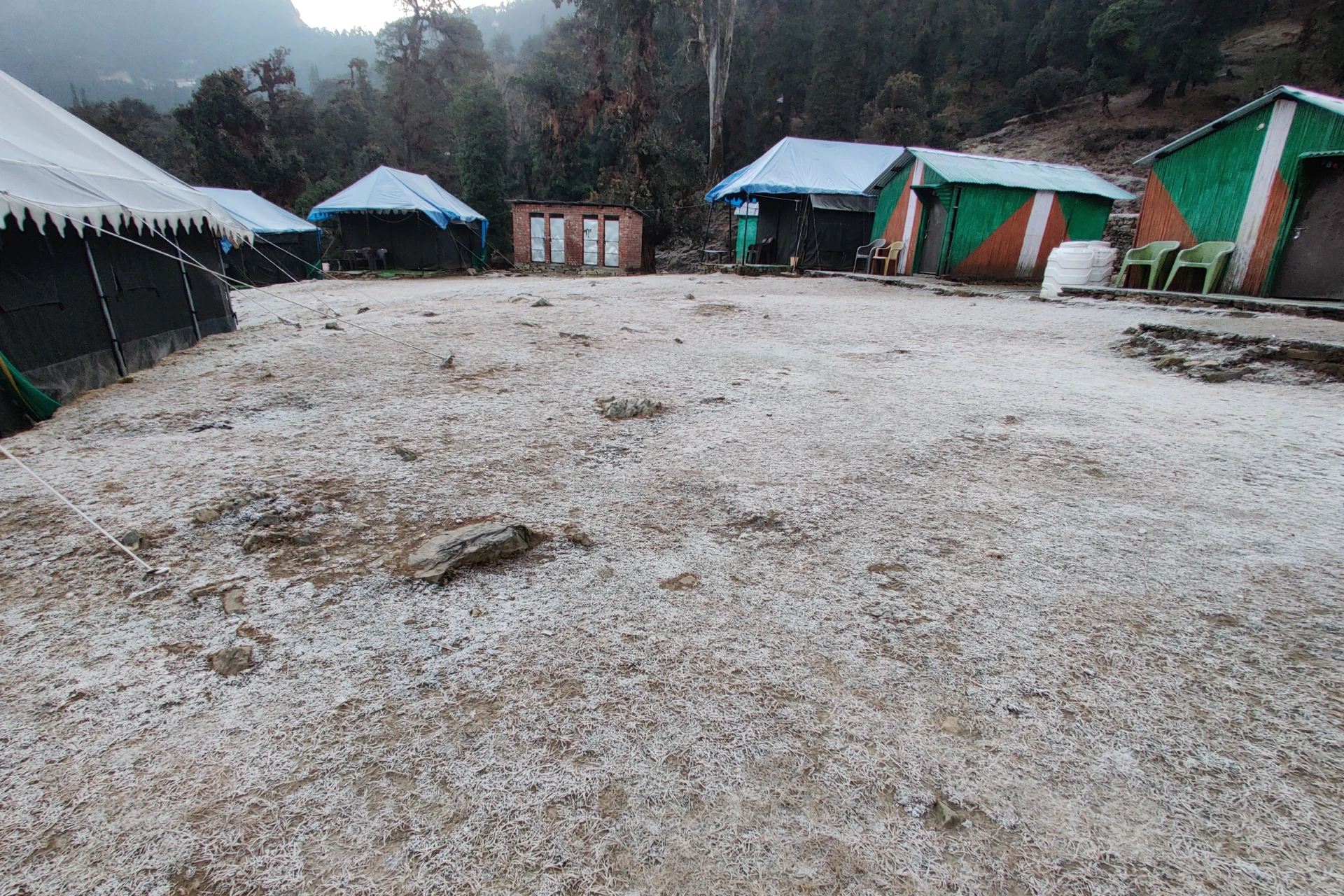
- Stay : Guesthouse(Separate male & Female) & Swiss/cottage tent
- Food : Meals while on trek & guesthouse
- Location : Uttarakhand
- Distance : 12 km
- Trail Type : Forest-crossing trekking trail.
- Airport: Jolly Grant Airport, which is 21 km away from Rishikesh
Why is Chopta – Chandrashila with Deoriatal a Must do Trek?
- You will explore four iconic destinations: Chopta, Chandrashila, Tungnath, and Deoriatal, all with beautiful views and different experiences.
- Witness the most majestic sunrise from Chandrashila Summit, painting the sky with hues of gold, as the Himalayan peaks come alive.
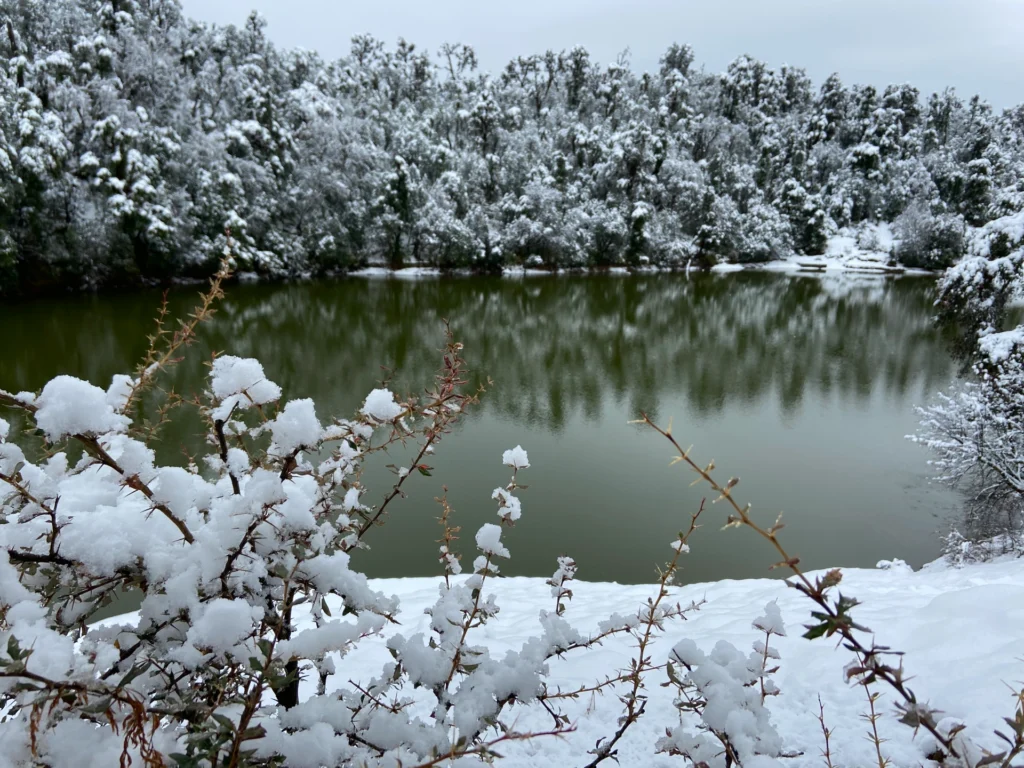
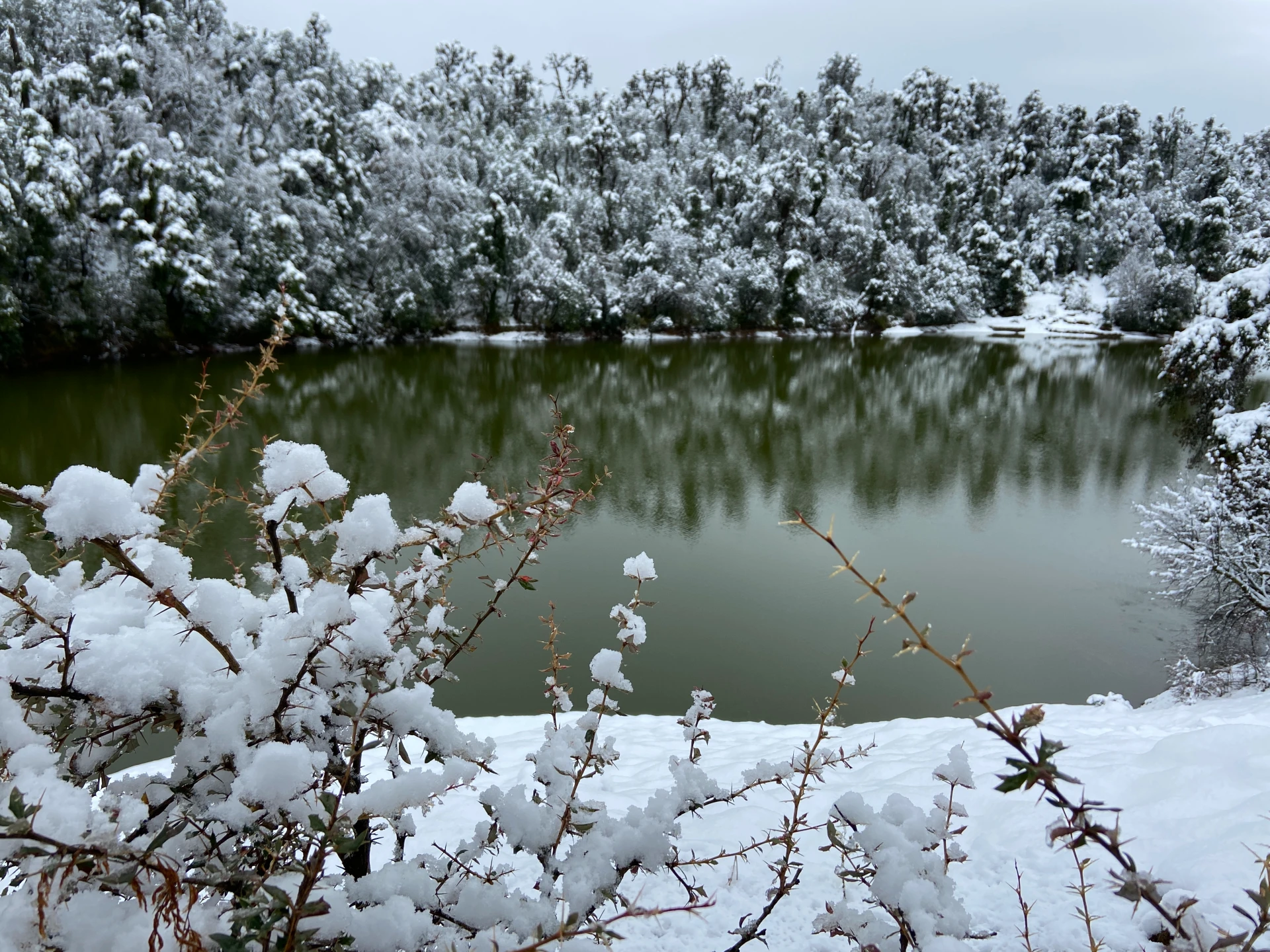
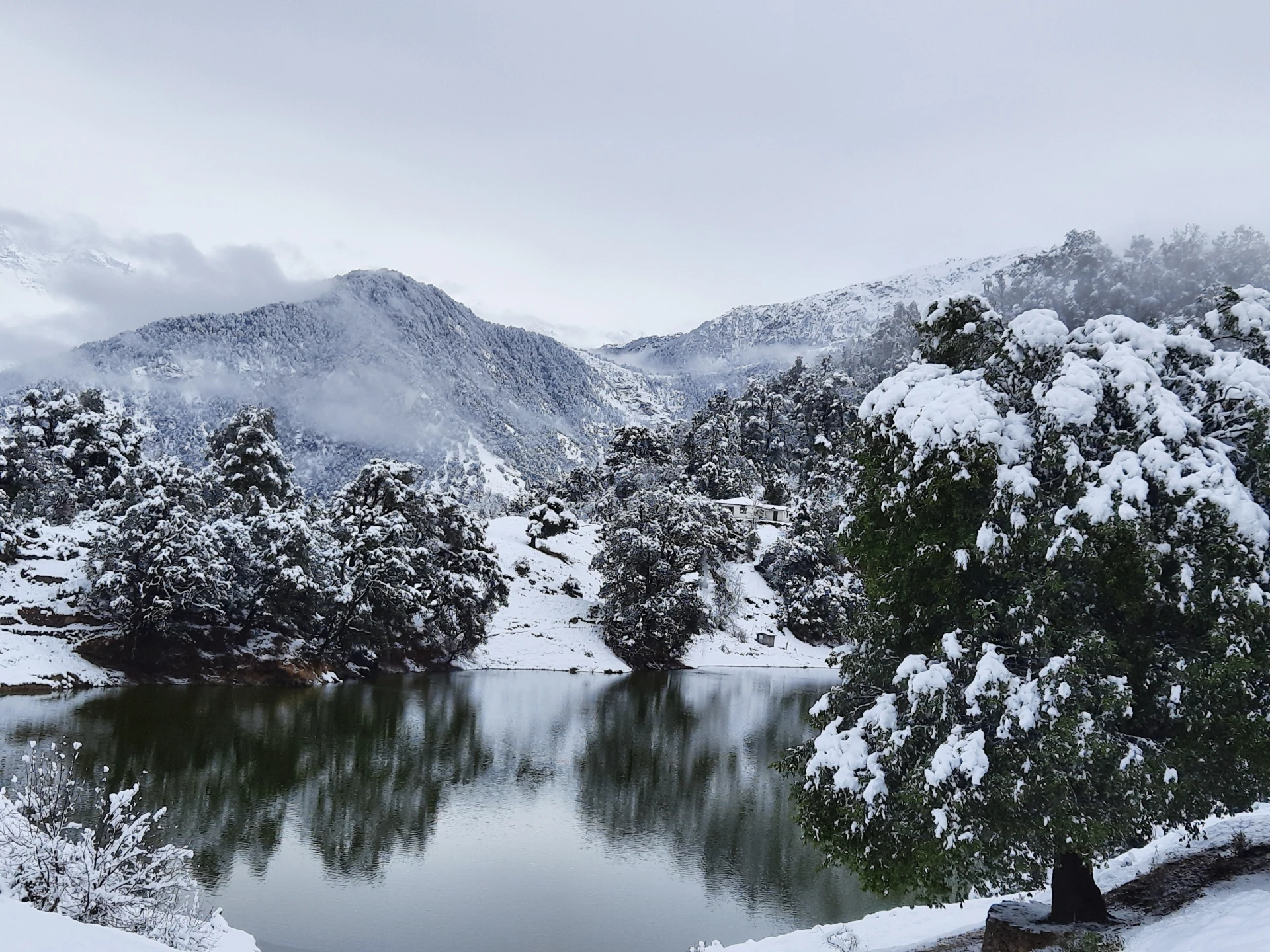
- Enjoy the scenic beauty of Deoriatal Lake, reflecting the surrounding peaks for a picture-perfect moment. The tranquil Deoriatal Lake showcases a stunning reflection of the surrounding peaks and makes it a peaceful spot to pause and admire nature.
- Visit the ancient Tungnath Temple, the highest Shiva temple in the world, rich with spiritual significance.
- Reach the Chandrashila summit at a higher altitude, and enjoy the lifetime views of sunrise.
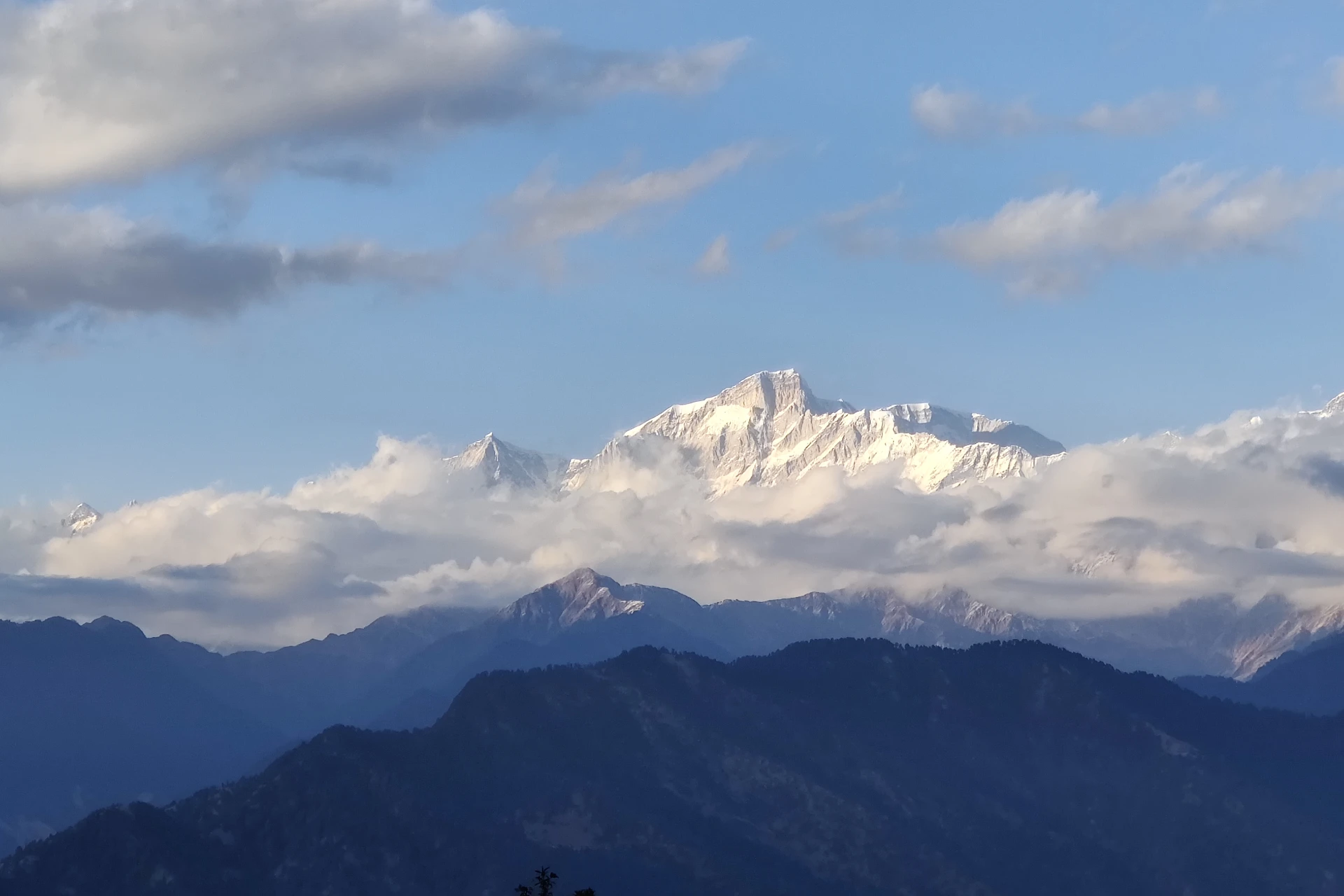
- Witness the breathtaking 360-degree panoramic views of the Himalayas, including peaks like Nanda Devi, Trishul, and Chaukhamba.
- Experience serene camping nights under a starlit sky, surrounded by the peaceful ambiance of the mountains.
- Spot diverse wildlife and rare bird species that make this region a paradise for birdwatchers.
- Immerse yourself in the tranquil meadows, rich myth, and captivating trails that make the trek both rejuvenating and adventurous.
Major Attractions
- Sunrise from Chandrashila Summit : One of the most mesmerizing highlights of the trek is witnessing the sunrise from the Chandrashila summit. Trekkers set out in the early pre-dawn hours to reach the top just as the first light breaks over the horizon. The sky transforms into vivid shades of gold, orange, and crimson, casting a radiant glow over the surrounding mountains. This spectacular sunrise, with its serene and almost spiritual atmosphere, is a moment of pure magic and is often described as the crowning glory of the trek.
- Tungnath Temple : The highest Shiva temple in the world, Tungnath is a major spiritual attraction on the trek. Steeped in mythology, it is one of the revered Panch Kedars and is said to have been built by the Pandavas in their quest for Lord Shiva’s forgiveness. The temple’s ancient stone structure and peaceful surroundings create an ambiance that feels timeless and sacred. The history and legends associated with Tungnath infuse the journey with a deep sense of reverence and spirituality.
- Glory of Himalayan Peaks : The trek rewards adventurers with unparalleled views of the majestic Himalayan peaks. From the summit, trekkers can marvel at a 360-degree panorama that includes towering giants such as Nanda Devi, Trishul, Chaukhamba, Kedar Dome, and more. These snow-capped peaks stand like guardians over the Garhwal region, their imposing presence filling the horizon. The sight of these mountains bathed in the soft light of dawn or silhouetted against a clear blue sky is a visual feast that lingers long after the trek is over.
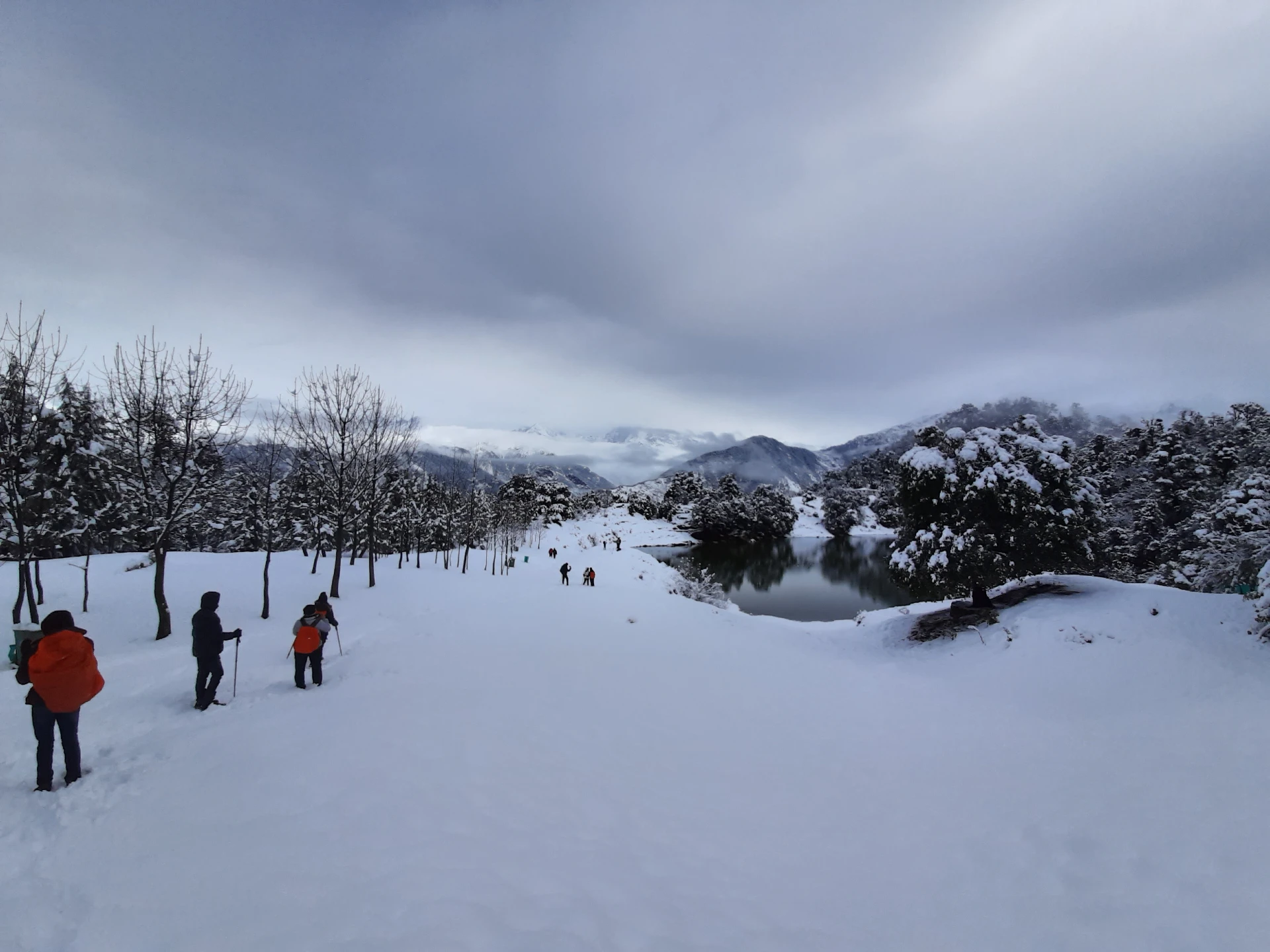
- Deoriatal Lake : Situated amidst dense forests and offering reflections of the Chaukhamba peaks, Deoriatal is another major highlight. The serene lake, surrounded by lush greenery and overlooked by snowy summits, provides a tranquil spot for trekkers to rest and take in nature’s beauty. The clear waters of Deoriatal, with the majestic peaks mirrored on its surface, create an enchanting scene that adds to the trek’s allure.
- Rich Flora and Fauna : The Chopta region is known for its rich biodiversity. Trekking through dense rhododendron forests, pine trees, and alpine meadows, adventurers often spot native birds such as the vibrant Himalayan Monal, the state bird of Uttarakhand. The area’s natural beauty and the chance encounters with wildlife enhance the trek's immersive experience in nature.
Eligiblity for Chopta –Chandrashila with Deoriatal Trek
-
Age Requirement : April to November : 9 years.
December to March : 11 years. - First-timers are welcome, though prior trekking experience is preferred. Good fitness is a must.
- Fitness Criteria :
- The Trekker should have sufficient stamina to cover 5 km of distance by jogging in 35 minutes without stress or 10 km of distance in 80 minutes without stress
- If the trekker prefers cycling he/ she should be able to cycle 10 km of distance in 30 minutes .
- If the trekker wants to carry a backpack then he/she should be able to carry a 10-12 kg backpack. If opt Off-load option then the trekker should be able to carry a 3-5 kg backpack.
- If a trekker's BMI is more or less than the normal range (18-29), please consult our Trek Coordinator before booking.
Chopta – Chandrashila Trek: Itinerary
Day 1: Drive from Rishikesh to Chopta
- Altitude Chopta: 2,679 m/ 8,790 ft
- Drive Distance : 200 km | 8-9 hrs
Day 2: Chopta to Chandrashila summit via Tungnath temple
- Altitude Chandrashila summit: 3,810 m/ 12,500 ft.
- Trek Distance: 12-13 km (bothways)| 6-7 hrs
Day-3: Chopta to Deoriatal lake (optional) & drive to Rishikesh
- Altitude: Sari village: 2,000 m/ 6,381 ft.
- Trek Distance: 6 km (bothways)| 6-7 hrs
- Drive Distance: 215 km | 8-9 hrs
Note:
- Trek to Deoriatal lake is optional. Those interested can visit the lake but be sure to inform the trek leader well in advance to arrange your return to Rishikesh accordingly.
- Keep a buffer day in your travel plan.
- If buffer day is not used in the travel then it can be used to Explore Rishikesh.
- Distance, Altitude, and Trekking hours are approximate and rounded off.
- Keep the original and copy of ID proof handy.
- Come one day early if planning to come by plane.
Drive from Rishikesh to Chopta
- Altitude : Chopta : 2,679 m/ 8,790 ft.
- Driving distance : 200 km | 8-9 hrs
Your adventure begins with a scenic journey from Rishikesh to the serene Chopta village, the base for your Chandrashila trek, starting at 7:30 AM. As the vehicle winds through the mountain roads, you’ll be treated to breathtaking views of the majestic Himalayas, with every turn presenting a new perspective of the towering peaks. En route, you’ll pass through the sacred town of Devprayag, where the Alakananda and Bhagirathi rivers converge. This picturesque spot is not only a visual delight but also holds deep spiritual significance as a major pilgrimage site in Hinduism.
Throughout the journey, the vehicle will make stops, giving you the chance to take a break and enjoy breakfast or lunch at your own expense, all while soaking in the peaceful atmosphere and natural beauty of the landscape. It’s a perfect way to start your trek, with scenic moments that set the tone for the adventure ahead.
Upon arrival, you’ll be greeted with tea and a briefing of the trek ahead. The evening is free for you to relax and settle into your guesthouse. Chopta village provides a peaceful ambiance surrounded by meadows and stunning views of mountains. If time permits, you can explore the village or simply unwind. Stay the night in a comfortable guesthouse, where you’ll be well-rested for the days ahead.
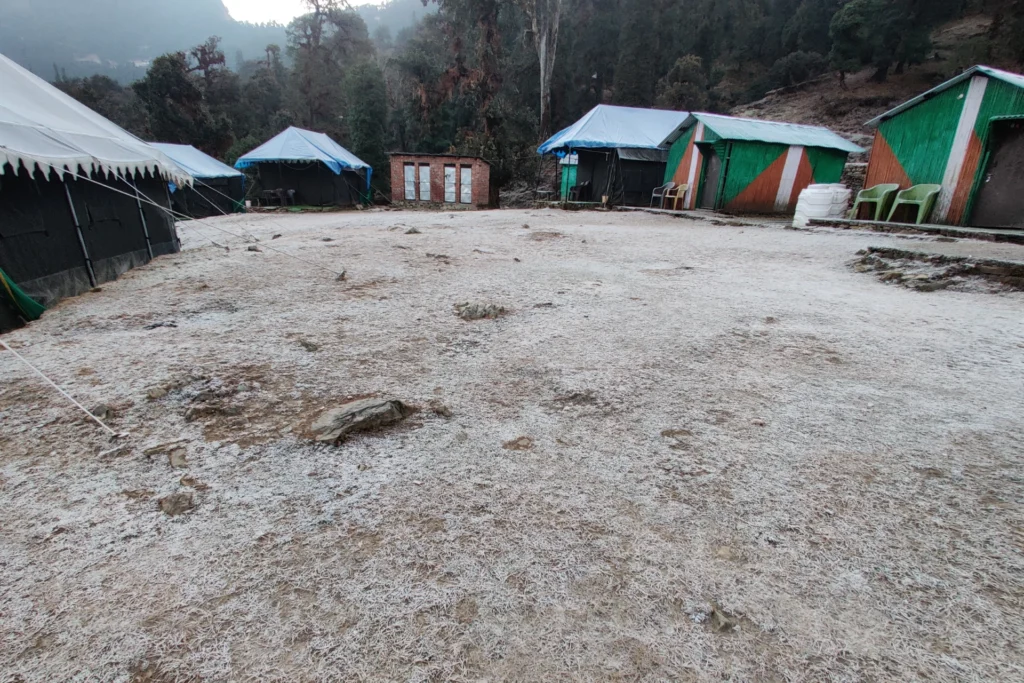
Chopta to Chandrashila summit via Tungnath temple
- Altitude: Chandrashila summit: 3,810 m/ 12,500 ft.
- Trek distance : 7 km | 4-5 hrs
Your adventure truly begins today as you embark on a 6-7 km trek from Chopta to Chandrashila via Tunganath temple,. The trek is relatively easy with gradual ascents, setting the perfect pace for the day ahead.
The trail starts as a well-defined rocky path, gradually ascending through the mountains. An ideal spot to pause and soak in the breathtaking views of surrounding valleys. The trail continues into a beautiful forest of maple and rhododendron trees. If you happen to visit during the spring season, the rhododendrons will be in full bloom, painting the forest with striking hues of red.
From the trail, you’ll also catch glimpses of the Chandrashila summit and the Tungnath temple perched below it. Tiny dots that come into focus with binoculars.
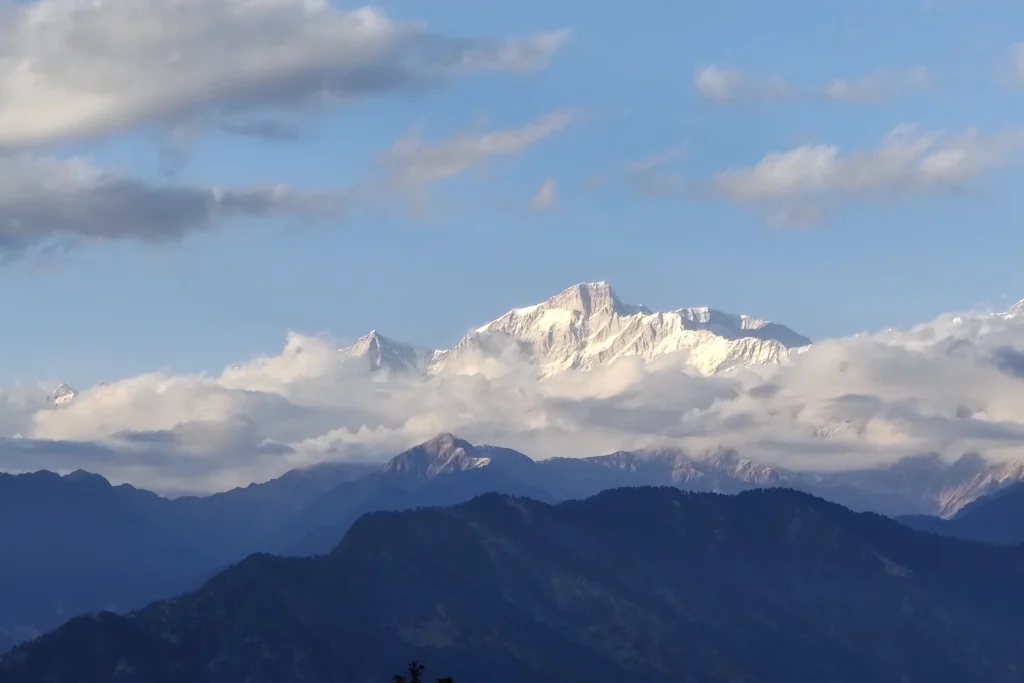
Chopta to Deoriatal lake (optional) & drive to Rishikesh
- Altitude :
- Sari Village : 2,000 m/ 6,381 ft.
- Trek Distance : 6 km (bothways)| 3-4 hrs
- Drive Distance : 215 km | 8-9 hrs
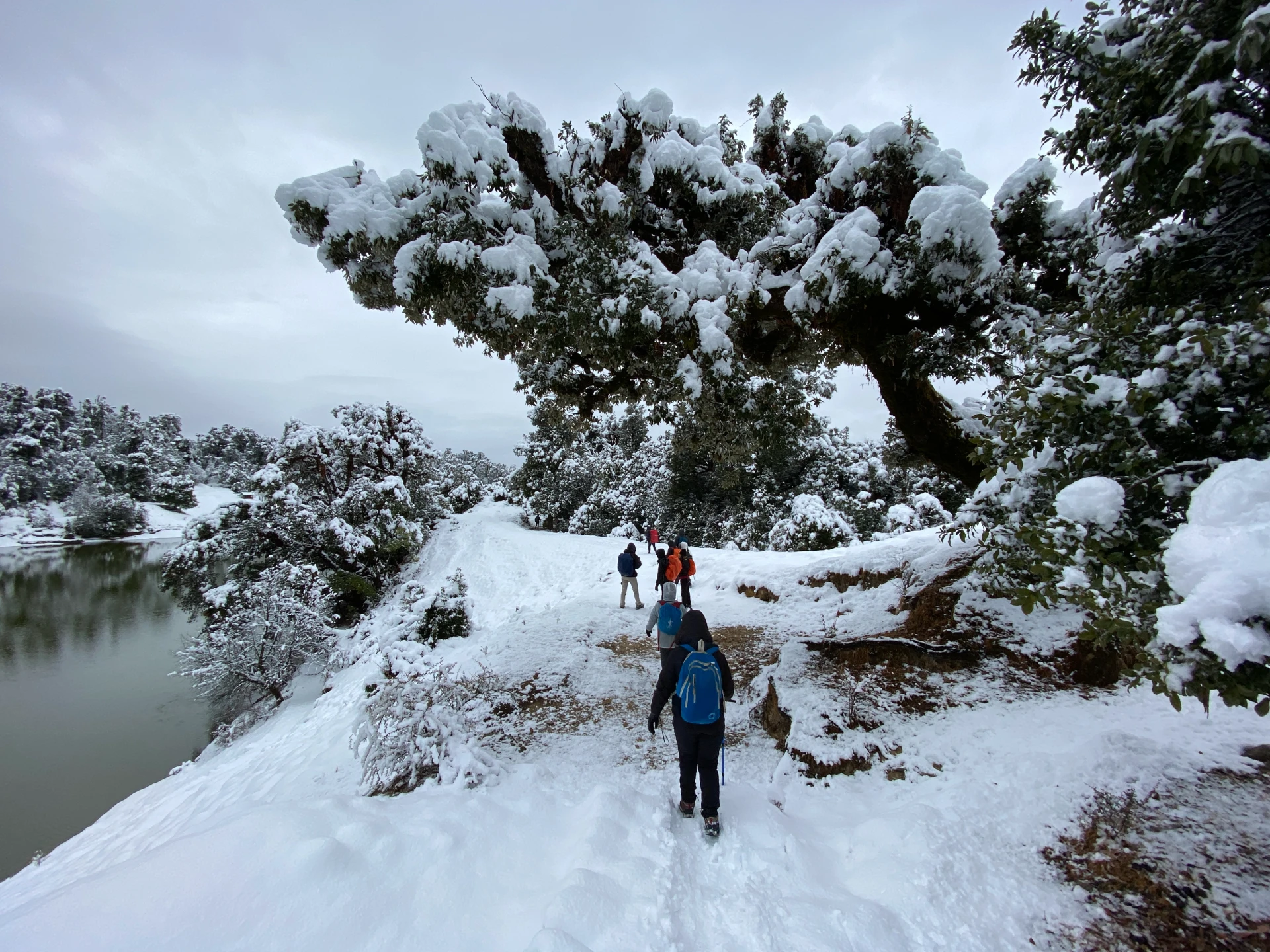
Today’s journey is a visual delight, filled with natural beauty from start to end. The trail is gradual zig-zag ascent laid by rocky path. The trail from Sari to Deoariatal lake passes through dense rhododendron forests. In spring, the trees are covered with fiery red and pink blossoms, while in winter the same trail turns into a serene white corridor with snow-laden trees. Throughout the walk, intermittent views of Kedarnath Main and Chaukhamba peaks appear through the forest canopy.
The trek is of moderate gradient — starting with a steady ascent and then gently descending through forest and meadow sections before a gradual climb towards Shyalmi meadows.
Health Awareness
- Pulse rate at rest must be in between (60 to 100 beats per minute).
- Blood Pressure Reading must be in between (DIASTOLIC 75 – 85, SYSTOLIC 100 - 130 mm Hg).
- Respiratory rate at rest must be in between (12 to 20 breaths per minute).
- Should not have Liver and kidney issues.
- Should not have Diabetes Mellitus, Bronchial Asthma, Heart problems, Hypertension, etc.
- No pacemaker implant.
- People with Sinus issues, Epilepsy please contact to trek coordinator before booking the trek.
- If your BMI is not normal, Please contact our Trek coordinator before Trek booking.
Important Links
How to Reach:
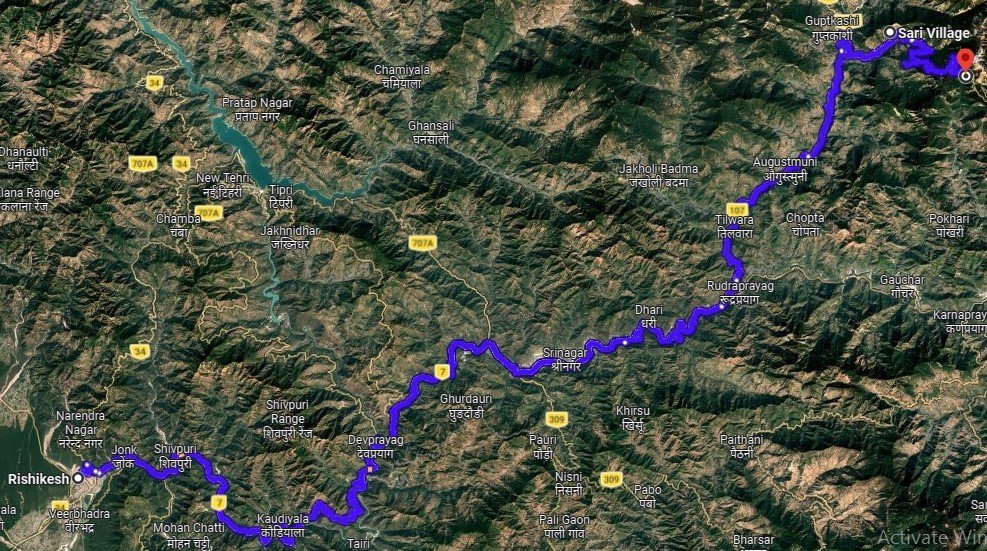
Pick-Up Information
- It is essential for everyone to arrive at Rishikesh (07:00 am)
- Pick-up Location - Nainital Bank, Tapovan, Rishikesh
- Once you have reached Rishikesh, WTM will manage the rest of your travel arrangements, if you have opted for WTM’s pick-up service, you can select this option during the booking process by adding it as an add-on.
Options to Reach Rishikesh
First, you can arrive at Delhi, Dehradun airport or Chandigarh. The journey from these locations to Rishikesh is explained below.
- 1. Take overnight train/bus to Rishikesh.
- 2. Take overnight train/bus to Haridwar and drive to Rishikesh (25km | 35 min drive with normal traffic).
- 3. Take overnight train/bus to Dehradun and drive to Rishikesh (50km | 1hr 20min drive with normal traffic).
- ( We always recommend going for the govt. Buses over the private ones outside the bus station as based on the experience we have found that there are very high chances of delay involved with private buses. Also, govt. Buses are always more reliable. Whichever bus you choose, just make sure to reach Rishikesh at least by 05:30 am. )
- 4. Board a flight to Dehradun airport (Jolly Grant Airport) (21 km, 30 min). If you're arriving by air, then come one day in advance.
Drop-Off Information
- The designated drop-off point is Tapovan, Rishikesh.
- Reach in Rishikesh by 6:30 to 7:30 pm.
- Please consider planning your subsequent travel arrangements after 10:00 pm.
- Note - In July and August month always have a buffer day in your Itinerary due to the Monsoon.
- It's highly advisable to keep a buffer day in your travel plan. If the buffer day is not used, it can be used to explore Rishikesh.
- ( If you prefer to travel independently to Base camp and don't want to take WTM's pick-up service, you can either take a government bus or book a private cab from Rishikesh.
- WTM offers comfortable transportation through Tempo Traveler, Bolero, or equivalent vehicles. If you wish to upgrade your mode of transportation, please contact your trek coordinator for further assistance.
Cost Terms
1. Accommodation (as per the itinerary):
- Guesthouse & Swiss/cottage tent(Male and Female separate on triple, quad, or hexa sharing).
2. Meals (Veg + Egg):
- All meals are from Sari village to Baniyakund.
- Day 1 dinner to Day 4 dinner.
3. Support:
- 1 Mountaineering & First aid qualified professional expedition Leader.
- 1 Experienced high-altitude chef.
- Local experienced guides (Number of guides depending on the group size).
- Enough support staff.
4. Trek equipment:
- Ropes, Helmet, Ice axe, Harness, Gaiters & Microspikes(if required).
5. First aid:
- Medical kit, Stretcher, Oxygen cylinder, Blood pressure monitor, Oximeter, Stethoscope.
6. Mules/porters to carry the central luggage.
7. All necessary permits and entry fees, up to the amount charged for Indians.
8. Services from Chopta village to Sari .
9. Trek completion certificate.
10. Insurance (only for Indians.)
- Insurance (For non-Indian Nationals, NRI or OCI card holders).
- Transportation: From Rishikesh to Chopta and Sari to Rishikesh is optional.
- Food/Meals during the transit.
- Any kind of personal expenses.
- Mule or porter to carry personal luggage.
- Emergency evacuation, hospitalization charge, etc.
- Any extra costs incurred due to extension/change of the itinerary due to natural calamities roadblocks, vehicle breakdown, etc. factors beyond our control.
- Anything not specifically mentioned under the head Inclusion.
Trek Essentials
| Backpack with rain cover | (40 – 50 ltr) with comfortable shoulder straps |
| Day pack with rain cover | 20 – 30 ltr (If off-load opted) |
| Walking stick | Advisable (At least one) |
| Water Bottle / Hydration pack | 2 bottles of one liter each, People who use hydration pack 1 hydration pack and 1 bottle of one liter, Carry at least one thermos flask. |
| Small size tiffin/lunch box | 1 Nos |
| Snacks | Energy bars, dry fruits, electral/ors |
| Personal Medical Kit | Consult your doctor |
| T-Shirt (Synthetic quick dry) | 1 Full & 1 Half sleeves |
| Fleece T-shirt | 1 Nos |
| Fleece jacket | 1-2 Nos |
| Windproof Jacket | 1 Nos |
| Down feather / Hollow jacket | 1 Nos |
| Thermal inner (Upper and Lower) | 1 Pair |
| Trek Pant (Synthetic quick dry) | 1 Nos |
| Fleece Pant | 1-2 Nos |
| Waterproof gloves | Not required |
| Fleece / woollen gloves | 1 Pair |
| Poncho / waterproof Jacket and pant | 1 Nos |
| Head torch | 1 Nos. (Avoid Hand torch) |
| Sun cap | 1 Nos. (One that covers the neck as well) |
| Woolen cap | 1 Nos. |
| Balaclava | Not required |
| Buff / Neck-gaiters | 1 Nos. |
| Sunglasses | UV with dark side cover, People who wear spectacles – (A)- Use contact lenses | (B)- Photo chromatic glasses |
| Trekking shoes | 1 Pair (Water-resistant, high ankle with good grip) |
| Floaters / flip-flops | 1 Pair |
| Cotton socks | 6 pairs |
| Woollen socks | 1 pairs |
| Gaiters | 1 Pair (WTM provides when required) |
| Micro spikes | 1 Pair (WTM provides when required) |
| Sunscreen cream | 1 Nos |
| Moisturiser | 1 Nos |
| Chap-stick / Lip balm | 1 Nos |
| Toothbrush and toothpaste | 1 Nos |
| Toilet paper & Wipes | 1 Nos |
| Soap / hand sanitizers | 1 Nos |
| Antibacterial powder | 1 Nos |
| Quick dry towel | 1 Nos |
Gallery
Cancellation Terms
To request a cancellation, please email us at info@walkingthemountains.com using your registered email ID.
Cancellations prior to 28 days from the start of the Trip
Refund Options
- 5% deduction of trek fee
- 100% trek fee cash voucher for any trip until six months from the date of last trek.
- Transfer your trek (any trek, any date) to your friend
Cancellation between 27 days and 15 days to the start of the Trip
Refund Options
- 30% deduction of trek fee
- 100% trek fee cash voucher for same trip till one year
- 85% trek fee cash voucher for any trip till one year
Cancellation between 14 days and 8 days to the start of the Trip
Refund Options
- 50% deduction of trek fee
- 80% trek fee cash voucher for same trip till six months.
- Book the same trek, in the same season, with any other batch
- Transfer your trek (same trek, any date) to your friend
Cancellation less than 7 days to the start of the trek.
Refund Options
- No cash refund
- 20% trek fee cash voucher for the same trip until six months.
Itinerary and Modifications
- WTM reserves the right to modify, shorten, or cancel any part of the Trip due to transportation delays, weather, health emergencies, or other unforeseen circumstances including Force Majeure.
Cancellations and Refunds
- No refunds or vouchers, partial or otherwise, shall be provided for voluntary withdrawal, non-utilisation of services, or removal from the Trip.
- If WTM cancels the Trip before arrival at the designated pick-up point due to unforeseen circumstances or Force Majeure, the Participant may choose from:
- An alternate Trip/date.
- A credit voucher valid for one (1) year.
- Transfer to another Trip, with cost differences payable by the Participant.
- If the Trip is abandoned post-arrival at the designated pick-up point, no cash refund or voucher shall be issued. The Trek Again Policy may apply at WTM’s discretion.
- WTM shall not be liable for any associated travel costs such as flights, accommodation, or visa fees.
Force Majeure
- Events beyond its control including but not limited to earthquakes, landslides, strikes, curfews, war, pandemic, government restrictions, heavy rainfall or snowfall, windstorms, road blockages, trail disruption, or withdrawal of permits, WTM shall not be held liable for any cancellation, delay, or service modification caused by Force Majeure.
FAQ’S
The Chopta Chandrashila Trek is renowned for its stunning landscapes and breathtaking views of major Himalayan peaks, including Nanda Devi, Bandarpoonch, Chaukhamba, Kedar Peak, and Mt. Trishul. This trek also includes visits to the serene Deoriatal Lake, the sacred Tungnath Temple (the highest Shiva temple in the world).
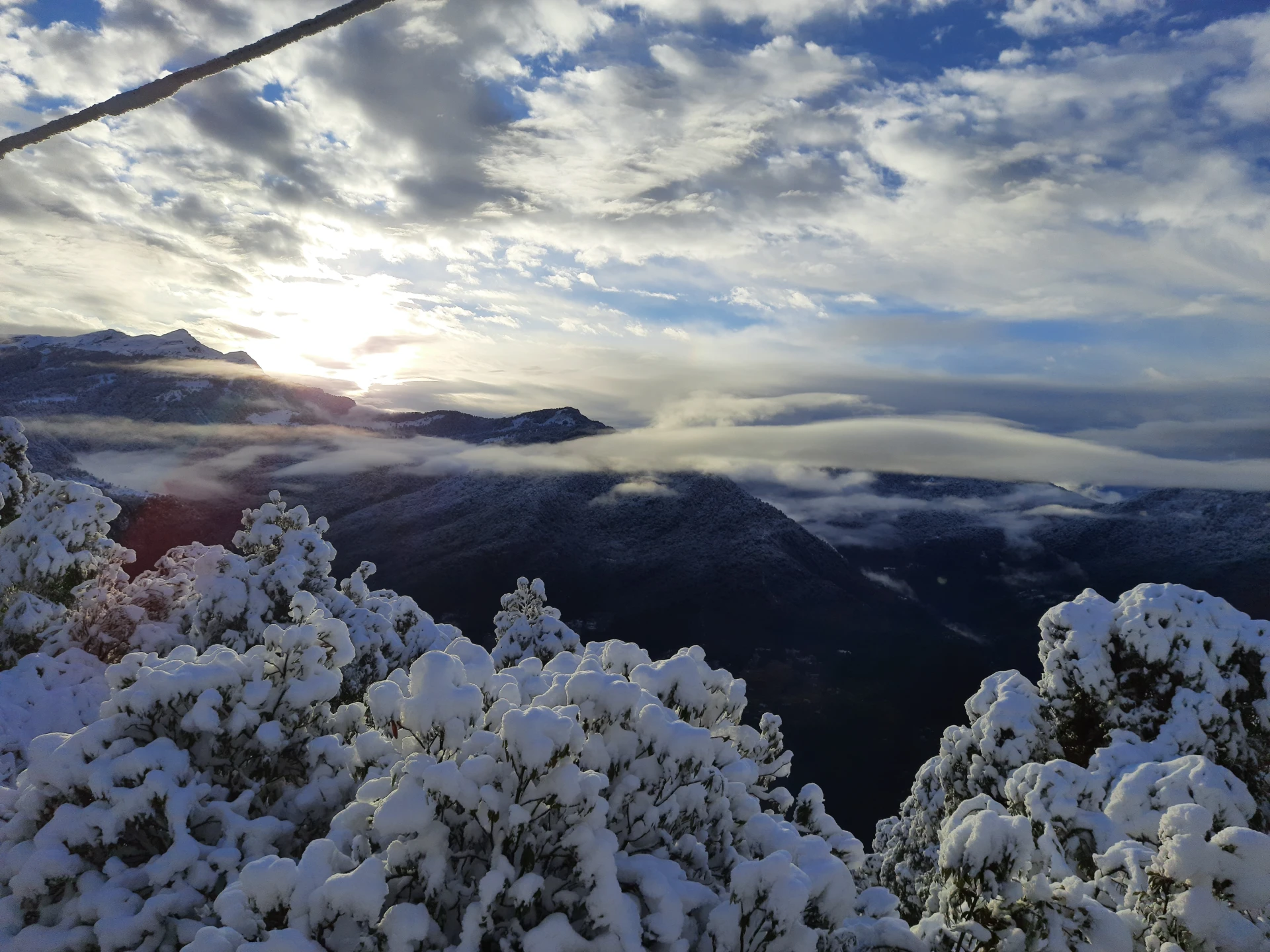
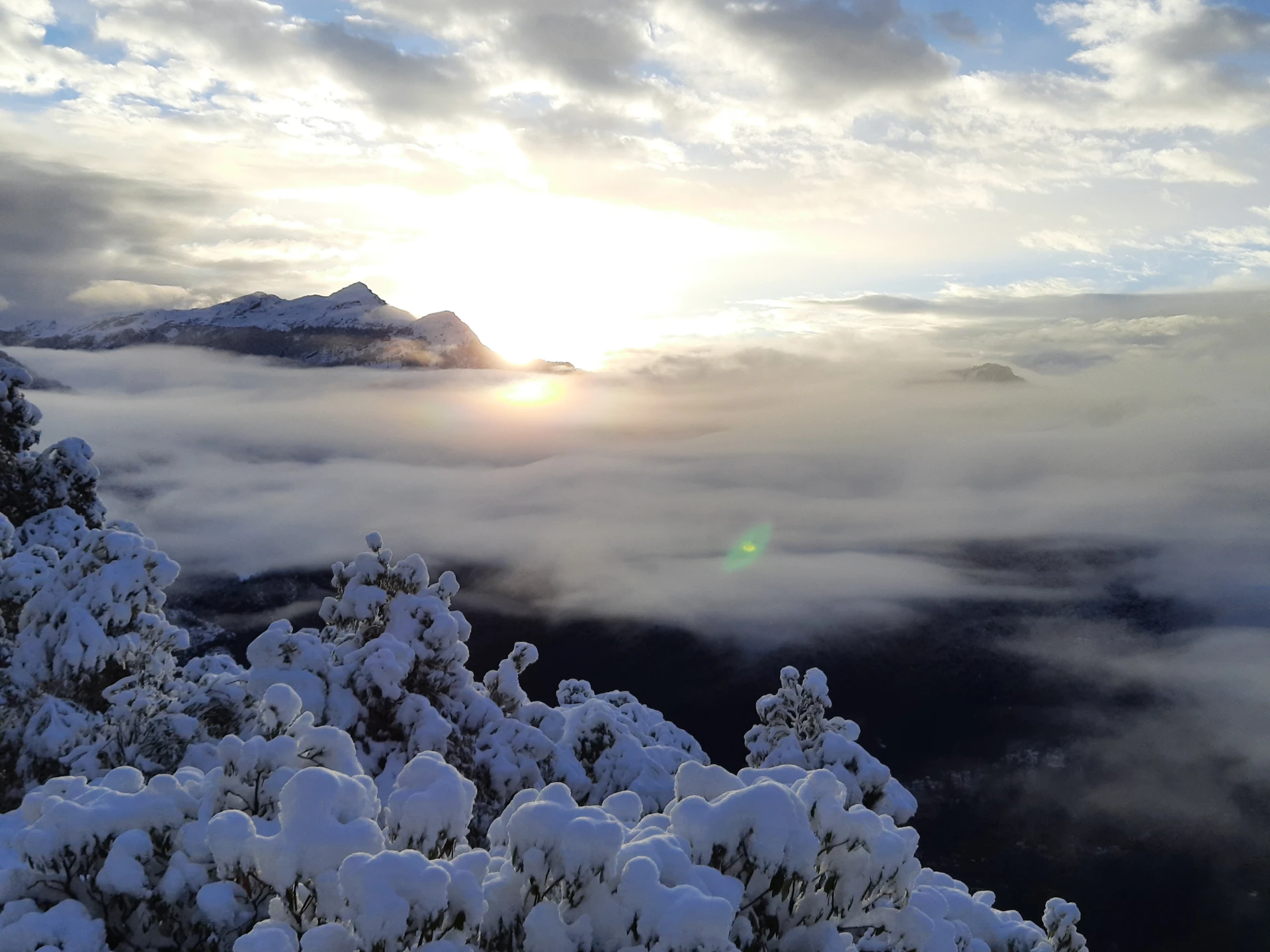
You can find snow on the Chopta Chandrashila Trek primarily during the winter months, from December to February. The trails, especially near Tungnath and Chandrashila, are often covered in snow, adding to the challenge and beauty of the trek.
A moderate level of physical fitness is required for the Chopta Chandrashila Trek. Trekkers should be comfortable walking 6-7 hours a day on varied terrain. Prior experience in trekking or regular physical exercise like jogging, running, or cycling can be beneficial.
Yes, the Chopta Chandrashila Trek is suitable for children, provided they are physically fit and accustomed to outdoor activities. It’s an excellent trek for families due to its relatively moderate difficulty and the wealth of natural beauty and cultural experiences it offers.
Washroom facilities on the Chopta Chandrashila Trek are basic. At campsites, there are usually portable toilets or dry pit toilets available. Trekkers should carry personal hygiene kits and be prepared for limited facilities in remote areas.
From the Chandrashila summit, trekkers can enjoy unobstructed views of several major Himalayan peaks, including Nanda Devi, Thalaysagar, Chaukhamba, Dronagiri, Trishul, Nandaghunti, the Gangotri ranges, Kedar dome, and Jahanukut. These panoramic vistas are a highlight of the trek.
While the altitude of Chandrashila Peak is significant, the gradual ascent helps with acclimatization. However, trekkers should be mindful of altitude sickness and take necessary precautions, such as staying hydrated and ascending slowly.
Yes, offloading services are usually available for the Chopta Chandrashila Trek. Trekkers can arrange to have their heavy backpacks transported by porters or mules, allowing them to trek with lighter day packs.
Accommodation on the Chopta Chandrashila Trek typically involves camping in high-quality tents. The campsites are set in picturesque locations, offering basic amenities and comfortable sleeping arrangements.
The best time to visit the Tungnath trek is from April to November. During summer, the weather is pleasant, with clear skies and lush green meadows. In winter, the region transforms into a snow-covered wonderland, offering a unique trekking experience for those seeking adventure in colder months.