
Har Ki Dun Trek

Region
Uttarakhand

Duration
7 days

Max. Altitude
11600 ft.

Trek Distance
36 kms

Grade
Easy to Moderate
Fixed Departures
September - 2026
- 10 Sept - 16 Sept
- Closed
- 17 Sept - 23 Sept
- Closed
- 24 Sept - 30 Sept
- Open
October -2026
- 2 Oct - 8 Oct
- Open
- 9 Oct - 15 Oct
- Open
- 16 Oct - 22 Oct
- Open
- 23 Oct - 29 Oct
- Open
November -2026
- 1 Nov - 7 Nov
- Open
- 8 Nov - 14 Nov
- Open
- 15 Nov - 21 Nov
- Open
- 22 Nov - 28 Nov
- Open
March - 2027
- 20 March - 26 March
- Open
- 27 March - 2 Apr
- Open
April - 2027
- 3 Apr - 9 Apr
- Open
- 10 Apr - 16 Apr
- Open
- 17 Apr - 23 Apr
- Open
- 24 Apr - 30 Apr
- Open
₹12,750
+5% GST / Person
Highlights
- Services from Sankri to Sankri
- Base Camp Accommodation : Guest house stay with attached washroom (no bunk beds).
- Pickup & Drop Location : Prince Chowk, Dehradun
- Pickup : 06:00 AM | Drop: 06:30 PM–07:30 PM (weather/road dependent) Keep a buffer day and arrive a day early to avoid delays.
Add-ons
- Transport
- Rs 2200/- Per Person
- Offload
- Rs 2000/- Per Person
Add on information
- Insurance is mandatory.
- It is available for Indian citizens only.
- Non-Indians have to take insurance on their own.
- The cancellation policy will be implemented in accordance with the trek cancellation policy.
- Transportation: Dehradun to Sankri & return is optional.
- Choose add-ons during booking. If missed, you can contact us to book the same.
- Book transportation at least 10 days before the trek.
- Cancellation 6 or more days before the start of the trip results in a 100% cash refund.
- Cancellation less than 4 days from the start of the trip results in a 50% cash refund.
- Cancellations made on the trip date are not eligible for a refund.
- Backpack offload is optional.
- Choose add-ons during booking. If missed, you can contact us to book the same.
- Book off-load at least 10 days before the trek.
- For offline bookings at the base camp, a variable convenience fee may apply. (It differs from trek to trek)
- Offload can't weigh more than 10kg. Offload should have a waterproof cover. Suitcases/trolleys will not be allowed.
- In the event that you choose to cancel your trek prior to the departure date, you will receive a full refund.
- Note : The bag weight should not exceed 10 kg.
Har Ki Dun Trek Overview
- Trek Name : Har Ki Dun Trek
- Days : 7
- Adventure : Trekking
- Base Camp : Sankri
- Season : Summer | Autumn |
- Months : April | May | June | September | October | November |
- Country : India
- Altitude : 11,600 ft
- Grade : Easy to Moderate
- Rail Head : Dehradun
- Stay : Camping (Twin sharing) & Hotel/Guesthouse (Separate male & Female)
- Food : Meals while on trek & at Hotel/Guesthouse (Veg & Eggs)
- Location : Uttarakhand
- Distance : 36 km
- Trail Type : Point to point trail | Camping at the same location upon returning.
- Airport: Jolly Grant Airport, which is 28 km away from Dehradunn
Why Har Ki Dun Trek?
- Har Ki Dun is believed to be the path taken by the Pandavas on their way to heaven.
- The valley is surrounded by beautiful villages like Osla and Gangad. Osla village is very famous for its wooden houses and unique temples.
- You will find the very famous Duryodhana temple in Osla village, which was formally dedicated to Duryodhana. Today, the temple is devoted to lord Someshwar.
- The Supin River is a very famous attraction of the Har Ki Doon trek. You will trek along with it.
- During your trek, you will find all the greenery, some water streams along the way, and mighty peaks like Swargarohini I and II, Bandarpoonch, and Kala Nag (Black Peak).
- As much as the Har Ki Dun trek is famous for its beautiful surroundings, the trek is also very famous for its Mythological significance.
- The trek is easy to moderate in difficulty and can be done easily by beginners.
- In summer, the valley is fully lively with greenery, wildflowers, and rhododendrons. In Autumn, the valley turns golden, and you will get the more clear views of the peaks.
- You will also get to see a grand Jaundar glacier when you are in the valley. There is one more Mahadev temple you will find.
Why Har Ki Dun Feels Special
- Unlike other tourist areas, Har Ki Dun is quiet and not overcrowded. There will be no honking cars and huge buildings. What you will hear instead, is the sound of wind in the trees, the singing of birds, and the water running across rocks. It has a certain way of being able to slow down, take a deep breath and feel grounded into the earth and maybe even into yourself.
- The journey of the Har Ki Dun trek begins from the beautiful and very famous village of the Himalayas, Sankri. From here, you will start seeing the Garhwal region trees, birds, water streams, and many more. You also walk through small mountain villages like Seema and Osla. These are simple places where people live happily and close to nature.
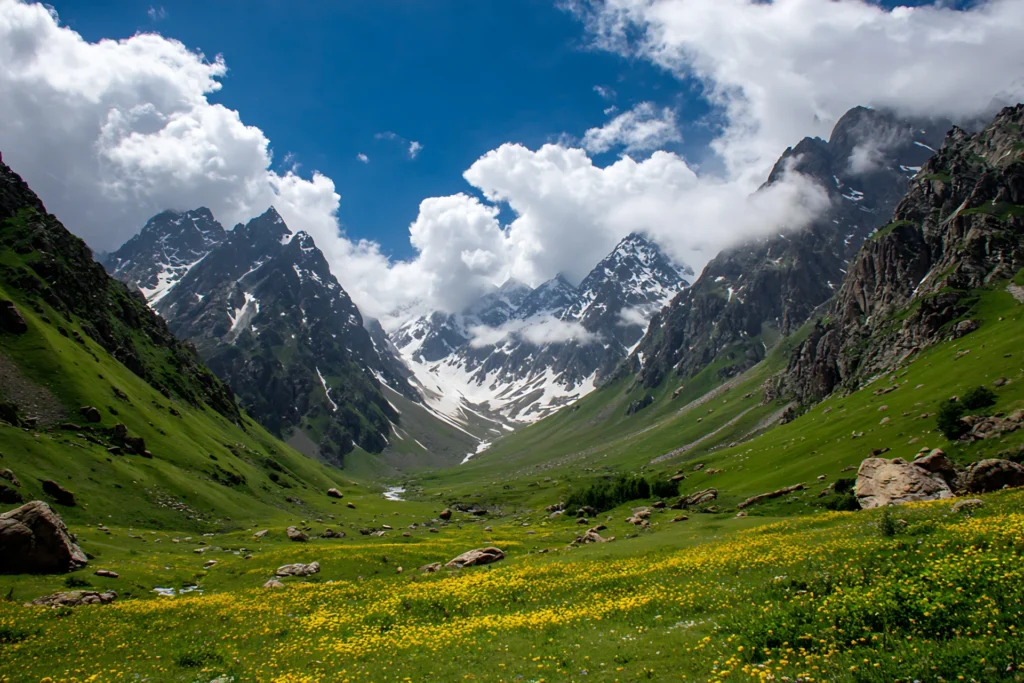
- After a few days of walking, you finally reach the Har Ki Dun valley. And when you see it for the first time, it feels special. It is incredible to explain how good it looks. In front of you, there are wide green meadows, and in the background, you have high mountains covered with snow. There, you will find the mighty Jaundar glacier as well, and major peaks like Bandarpoonch, Kala Nag (Black Peak) and Swargarohini 1 and 2.
A Place of Old Stories
- Har Ki Dun is also full of old legends. According to the Indian epic Mahabharata, the Pandavas had traveled this valley to heaven. This has made many residents think that the valley is holy. Even in the village of Osla, there is a temple attributed to the worship of Duryodhana. This temple is now dedicated to the Lord Shiva.
Major Attractions of the Har Ki Dun Trek
The Very Known Duryodhan Temple
Osla is home to one of the most unique temples in this region. This temple is formerly called The Duryodhan Temple. The inhabitants here at an ancient time adored one of the characters of the Mahabharata named Duryodhana. This is surprising to tell, but back in this distant corner of the Himalayas, Duryodhana used to be a powerful and righteous character.
But now it’s no longer like that. Today, the temple is devoted to lord Someshwar which is another name of lord Shiva. The stories of Duryodhana are still remembered by the locals.
The architecture of the temple is fascinating indeed. The wooden walls are also carved in detail; flowers, animals, and scenes from old stories. It’s built strong enough to face tough winters, and beautiful enough that you will not stop admiring.
The Supin River and the Valley Below
When you are standing perfectly close to Osla, you get the chance to look into a ghati where Supin River flows gently. You may go down and sit by its banks, drink the cold water out of the stream, and have your feet in the frozen water. There are little falls everywhere and little streams of clear water go through the rocks.
Peaks that Watch Over You
During the journey, you will also come across some tall mountains such as Bandarpoonch, Kala Nag (Black Peak) and Swargarohini I and II. The entire experience is surreal because of these mountains. Among them, Swargarohini is the most holy one.
The Grand Jaundar glacier
As you leave Osla and continue the trek, the climb starts getting steeper. The forest begins to change. You start to see small colourful flowers on trees. Their fresh colors are so natural, you might call them the decorations of nature.
The Jaundar glacier can be observed at a distance in a sheet of ice under the rays of the sun. And in the midst of all this, there is a small Mahadev Mandir, dedicated to Lord Shiva.
Who can do this tek?
- Age Requirement : Minimum 9 years
- First-timers are welcome, though prior trekking experience is preferred. Good fitness is a must.
- Fitness Criteria :
- The Trekker should have sufficient stamina to cover 5 km of distance by jogging in 35 minutes without stress or 10 km of distance in 80 minutes without stress
- If the trekker prefers cycling he/ she should be able to cycle 10 km of distance in 30 minutes.
- If the trekker wants to carry a backpack then he/she should be able to carry a 10-12 kg backpack. If opt Off-load option then the trekker should be able to carry a 3-5 kg backpack.
- If a trekker's BMI is more or less than the normal range (18-29), please consult our Trek Coordinator before booking.
Har Ki Dun Trek : Itinerary
Day 1: Dehradun to Kotgaon/Sankri
- Altitude Sankri: 1,950 m/ 6,400 ft
- Drive Distance: 200 km | 9-10 hrs
Day 2: Sankri to Gangaad via Taluka
- Altitude:
- Gangaad: 2,377 m/ 7,800 ft
- Taluka: 2,100 m/ 6,890 ft
- TrekDistance: 9 km | 2-3 hrs
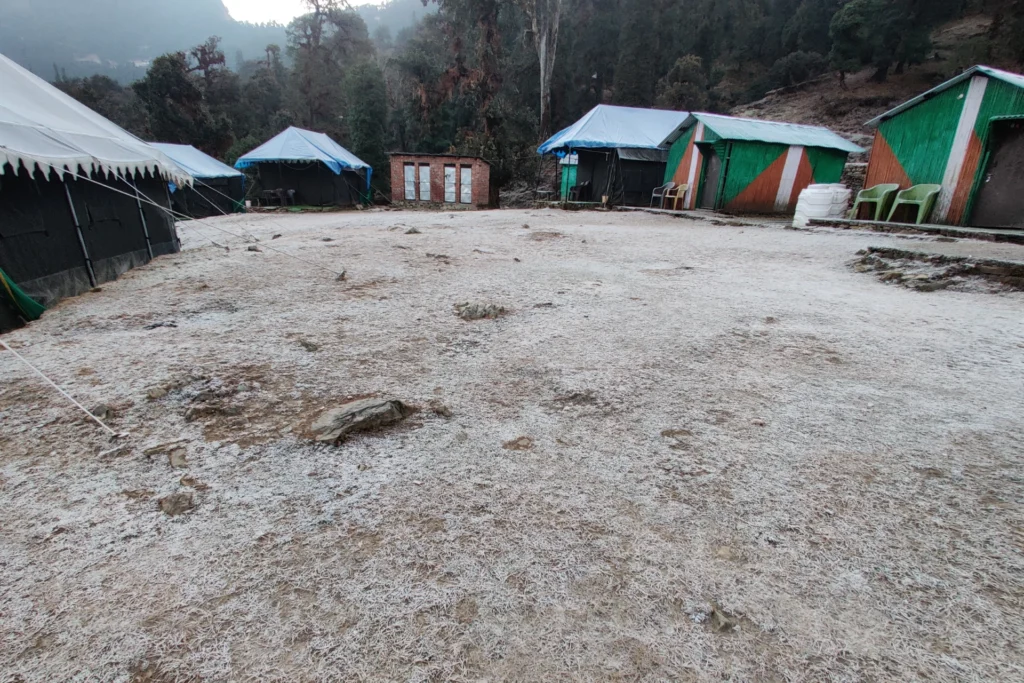
Day 3: Gangaad to Kalkatiyadhar Campsite
- Altitude Kalkatiyadhar: 2,743 m/ 9,000 ft
- Trek Distance: 12 km | 3-4 hrs
Day 4: Kalkatiyadhar to Har ki Dun & return
- Altitude: Har Ki Dun: 3,535 m/ 11,600 ft
- Trek Distance: 6 km (both sides) | 2-3 hrs
Day 5: Kalkatiyadhar to Gangaad via Osla
- Altitude Gangaad: 2,377 m / 7,800 ft
- Trek Distance: 12 km | 3-4 hrs
Day 6: Gangaad to Kotgaon/Sankri via Taluka
- Altitude Taluka: 2,100 m / 6,890 ft
- Altitude Sankri: 1950 m / 6400 ft
- Trek Distance: 9 km | 3-4 hrs
- Drive Distance: 12 km | 1 hrs
Day 7: Kotgaon/Sankri To Dehradun | Saying Goodbye To The Mountains
- Drive Distance: 200 km | 9-10 hrs
Note:
- Keep a buffer day in your travel plan.
- If buffer day is not used in the travel then it can be used to Explore Dehradun.
- Read the article Things to do in Dehradun.
- Distance, Altitude, and Trekking hours are approximate and rounded off.
- Keep the original and copy of ID proof handy.
- Come one day early if planning to come by plane.
Dehradun to Kotgaon/Sankri
- Altitude Sankri: 1,950 m/ 6,400 ft
- Driving distance : 200 km | 9-10 hrs
- Accommodation : Guest house/Alpine tent
The first day begins with a 10-hour drive from Dehradun to Sankri. You are expected to reach Prince Chowk, Dehradun by 6:00am in the morning. To reach on time, you can book an overnight Bus/Train from Delhi to Dehradun ISBT. Sankri is located at a distance of 220 km away from Dehradun and it takes about 10 hrs approximately to cover the distance.
Passing through Mussoorie- the “Queen of the Hills” and the beautiful Kempty Falls onto Uttarkashi district, we will cross Naugaon, Purola, Mori, and Netwar before finally reaching village Sankri- the first stop on the trek. The road passes through picturesque pine tree forests starting on both sides of a road that catches up on a parallel to the course of the river Tons. After Mussoorie the scenery changes vividly, the deep gorges are replaced with pine forests that carry the fresh scent of pinewood in the air. Stopping at a favorable hour, we will have lunch somewhere by the road at an inn. Reaching Purola, you should get done with important calls and internet usage because hereafter, the connection will get fuzzy. BSNL and Jio are the only efficient services available in this zone with limited providers.
The final stretch to Sankri for about 20 km, the drive becomes extremely scenic. A short way before Sankri, we will cross the Govind National Park checkpoint and at about 6 in the evening, the drive will end at Sankri. Sankri is a beautiful Himalayan village that serves as the base camp for many Himalayan treks. The village offers stunning views of Mt. Swargarohini. If you are doing the trek in the winter months, you can expect snow right from Sankri itself. After freshening up at the guest house, you will get sufficient time to explore the market close by. Trekking essentials, garments, and equipment are available at the bazaar in Sankri, in case you need last-minute shopping for the venture ahead.
Sankri to Gangaad Campsite via Taluka
- Altitude :
- Gangaad : 2,377 m / 7,800 ft
- Taluka : 2,100 m / 6,890 ft
- Trek distance : 9 km | 5-6 hrs
- Accommodation : Homestay
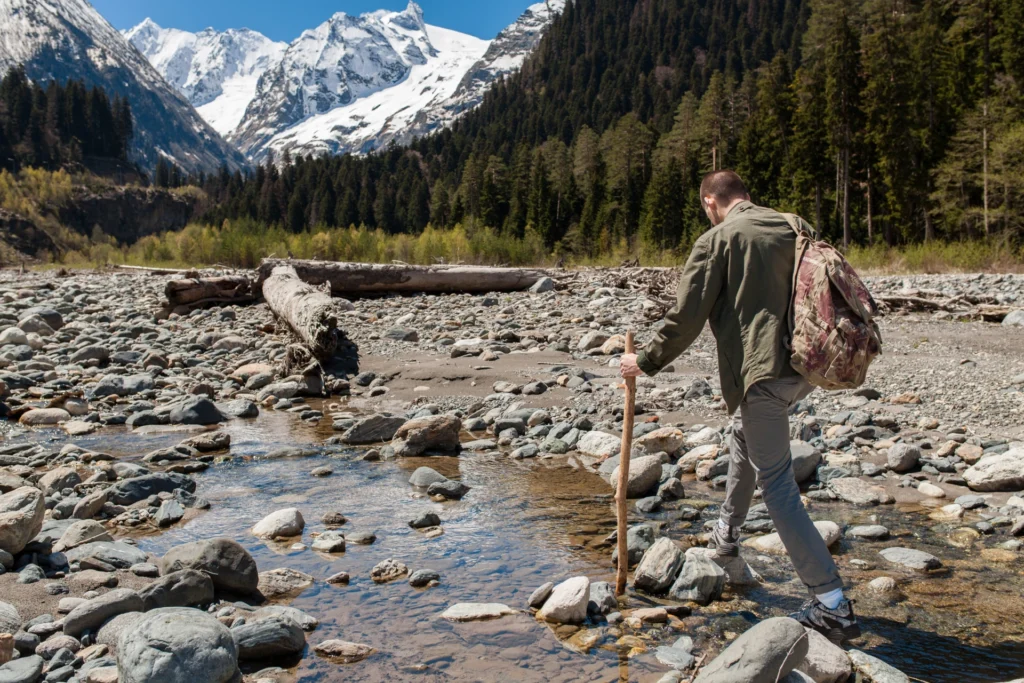
Start your day with a warm and hearty breakfast, surrounded by stunning views of the majestic mountains. The crisp morning air and serene surroundings will set the perfect mood for the adventure ahead. After enjoying your meal, it’s time to embark on today’s journey.
You’ll trek from Sankri to Gangaad campsite, a journey of about 8-9 kms. You’ll feel the cool, refreshing breeze of the mountains, making the ride even more enjoyable. The peaceful sounds of nature will accompany you, from chirping birds to the gentle rustling of leaves. Along the way, you’ll come across Gangar village, a charming settlement with traditional wooden houses that reflect the region’s unique architecture. Take a short break here, soaking in the mesmerizing mountain views, before continuing your journey.
Gangaad to Kalkatiyadhar Campsite
- Altitude Kalkatiyadhar: 2,729 m/ 8,956 ft
- Trek Distance : 12 km | 4-5 hrs
- Accommodation : Tent
The morning begins with a relaxing start, surrounded by breathtaking views and a delicious breakfast provided by WTM. Enjoy the fresh morning air, take in the beauty of the surroundings, and fuel yourself for the adventure ahead. This is the perfect time to soak in the peaceful atmosphere before beginning the day’s trek.
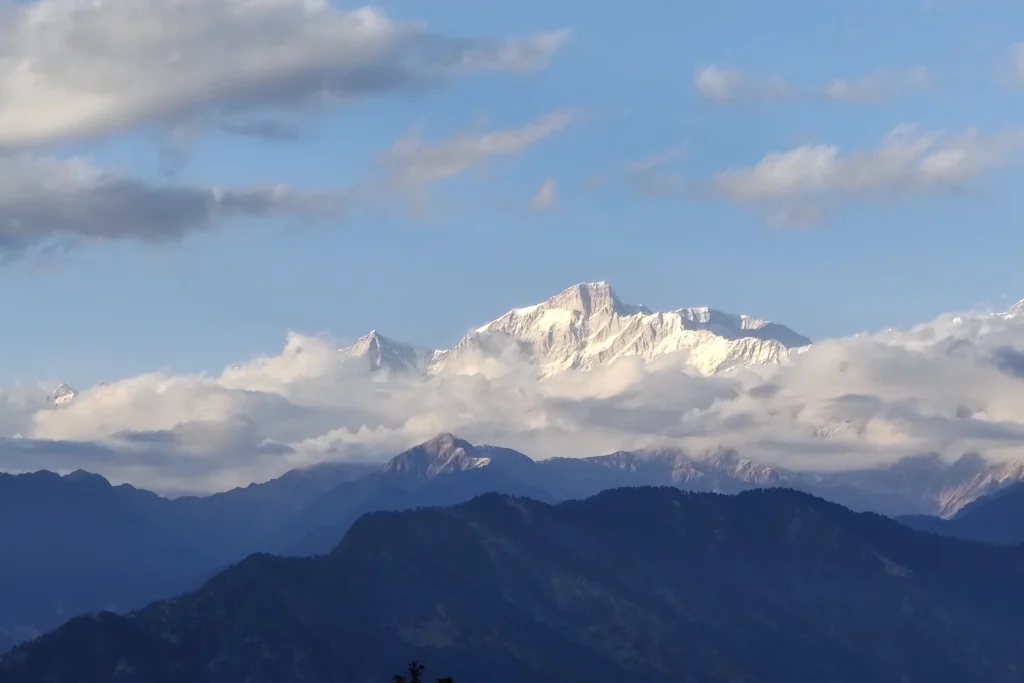
The journey starts with a short walk through the charming Kalkatiyadhar campsite. The trail is a mix of ascends and gradual climbs. The trail passes through scenic locations with beautiful mountains in the background. Until now, the views have been spectacular, but from this point onward, they only get better. As you trek higher, the vast mountains come even closer, offering awe-inspiring sights at every turn. As the trail winds its way up, you will come across some fabulous viewpoints that provide mesmerizing glimpses of the mighty Dhauladhar Range. The high-altitude path descends slightly and eventually brings you to a stunning tabletop meadow called Kalkattiyadhar. This open stretch of greenery offers breathtaking panoramic views of the surrounding peaks. Here, you can admire the majestic Bugyal Devsu and the towering Mt. Black Peak. Looking to the left, you will be able to spot the Ruinsara Range and the Kedarkantha Summit standing tall in the distance. This is a great spot to pause, soak in the scenery, and capture some beautiful pictures.
Kalkatiyadhar to Har ki Dun & back
- Altitude Har Ki Dun : 3,500 m/ 11,600 ft
- Trek Distance : 5-6 km | 6-7 hrs
- Accomodation : Tent
Today is the much-awaited day when you finally witness the beauty of the Har Ki Dun Valley. It’s going to be a long and exciting journey, so start with a hearty breakfast amid the mountains before setting off for the stunning valley.
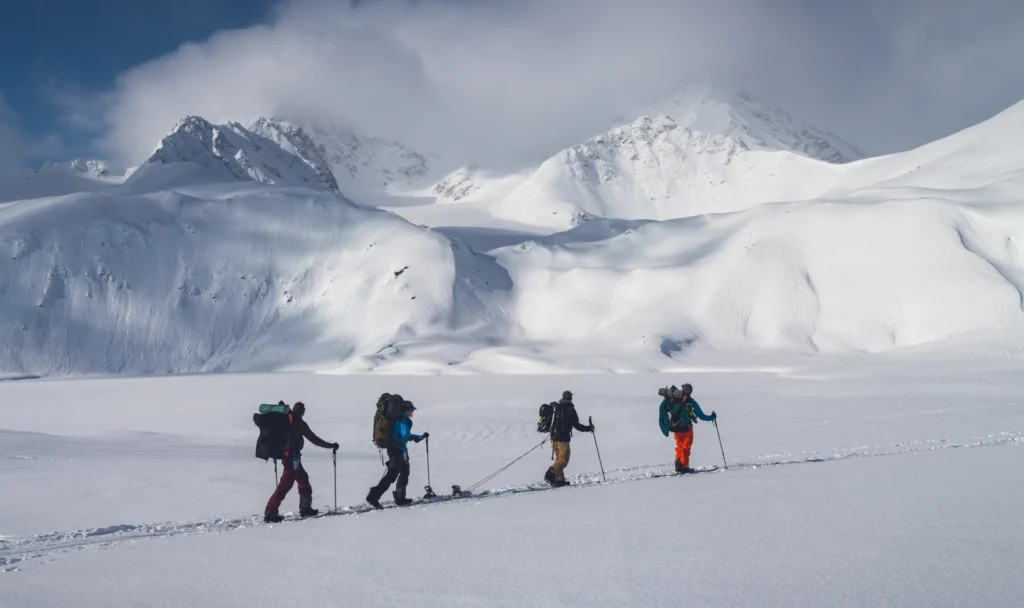
The trail is a mix of steep and moderate ascents leading to Har Ki Dun Valley. As you gain elevation, snow patches come into view, adding to the surreal beauty. You will pass through picturesque meadows with lush greenery, occasionally dotted with vibrant flowers. In winter, these sections transform into a magical snow-covered wonderland. The final stretch of the trek follows a river and winds through dense forests before reaching the Har Ki Dun summit. From here, the views of Swargarohini I Peak, Hata Peak, and Black Peak are absolutely spellbinding.
Har Ki Dun Valley is a paradise, offering a mesmerizing sight at every turn. Towering peaks stand majestically, creating a stunning backdrop. The valley is deeply rooted in mythology and is dedicated to Lord Shiva. As you reach the top, you’ll find a small temple with a stone statue of Nandi and a Shivling. The tranquility and grandeur of the place make it evident why it is called the ‘way to heaven.’ Surrounded by the snowy peaks of Swargarohini, Bandarpoonch, and Kalanag, the vast mountains and lush meadows create an enchanting view. Take your time to soak in the beauty, capture stunning photographs, and enjoy the serene surroundings.
Kalkatiyadhar to Gangaad via Osla
- Altitude Gangaad: 2,377 m / 7,800 ft
- Altitude Osla: 2,590 m / 8.500 ft
- Trek Distance : 12 km | 4-5 hrs
- Accomodation :Tent
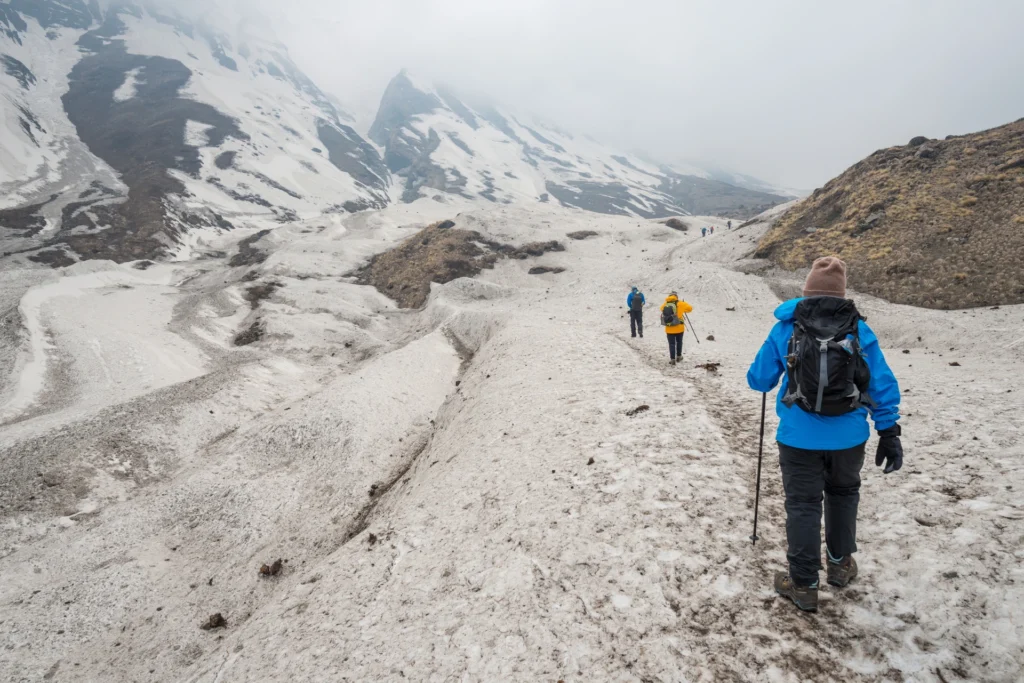
Start your morning with a delicious breakfast while witnessing a pleasant sunrise over the mountains. Take in the crisp mountain air and prepare yourself for the trek ahead. The route today consists of a moderate descent, leading you back through picturesque trails. You will follow the same path towards Gangaad. The trail winds through dense forests of tall coniferous trees, their towering presence providing shade and a refreshing atmosphere. As you continue, you will gradually descend, leading to the stunning Seema Bridge, a picturesque hanging bridge over the gushing Thamsa River. The backdrop of snow-covered peaks and the rushing water below make this a perfect spot to pause, capture photographs, and immerse yourself in the raw beauty of the Himalayas.
Beyond the bridge, the trail offers glimpses into the local way of life. You will pass by traditional garaats, small hydroelectric mills used by villagers to grind grains like millet and maize into flour. These simple yet effective structures reflect the sustainable and resourceful lifestyle of the mountain communities. The trail also unveils beautiful views of terraced fields, grazing cattle, and small slant-roofed huts scattered across the hillside. The harmony of nature and human life in this region is truly fascinating. As you walk steadily, enjoying the fresh mountain breeze and the soothing sounds of birds, take a moment to appreciate the unique charm of the Himalayas. The changing landscapes, from dense forests to open meadows, add to the trek’s enchanting appeal.
Gangaad to Kotgaon/Sankri via Taluka
- Altitude Sankri: 1,950 m / 6,400 ft
- Trek Distance : 9 km | 2-3 hrs
Today marks the final trekking day of your journey, so make sure to enjoy every moment. Start your morning by waking up to stunning mountain views and sharing a hearty breakfast with your team. Take in the fresh mountain air and prepare yourself for the last leg of your adventure.
You will trek from the beautiful Pauni Gharat campsite to Dhatmeer. The route consists of a steady descent, making it relatively easy, but be mindful of your footing. Pay special attention to your technique while descending, as taking large steps can strain your soles. Instead, take small, controlled steps to maintain balance and avoid unnecessary stress on your legs. Take short breaks along the way to admire the breathtaking surroundings and soak in the peaceful atmosphere. The trail winds through enchanting forests filled with towering Oak and Deodar trees, casting a serene shade over the path. Occasionally, through the gaps in the trees, you will catch glimpses of the snow-capped mountains, adding to the magical experience of the trek. The changing landscape, from dense forests to open clearings, makes the journey visually captivating and enjoyable.
After trekking through these vibrant landscapes for a few hours, you will reach Dhatmeer, where a WTM vehicle will be waiting to take you back to Sankri. The drive from Dhatmeer to Sankri takes about two hours, giving you time to relax and reflect on your journey. As you make your way back, take in the last views of the mountains and cherish the memories you’ve made. Upon reaching Sankri, check into your hotel and celebrate the incredible achievement of completing the trek. Enjoy a well-earned delicious final dinner with your team, sharing stories and laughter as you reminisce about the experience. After a fulfilling meal, settle into your cozy bed for a restful night, knowing you’ve completed an unforgettable journey in the Himalayas.
Kotgaon/Sankri To Dehradun | Saying Goodbye To The Mountains
- Drive Distance : 200 km | 9-10 hrs.
Today marks the final day of this incredible journey, and it’s time to head back to Dehradun with a heart full of unforgettable memories.
You will check out from the hotel early in the morning to ensure a timely departure, as today’s journey will be long. A vehicle will be arranged to drive you back from Sankri to Dehradun. The distance between the two is approximately 220 kilometers, and the journey may take around 10 hours, depending on road and weather conditions.
As we retrace our route, enjoy the scenic landscapes one last time. The winding mountain roads, lush greenery, and charming villages along the way will serve as a reminder of the adventure you’ve just completed. Feel free to take short breaks, stretch your legs, and soak in the last glimpses of the beautiful surroundings.
The cost of today’s meal is not included in the package, so plan accordingly. We expect to reach Dehradun between 6:30 and 7:30 pm, so be sure to arrange your further travel plans accordingly.
Health Awareness
- Pulse rate at rest must be in between (60 to 100 beats per minute).
- Blood Pressure Reading must be in between (DIASTOLIC 75 – 85, SYSTOLIC 100 - 130 mm Hg).
- Respiratory rate at rest must be in between (12 to 20 breaths per minute).
- Should not have Liver and kidney issues.
- Should not have Diabetes Mellitus, Bronchial Asthma, Heart problems, Hypertension, etc.
- No pacemaker implant.
- People with Sinus issues, Epilepsy please contact to trek coordinator before booking the trek.
- If your BMI is not normal, Please contact our Trek coordinator before Trek booking.
Important Links
Medical & Disclaimer Form (Mandatory Documents) Click here to download Medical & Disclaimer Form
How to Reach:
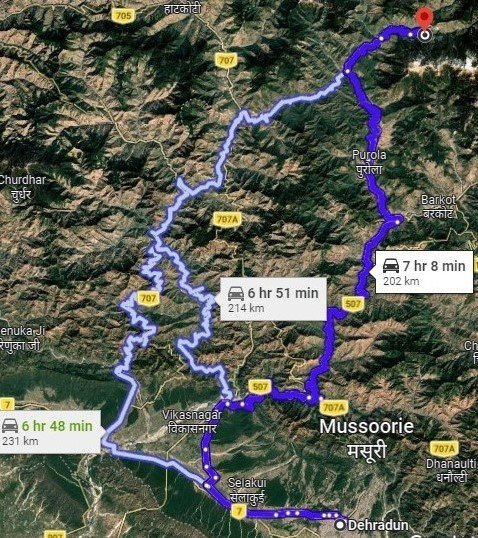
Pick-Up Information
- It is essential for everyone to arrive at Prince Chowk, Dehradun (06:00 am).
- Once you have reached Dehradun, WTM will manage the rest of your travel arrangements, if you have opted for WTM’s pick-up service, you can select this option during the booking process by adding it as an add-on.
Options to Reach Dehradun
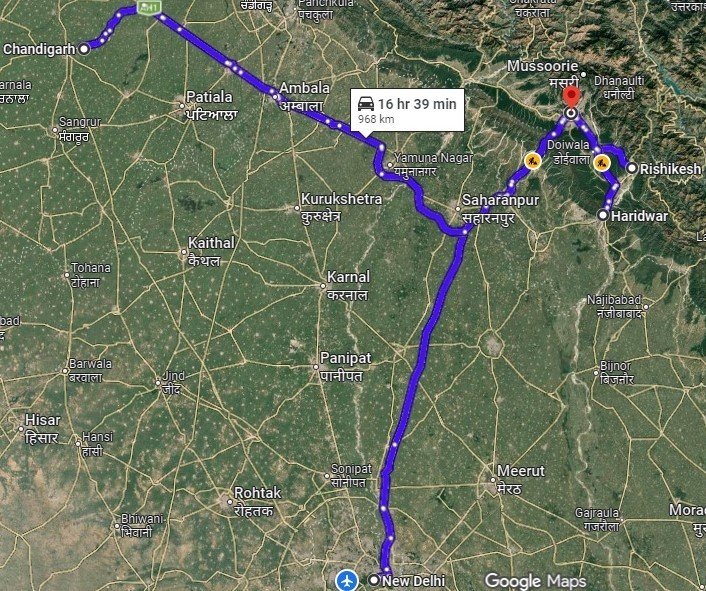
First, you can arrive at Delhi, Dehradun Airport or Chandigarh. The journey from these locations to Dehradun is explained below.
- 1. Take an overnight train from Delhi to Dehradun.
- 2. Take a bus to Dehradun ISBT from Delhi Kashmiri gate ISBT or Chandigarh Sector 17 Bus stand, and then take local transport to the pickup point (Prince Chowk).
- Delhi to Dehradun - 250km | 6hr.
- Chandigarh to Dehradun - 220km | 5hr
- The distance from the Dehradun Bus Stand (ISBT) to the Railway Station is 6 km, without traffic, it will take 15 minutes.
- ( We always recommend to go for the govt. Buses over the private ones outside the bus station as based on the experience we have found that there are very high chances of delay involved with private buses. Also, govt. Buses are always more reliable. Whichever bus you choose, just make sure to reach Dehradun at least by 05:30 am positively. )
- 3. Take a flight to Dehradun airport (Jolly Grant Airport), then from the Airport to Prince Chowk, Dehradun Distance is 30km and it will take around 1 hr( if coming by flight then reach one day early).
Drop-Off Information
- The designated drop-off point is Prince Chowk, Dehradun.
- Arrive in Prince Chowk by 6:30 to 7:30 pm.
- Please consider planning your subsequent travel arrangements after 9:00 pm.
- The distance from the Railway Station to Dehradun Bus Stand (ISBT) is 6 km, it will take approx 25 minutes.
- The distance from Railway Station to Dehradun Airport is 30km, it will take approx 1hr.
- It's highly advisable to keep a buffer day in your travel plan. If the buffer day is not needed, it can be used to explore Dehradun/Mussoorie/Rishikesh.
- ( If you prefer to travel independently to Base camp and don't want to take WTM's pick-up service, you can either take a government bus or book a private cab from Dehradun.)
Cost Terms
1. Accommodation (as per the itinerary):
- Day 1 & Day 6: Guest house
- Day 2: Home stay
- Day 3,4,5: Camping.
2. Meals (Veg + Egg):
- Meals while on trek (Veg. + Egg).
- Day 1 Dinner to Day 6 Dinner as per itinerary.
3. Support:
- 1 Versatile base camp manager handles communication and deploys extra manpower in emergencies.
- 1 Mountaineering & First aid qualified professional trek Leader.
- 1 Experienced high-altitude chef.
- Local experienced guides (Number of guides depending on the group size).
- Enough support staff.
4. Trek equipment:
- Sleeping bag, Sleeping liners (if required), mattresses, and Utensils.
- 3 men all season trekker tent (twin sharing), Kitchen & Dining tent, Toilet tent.
- Camping stool, Walkie talkie.
- Ropes, Helmet, Ice axe, Harness, Gaiters & crampons (if required).
5. First aid:
- Medical kit, Stretcher, Oxygen cylinder, Blood pressure monitor, Oximeter, Stethoscope.
6. Mules/porters to carry the central luggage.
7. All necessary permits and entry fees, up to the amount charged for Indian.
8. Services from Sankri to Sankri.
9. Trek Completion Certificate.
- Insurance (For non-Indian Nationals, NRI or OCI card holders).
- Food during the transit.
- Any kind of personal expenses.
- Mule or porter to carry personal luggage.
- Emergency evacuation, hospitalization charge, etc.
- Any extra costs incurred due to extension/change of the itinerary due to natural calamities roadblocks, vehicle breakdown, etc. factors beyond our control
- Anything not specifically mentioned under the head Inclusion.
Trek Essentials
| Backpack with rain cover | (40 – 50 ltr) with comfortable shoulder straps |
| Day pack with rain cover | 20 – 30 ltr (If off-load opted) |
| Walking stick | Advisable (At least one) |
| Water Bottle / Hydration pack | 2 bottles of one liter each, People who use hydration pack 1 hydration pack and 1 bottle of one liter, Carry at least one thermos flask. |
| Small size tiffin/lunch box | 1 Nos |
| Snacks | Energy bars, dry fruits, electral/ors |
| Personal Medical Kit | Consult your doctor |
| T-Shirt (Synthetic quick dry) | 1 Full & 1 Half sleeves |
| Fleece T-shirt | 1 Nos |
| Fleece jacket | Not required |
| Windproof Jacket | 1 Nos |
| Down feather / Hollow jacket | 1 Nos |
| Thermal inner (Upper and Lower) | 1 Pair |
| Trek Pant (Synthetic quick dry) | 1 Nos |
| Fleece Pant | Not required |
| Waterproof gloves | Not required |
| Fleece / woollen gloves | 1 Pair |
| Poncho / waterproof Jacket and pant | 1 Nos |
| Head torch | 1 Nos. (Avoid Hand torch) |
| Sun cap | 1 Nos. (One that covers the neck as well) |
| Woolen cap | 1 Nos. |
| Balaclava | Not required |
| Buff / Neck-gaiters | 1 Nos. |
| Sunglasses | UV with dark side cover, People who wear spectacles – (A)- Use contact lenses | (B)- Photo chromatic glasses |
| Trekking shoes | 1 Pair (Water-resistant, high ankle with good grip) |
| Floaters / flip-flops | 1 Pair |
| Cotton socks | 6 pairs |
| Woollen socks | 1 pairs |
| Gaiters | 1 Pair (WTM provides when required) |
| Micro spikes | 1 Pair (WTM provides when required) |
| Sunscreen cream | 1 Nos |
| Moisturiser | 1 Nos |
| Chap-stick / Lip balm | 1 Nos |
| Toothbrush and toothpaste | 1 Nos |
| Toilet paper & Wipes | 1 Nos |
| Soap / hand sanitizers | 1 Nos |
| Antibacterial powder | 1 Nos |
| Quick dry towel | 1 Nos |
Gallery
Cancellation Terms
To request a cancellation, please email us at info@walkingthemountains.com using your registered email ID.
Cancellations prior to 28 days from the start of the Trip
Refund Options
- 5% deduction of trek fee
- 100% trek fee cash voucher for any trip until six months from the date of last trek.
- Transfer your trek (any trek, any date) to your friend
Cancellation between 27 days and 15 days to the start of the Trip
Refund Options
- 30% deduction of trek fee
- 100% trek fee cash voucher for same trip till one year
- 85% trek fee cash voucher for any trip till one year
Cancellation between 14 days and 8 days to the start of the Trip
Refund Options
- 50% deduction of trek fee
- 80% trek fee cash voucher for same trip till six months.
- Book the same trek, in the same season, with any other batch
- Transfer your trek (same trek, any date) to your friend
Cancellation less than 7 days to the start of the trek.
Refund Options
- No cash refund
- 20% trek fee cash voucher for the same trip until six months.
Itinerary and Modifications
- WTM reserves the right to modify, shorten, or cancel any part of the Trip due to transportation delays, weather, health emergencies, or other unforeseen circumstances including Force Majeure.
Cancellations and Refunds
- No refunds or vouchers, partial or otherwise, shall be provided for voluntary withdrawal, non-utilisation of services, or removal from the Trip.
- If WTM cancels the Trip before arrival at the designated pick-up point due to unforeseen circumstances or Force Majeure, the Participant may choose from:
- An alternate Trip/date.
- A credit voucher valid for one (1) year.
- Transfer to another Trip, with cost differences payable by the Participant.
- If the Trip is abandoned post-arrival at the designated pick-up point, no cash refund or voucher shall be issued. The Trek Again Policy may apply at WTM’s discretion.
- WTM shall not be liable for any associated travel costs such as flights, accommodation, or visa fees.
Force Majeure
- Events beyond its control including but not limited to earthquakes, landslides, strikes, curfews, war, pandemic, government restrictions, heavy rainfall or snowfall, windstorms, road blockages, trail disruption, or withdrawal of permits, WTM shall not be held liable for any cancellation, delay, or service modification caused by Force Majeure.
FAQ’S
The best time for the Har Ki dun trek, which is widely known as Valley of God, is from April to June and September to November. This is one of the famous treks of Grahwal Himalayas and can be done most of the time of the year which makes it a more special trek among trekkers. From April to June, trekkers can see the lively greenery, supin river flowing gently, traces of melting snow, and even flowers on the trees. From September to November, trekkers can enjoy the high altitude snow along with the views of Jaundar glacier.
The Har Ki Dun Trek requires a moderate level of physical fitness as the trek involves moderate ascents and descents, rocky terrain, and potential altitude sickness. It is recommended to undergo physical training and preparation before attempting the trek.
Yes, the Har Ki Dun Trek is generally considered safe, but with any trek, there are inherent risks involved. It is important to follow safety guidelines, such as staying hydrated, wearing appropriate clothing and footwear, and avoiding overexertion.
It is recommended to do the Har Ki Dun Trek with a certified guide or trekking agency for safety reasons, but it is possible to do it solo if you have previous trekking experience and the necessary equipment and permits.
The altitude sickness risk on the Har Ki Dun Trek is generally considered to be low to moderate. The highest point reached on the trek is approximately 12,000 feet (3,658 meters) at the Har Ki Dun Trek Valley. This altitude is relatively moderate and usually does not pose significant altitude-related challenges for most trekkers. However, individual susceptibility to altitude sickness can vary, and it's important to take necessary precautions such as acclimatizing properly, maintaining a gradual ascent, staying hydrated, and listening to your body for any signs of altitude sickness. It is always recommended to consult with a medical professional before undertaking any high-altitude trek.
Har Ki Dun trek in Uttarakhand is one of the most ancient treks in India and is a beautiful journey through a resplendent Himalayan valley. The trek is accessible in both summer and winter, offering fascinating views of the Swargarohini group of peaks. The Har Ki Dun valley features alpine meadows, pine forests, and a major catchment area for the Yamuna River System. The trek also includes historical attractions like the Duryodhana temple in Osla village which is renowned for its picturesque landscapes and rich cultural heritage.
The Har Ki Dun Trek covers a total distance of approximately 44 km, starting from Sankri.
The nearest ATM is located in Purola, which is en route to Sankri. Trekkers are advised to carry sufficient cash or withdraw cash from Dehradun as ATM facilities may be unreliable or limited.
Electricity is available at the guesthouse in Sankri, but there will be no electricity during the trek. Trekkers are advised to carry extra batteries and power banks for their electronic devices.
Accommodation includes guesthouse stays in Sankri and camping in tents during the trek. Tents are provided on a twin or triple-sharing basis, with sleeping bags and mats.
In case of emergencies, the trek leaders and guides are trained to handle various situations, including medical emergencies. Basic first aid kits are carried on the trek. We also carry oxygen cylinde and stretchers with us. The nearest medical facilities are in Sankri, and arrangements can be made for evacuation if necessary. It is crucial to follow the trek leader's instructions and ensure you have travel insurance that covers trekking activities.