
Bhrigu Lake Trek

Region
Himachal Pradesh

Duration
4 days

Max. Altitude
13700 ft.

Trek Distance
24 kms

Grade
Easy to Moderate
Fixed Departures
September - 2026
- 1 Sept - 4 Sept
- closed
- 6 Sept - 9 Sept
- closed
- 12 Sept - 15 Sept
- closed
- 17 Sept - 20 Sept
- closed
- 26 Sept - 29 Sept
- closed
May - 2027
- 1 May - 4 May
- Open
- 6 May - 9 May
- Open
- 11 May - 14 May
- Open
- 16 May - 19 May
- Open
- 22 May - 25 May
- Open
- 28 May - 31 May
- Open
June - 2027
- 5 Jun - 8 Jun
- Open
- 10 Jun - 13 Jun
- Open
- 15 Jun - 18 Jun
- Open
₹7,500
+5% GST / Person
Highlights
- Services from Gulaba to Gulaba.
- Pickup Location: Manali Bus Stand
- Drop Location (if transport opted ) : Manali Bus Stand
- Pickup : 12:00 PM | Drop : 06:30 PM–07:30 PM (weather/road dependent) Keep a buffer day and arrive a day early to avoid delays.
Add-ons
- Transport
- Rs 1700/- Per Person
- Offload
- Rs 1600/- Per Person
Add on information
- Insurance is mandatory.
- It is available for Indian citizens only.
- Non-Indians have to take insurance on their own.
- The cancellation policy will be implemented in accordance with the trek cancellation policy.
- Transportation from Manali to Gulaba & return is optional.
- Choose add-ons during booking. If missed, you can contact us to book the same.
- Book transportation at least 10 days before the trek.
- Cancellation 6 or more days before the start of the trip results in a 100% cash refund.
- Cancellation less than 4 days from the start of the trip results in a 50% cash refund.
- Cancellations made on the trip date are not eligible for a refund.
- Backpack offload is optional.
- Choose add-ons during booking. If missed, you can contact us to book the same.
- Book off-load at least 10 days before the trek.
- For offline bookings at the base camp, a variable convenience fee may apply. (It differs from trek to trek)
- Offload can't weigh more than 10kg. Offload should have a waterproof cover. Suitcases/trolleys will not be allowed.
- In the event that you choose to cancel your trek prior to the departure date, you will receive a full refund.
- Note : The bag weight should not exceed 10 kg.
Bhrigu Lake Trek Overview
- Trek Name : Bhrigu Lake Trek
- Days : 4
- Adventure : Trekking
- Base Camp : Gulaba
- Season : Spring | Summer | Monsoon | Autumn
- Months : April | May | June | July | August | September | October | November
- Country : India
- Altitude : 13700 FT
- Grade : Easy to Moderate
- Trail Type : Point to point trail | Camping at the same location upon returning.
- Food : Meals while on trek (Veg & Eggs)
- Location : Himachal Pradesh
- Distance : 24 km
- Rail Head : Chandigarh is the nearest rail head to the base camp
- Stay : Camping (Twin sharing)
- Airport: Bhuntar, which is 52 km away from Manali
Why is Bhrigu Lake a Must-Do Trek?
- One of the defining features of this trek is its stunning campsites, offering a surreal natural beauty during the day and a magical experience of sleeping under a starlit sky.
- The first thing that surprises you is the landscape. Its meadows are often compared to the famous grasslands of Europe, but what makes them truly special is their untouched Himalayan charm.
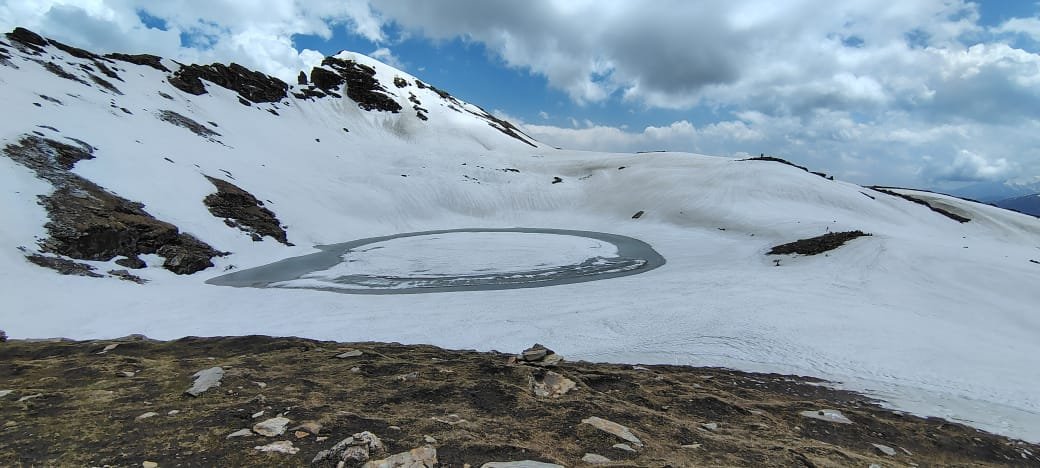
- Located at an altitude of 13,700 feet, Lake Bhrigu appears deep blue, emerald-green, or partially frozen depending on the season.
- According to the Hindu mythology, the lake holds deep spiritual significance as one of the revered sages, Maharishi Bhrigu, meditated here.
- You will enjoy the breathtaking bird’s-eye views of Manali and Solang Valley. The trek also offers an elevated vantage point, allowing you to admire stunning landscapes and majestic mountain ranges.
- As you travel along the route, you'll be treated to sweeping panoramic views of the magnificent Pir Panjal and Dhauladhar mountain ranges.
- Wildflowers are like icing on the cake – they appear to bloom in every direction. These low-growing perennial flowers look incredibly beautiful against the stunning backdrop of mighty peaks.
- This is the perfect trek for beginners due to its accessibility. Where many high-altitude treks require proper preparation, Bhrigu Lake offers spectacular beauty without demanding extreme technical skills.
- At sunrise and sunset, the sky above Bhrigu Lake becomes a breathtaking spectacle. The golden orange glow casts a stunning reflection on the pristine lake, which is mesmerizing to say the least.
- Being a relatively short and beginner-friendly trek, the Bhrigu Lake journey is perfectly suitable for families and friends who are looking for a peaceful adventure.
Major Attractions of the Bhrigu Lake Trek
The Bhrigu Lake trek is one of those extraordinary journeys that combine adventure, peace, spirituality, and breathtaking scenery in one unforgettable experience.
- Bhrigu Lake : The obvious main highlight of the trek is the enchanting Bhrigu Lake, a high-altitude glacial lake nestled in the embrace of the Himalayas. According to legends, Sage Bhrigu meditated beside this lake to seek deep spiritual liberation and connect with higher cosmic powers. This sacredness makes the lake a revered destination for many.
- Rola Kholi Campsite : The Rola Kholi campsite is probably the most scenic and beautiful camping location on the trek. What makes it beautiful isn't just one feature—it's the way mountains, meadows, streams, and sky come together in a vast landscape. During the summer and the monsoon season, this place turns vibrant green and is wonderfully dotted with wildflowers
- Sweeping Himalayan Vistas : Throughout the trek, you’ll be greeted with breathtaking panoramic views of several prominent Himalayan ranges. The route offers sweeping vistas of the Pir Panjal Range and Dhauladhar Range, along with numerous snow-clad peaks. Not only that, the changing colors of the mountains during sunrise and sunset create unforgettable visual spectacles. These panoramic visuals are among the most photographed segments of the trek.
- Gulaba Forests : The initial section of the trek takes you through forests dominated by oak, cedar, pine, and deodar trees. Walking through this stretch is refreshing, especially during the morning hours when sunlight filters through the canopy. In the monsoon, this section is at its greenest, while the mist in the middle of the forest provides an otherworldly vibe.
- Manali and Sonalg Valley : These stunning vantage points offer a unique bird’s-eye perspective of the landscape below, revealing winding roads, dense forests, flowing rivers, and picturesque villages in the lap of majestic Himalayan mountains. The striking contrast between the vibrant valleys and the serene high-altitude surroundings makes these particular viewpoints one of the most memorable highlights of the trek.
Eligiblity for Bhrigu Lake Trek
- Age Requirement : Minimum 9 years
- First-timers are welcome, though prior trekking experience is preferred. Good fitness is a must.
- Fitness Criteria :
- The Trekker should have sufficient stamina to cover 5 km of distance by jogging in 45 minutes without stress.
- If the trekker prefers cycling he/ she should be able to cycle 10 km of distance in 30 minutes.
- If the trekker wants to carry a backpack then he/she should be able to carry a 10-12 kg backpack. If opt Off-load option then the trekker should be able to carry a 3-5 kg backpack.
- If a trekker's BMI is more or less than the normal range (18-29), please consult our Trek Coordinator before booking.
Bhrigu Lake Trek Itinerary
01. Drive from Manali to Gulaba and Trek to Gulaba Meadows
- Altitude:
- Manali: 2,050 m / 6,750 ft
- Gulaba: 3,000 m / 9,900 ft
- Gulaba Meadows: 3,200 m / 10,400 ft
- Drive Distance: 21 km | 1–2 hrs
- Trek Distance: 500 m | 20 minutes
- Altitude Gain: 3,150 feet and 500 feet more
- Difficulty: Easy to Moderate
- Landscape Type: Forest section and meadow walk
02. Trek from Gulaba to Rola Kholi
- Altitude:
- Gulaba: 3,000 m / 9,900 ft
- Rola Kholi: 3,800 m / 12,500 ft
- Trek Distance: 6 km | 4 hrs
- Altitude Gain: 2,100 feet
- Difficulty: Easy to Moderate
- Landscape Type: Meadow walk
03. Trek from Rola Kholi to Bhrigu Lake and back to Rola Kholi
- Altitude:
- Rola Kholi: 3,800 m / 12,500 ft
- Bhrigu Lake: 4,200 m / 13,700 ft
- Trek Distance: 10 km | 8 hrs (Both Sides)
- Altitude Gain: 1,200 feet and back to the same elevation.
- Difficulty: Moderate to Difficult
- Landscape Type: Steep climb, rocky section, loose soil
04. Trek from Rola Kholi to Gulaba & drive to Manali
- Altitude:
- Rola Kholi: 3,800 m / 12,500 ft
- Gulaba: 3,000 m / 9,900 ft
- Trek Distance: 6–7 km | 3 hrs
- Drive Distance (Gulaba to Manali): 21 km | 1–2 hrs
- Altitude Loss: 2,600 feet first, and another loss of 3,150 feet.
- Difficulty: Easy to Moderate
- Landscape Type: Descent along the meadows, and forest section.
Note:
- Keep a buffer day in your travel plan.
- If buffer day is not used in the travel then it can be used to Explore Manali.
- Distance, Altitude, and Trekking hours are approximate and rounded off.
- Keep the original and copy of ID proof handy.
- Come one day early if planning to come by flight.
Drive from Manali to Gulaba and Trek to Gulaba Meadows
- Altitude :
- Manali: 2,050 m / 6,750 ft
- Gulaba: 3,000 m / 9,900 ft
- Gulaba Meadows: 3,200 m / 10,400 ft
- Drive Distance : 21 km | 1–2 hrs
- Trek Distance : 500 m | 20 minutes
- Altitude Gain : 3,150 feet and 500 feet more
- Difficulty : Easy to Moderate
- Landscape Type : Forest section and meadow walk
The journey to Bhrigu Lake begins at Manali, one of the most celebrated hill stations of India. You’ll embark on a scenic drive to Gulaba, which is located approximately 21 km away on the route to Rohtang Pass. Along the banks of the Beas River, the drive roughly takes 2 hours, offering breathtaking views of towering mountains, dense forests, beautiful villages, and winding valleys. Gulaba is the starting point of the trek, and this is where you’ll step on the path to pristine wilderness.
As you proceed from Gulaba, you’ll follow the trail that goes through an oak, cedar, and pine forest. After crossing the tree line, you enter the stunning Gulaba meadows. This place appears almost immediately after a 20-minute walk. What makes these grasslands special is that they are always adorned with captivating seasonal wildflowers that seem to be scattered everywhere. You’ll reach the Gulaba campsite in the evening and be provided with tea and snacks right away.
Trek from Gulaba to Rola Kholi
- Altitude :
- Gulaba : 3,000 m / 9,900 ft
- Rola Kholi : 3,800 m / 12,500 ft
- Trek Distance : 6 km | 4 hrs
- Altitude Gain : 2,100 feet
- Difficulty : Easy to Moderate
- Landscape Type : Meadow walk
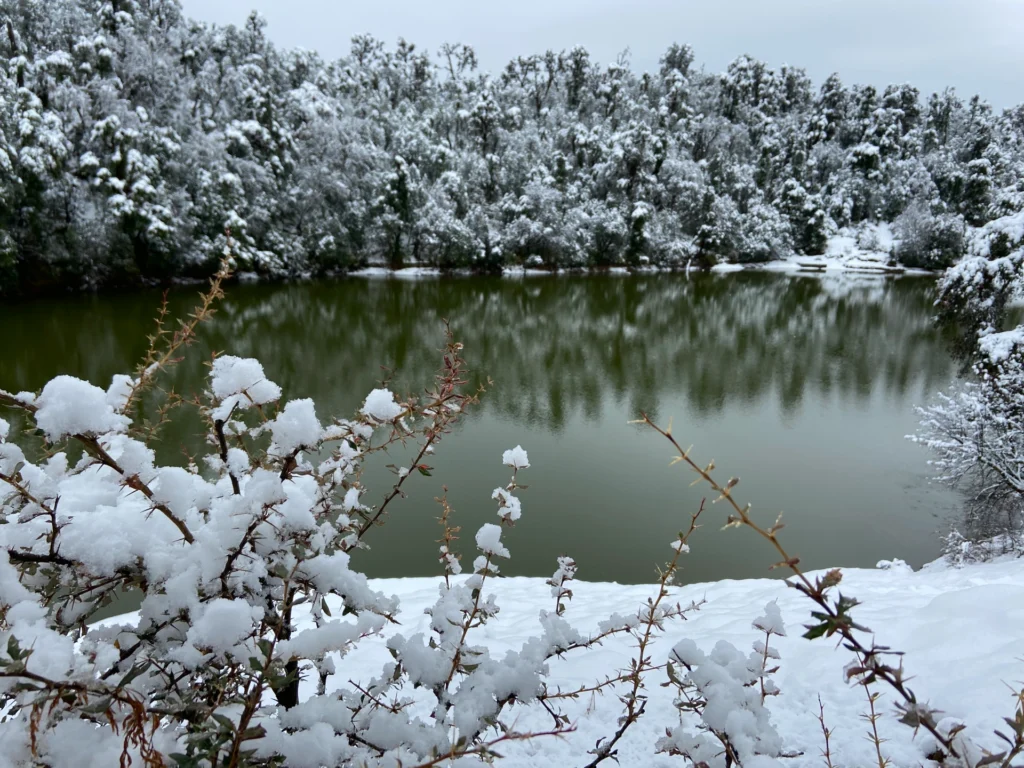
Second day will start with a refreshing morning tea and a wonderful mountain sunrise. The breakfast amidst the tranquil surroundings of the Gulaba meadows is a one-of-a-kind experience altogether. After breakfast, you’ll trek to Rola Kholi, an absolutely astonishing high-altitude campsite that serves as the base of the summit climb. Covering approximately 6 kilometres, the trail involves a steady ascent and takes around four to five hours to complete.
Leaving the campsite behind, you’ll still be walking through the meadows. For nearly half of the day’s trek, a forested stretch will follow you on your right side. That said, these vast stretches of alpine grasslands appear to extend endlessly beyond the horizon. Besides, the true grandeur is in the peaks. The giants like Pir Panjal range and the Dhauladhar range rise beyond the meadows. On a clear day, the Hanuman Tibba Peak appears standing steadfastly against the deep blue sky. This dramatic contrast is what makes this trek even more special.
Depending on the season, you may encounter grazing sheep, horses, and shepherd camps along the trail. The landscape becomes increasingly stunning as rocky patches and ridgelines emerge against the backdrop of towering Himalayan summits. Heading south, the landscape opens up to reveal the imposing presence of Mt. Hanuman Tibba, standing tall above the rolling meadows. Just below, the Seven Sisters peaks stand elegantly in the Beas Kund Valley.
Trek from Rola Kholi to Bhrigu Lake and back to Rola Kholi
- Altitude :
- Rola Kholi : 3,800 m / 12,500 ft
- Bhrigu Lake : 4,200 m / 13,700 ft
- Trek Distance : 10 km | 8 hrs (Both Sides)
- Altitude Gain : 1,200 feet and back to the same elevation.
- Difficulty : Moderate to Difficult
- Landscape Type : Steep climb, rocky section, loose soil
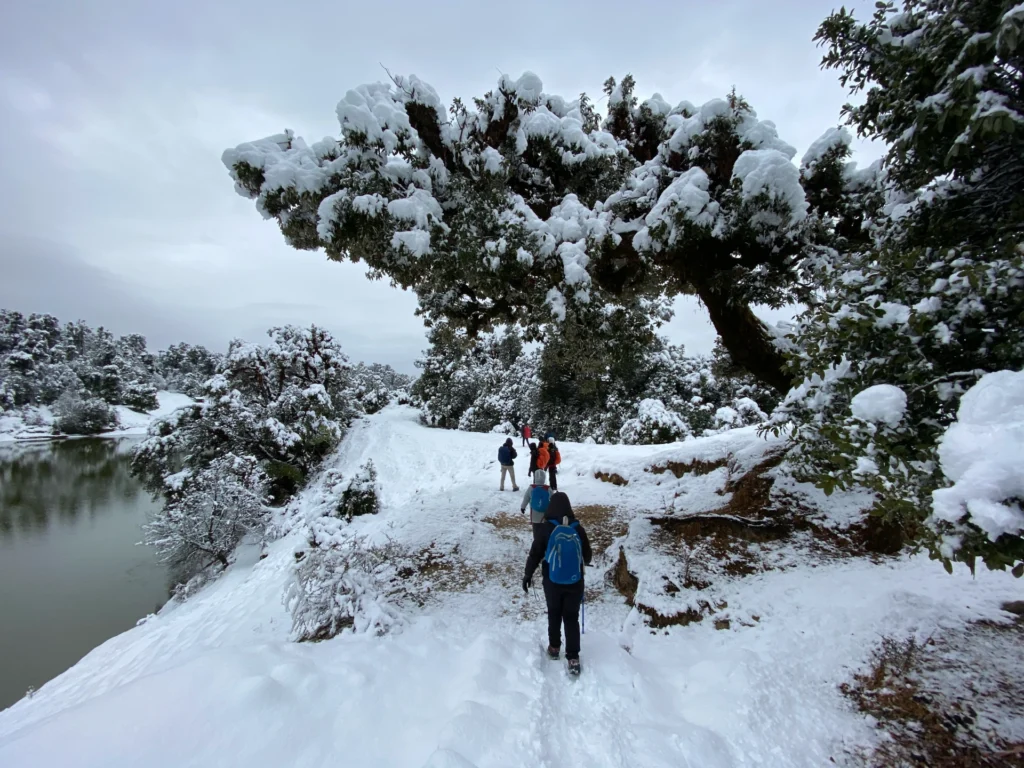
Day 3 is the highlight of the entire journey as you’ll make your way to the sacred and spectacular Bhrigu Lake. You’ll wake up early and have an early breakfast. Starting the trek at this hour is crucial to take advantage of favorable weather conditions and clear mountain views. You’ll embark on a challenging trek of approximately 10 km from Rola Kholi toward the Bhrigu Lake, which sits at an altitude of 4,200 m (13,700ft).
The trail begins with a gradual climb across grassy slopes before winding along high ridgelines. These narrow grassy spines reveal breathtaking panoramic views of the surrounding Himalayas. As the ascent continues, the landscape becomes increasingly rugged and the mountain air noticeably thinner. Yet every step brings more attractions—sweeping vistas of snow-clad peaks, deep glacial valleys, and endless stretches of alpine meadows unfolding in every direction.
Until June, the trail remains largely blanketed in snow, creating a pristine alpine landscape. As July arrives, the snow gradually melts from the lower slopes. This is the time when you can witness earthy brown and vibrant green terrain. During the early monsoon months of mid-July to Mid-August, the valley turns lush green due to the rains.
Perched between two ridges, the lake comes into view only after crossing the final stretch of the trek, which involves navigating a section of large boulders. We recommend walking carefully and following your trek leader’s instructions throughout this section, as the rocks can be slippery and require extra caution. The first glimpse of the lake is absolutely attractive, making the effort worthwhile.
The lake is often shrouded in fog. So, to navigate properly, it is important to stay with the group and follow the guidance of our trek leaders. The mighty Pir Panjal and Dhauladhar ranges stretch across the horizon, while prominent peaks such as Deo Tibba, Indrasen, and Hanuman Tibba stand right before you.
Trek from Rola Kholi to Gulaba & drive to Manali
- Altitude :
- Rola Kholi : 3,800 m / 12,500 ft
- Gulaba : 3,000 m / 9,900 ft
- Trek Distance : 6-7 km | 3 hrs
- Drive Distance (Gulaba to Manali) : 21 km | 1-2 hrs
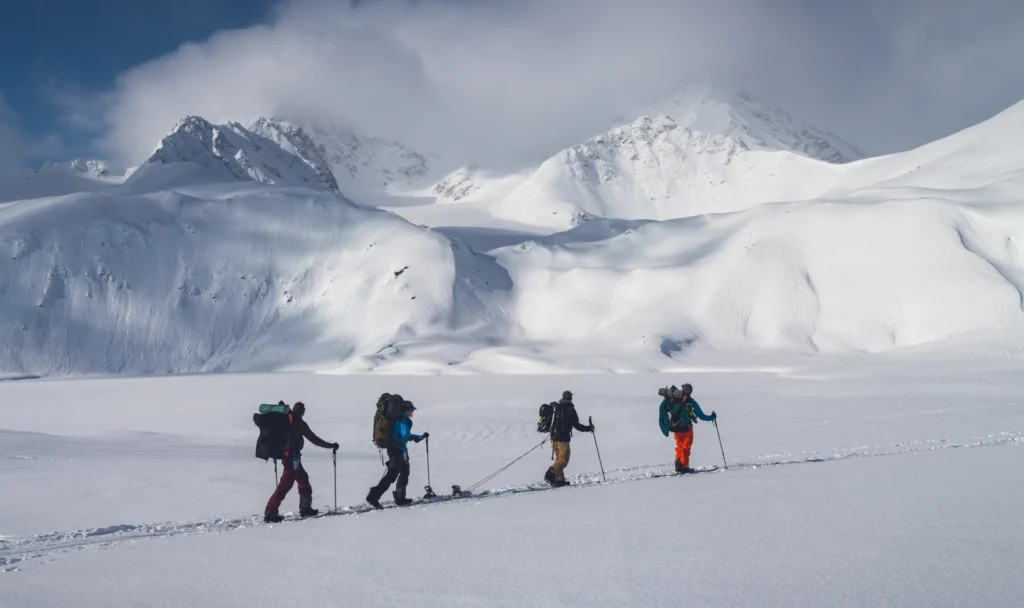
Today is the last day of the trek that begins with a fine morning at Rola Kholi. After breakfast, you’ll start your descent toward Gulaba. You’ll retrace the route through the meadows, allowing you to enjoy the scenery from a different perspective. The trek distance is approximately 7 km, but the route being downhill, is comparatively easier. It will take 2 to 3 hours to reach Gulaba.
Once again, breathtaking views of the Kullu valley appear while descending through this route. These green landscapes, vibrant valleys, and distant mountain peaks provide a fitting conclusion to the journey. Reaching Gulaba marks the end of the trekking phase. Here, your vehicle will be waiting, which will drive you back to Manali.
Health Awareness
- Pulse rate at rest must be in between (60 to 100 beats per minute).
- Blood Pressure Reading must be in between (DIASTOLIC 75 – 85, SYSTOLIC 100 - 130 mm Hg).
- Respiratory rate at rest must be in between (12 to 20 breaths per minute).
- Should not have Liver and kidney issues.
- Should not have Diabetes Mellitus, Bronchial Asthma, Heart problems, Hypertension, etc.
- No pacemaker implant.
- People with Sinus issues, Epilepsy please contact to trek coordinator before booking the trek.
- If your BMI is not normal, Please contact our Trek coordinator before Trek booking.
Important Links
How to Reach:
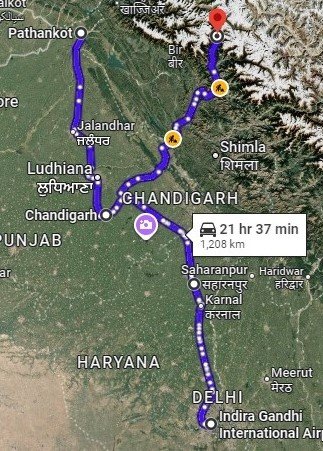
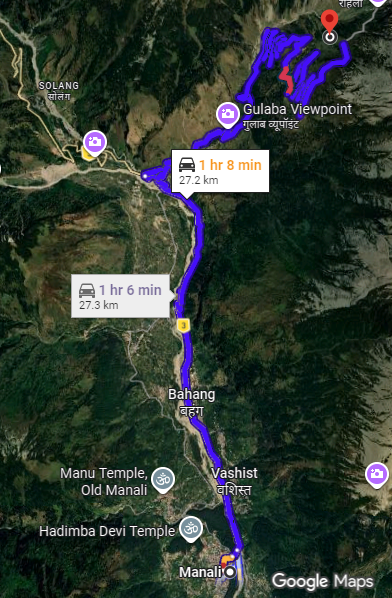
Arrival by Bus
If you are taking a bus for Manali, then try to take the bus from Chandigarh, as it’s more convenient.
- To take the bus from Chandigarh, first reach the Inter-State Bus Terminus (ISBT) in Sector 43. From there, you can take a direct overnight bus to Manali, which will take approx. 6 - 10 hours to reach.
- According to the HRTC schedule, the first bus for Manali departs at 3:40 AM and the last one runs until 9:00 PM. Although, we highly recommend that you visit the HRTC website to check the bus schedule according to your travel plan.
- From Delhi, reach the ISBT Kashmiri Gate and take a direct bus to Manali, which takes around 14 hours to reach. A pro tip: numerous buses leave for Manali throughout the day, but departures peak between 6:00 PM and 11:55 PM.
(We highly recommend choosing government buses over private ones; based on our experience, private buses are more prone to delays.)Government buses are generally more reliable. Whichever option you choose, ensure you reach Manali by 10:00 AM on the pickup day.
Arrival by Air
For all the international trekkers opting for flight, it is the most preferred option to reach Bhuntar Airport (Kullu-Manali Airport).
| Location | Travelling Guide / Travel Instruction |
| Delhi | The Indira Gandhi International Airport, Delhi, is the prime airport that offers a direct flight to Bhuntar Airport. As for the airlines, the major airline that offers a direct flight to Manali is the “Alliance Air”. Other than that Air India, IndiGo, and others also operate on this route. From Delhi Airport, you can also opt to travel by bus as mentioned above. |
| Chandigarh | Since Chandigarh is a better option and it takes less time from here then you can book a connecting flight to Chandigarh via Delhi/Hyd/Pune/Mumbai and then book a cab or take a bus to reach Manali. The distance between the Chandigarh Airport and Chandigarh Bus Stand is 14 km. |
- Note: The flights to Bhuntar are highly dependent on the weather conditions and seasonality. So, we firmly advise you to arrive a day or two before your trek.
- After arriving at the Bhuntar Airport (Kullu-Manali Airport), you can either take a bus or book a cab to reach the pickup point.
Arrival by Train
- Arrival by Train: There is no railway station in Manali, so there’s no direct train that goes there. The nearest major railway stations are Joginder Nagar (145 – 160 km), Chandigarh (260 – 270 km), Ambala Cantt (320 – 330 km), and Pathankot (390 – 400 km).
- From a connectivity point of view, Chandigarh railway station is ideal for reaching Manali. To know more about the train schedule, you can visit the IRCTC website. From Chandigarh Railway Station you need to travel to ISBT Sector 43 (approximately 10–11 km), and then you can take an overnight bus to Manali.
- Note: If you prefer to travel on your own, you can choose between a government bus or a private cab. Your trek coordinator will assist you with all the necessary details and guidance for arranging the bus or cab booking.
Pick Up Information
- If you choose WTM’s pickup service, WTM will manage the rest of your travel arrangements once you have reached the assembly point of the trek in Manali. You can select this option during the booking process by adding it as an add-on.
- To reach Hampta Pass, you have to first travel to Manali, which is the main base camp. Before that, you can arrive at Chandigarh, Delhi, Pathankot, or Bhuntar airport.
- Please Note : The most ideal place to reach Manali is from Chandigarh.
Drop-Off Information
- The designated drop-off point is the Manali Govt. bus stand around 6:30 pm to 7:30 pm.
- Please consider planning your subsequent travel arrangements after 8:00 pm.
- It's highly advisable to keep a buffer day in your travel plan. If the buffer day is not needed, it can be used to explore Manali.
- WTM offers comfortable transportation through Tempo Traveler, Bolero, or equivalent vehicles. If you wish to upgrade your mode of transportation, please contact your trek coordinator for further assistance.
Cost Terms
1. Accommodation (as per the itinerary)
- Camping during the trek.
2. Meals (Veg + Egg)
- All meals while on trek.
- Day 1 Lunch to Day 4 Breakfast.
3. Support
- 1 Versatile base camp manager: handles communication and deploys extra manpower in emergencies.
- 1 Mountaineering & First aid qualified professional trek leader.
- 1 Experienced high altitude chef.
- Local experienced guides (Number of guides depending on the group size).
- Enough support staff.
4. Trek Equipment
- Sleeping bag, Sleeping liners (if required), Mattress, Utensils.
- 3 men all season trekker tent (twin sharing), Kitchen & Dining tent, Toilet tent.
- Camping stool, Walkie talkie.
- Ropes, Helmet, Ice axe, Harness, Gaiters & Crampon (if required).
5. First Aid
- Medical kit, Stretcher, Oxygen cylinder, Blood pressure monitor, Oximeter, Stethoscope.
6. Cloakroom service at base camp.
7. Mules/porters to carry the central luggage.
8. All necessary permits and entry fees, Upto the amount charged for Indian.
9. Services from Gulaba to Gulaba.
10. Trek completion certificate.
- Insurance (For non-Indian Nationals, NRI or OCI card holders).
- Food during the transit.
- Any kind of personal expenses.
- Mule or porter to carry personal luggage.
- Emergency evacuation, hospitalization charge, etc.
- Any extra costs incurred due to extension/change of the itinerary due to natural calamities roadblocks, vehicle breakdown, etc. factors beyond our control
- Transportation - Manali to Gulaba & Return.
- Anything not specifically mentioned under the head Inclusion.
Trek Essentials
| Backpack with rain cover | (40 – 50 ltr) with comfortable shoulder straps |
| Day pack with rain cover | 20 – 30 ltr (If off-load opted) |
| Walking stick | Advisable (At least one) |
| Water Bottle / Hydration pack | 2 bottles of one liter each, People who use hydration pack 1 hydration pack and 1 bottle of one liter, Carry at least one thermos flask. |
| Small size tiffin/lunch box | 1 Nos |
| Snacks | Energy bars, dry fruits, electral/ors |
| Personal Medical Kit | Consult your doctor |
| T-Shirt (Synthetic quick dry) | 1 Full & 1 Half sleeves |
| Fleece T-shirt | 1 Nos |
| Fleece jacket | Not required |
| Windproof Jacket | 1 Nos |
| Down feather / Hollow jacket | 1 Nos |
| Thermal inner (Upper and Lower) | 1 Pair |
| Trek Pant (Synthetic quick dry) | 1 Nos |
| Fleece Pant | Not required |
| Waterproof gloves | Not required |
| Fleece / woollen gloves | 1 Pair |
| Poncho / waterproof Jacket and pant | 1 Nos |
| Head torch | 1 Nos. (Avoid Hand torch) |
| Sun cap | 1 Nos. (One that covers the neck as well) |
| Woolen cap | 1 Nos. |
| Balaclava | Not required |
| Buff / Neck-gaiters | 1 Nos. |
| Sunglasses | UV with dark side cover, People who wear spectacles – (A)- Use contact lenses | (B)- Photo chromatic glasses |
| Trekking shoes | 1 Pair (Water-resistant, high ankle with good grip) |
| Floaters / flip-flops | 1 Pair |
| Cotton socks | 6 pairs |
| Woollen socks | 1 pairs |
| Gaiters | 1 Pair (WTM provides when required) |
| Micro spikes | 1 Pair (WTM provides when required) |
| Sunscreen cream | 1 Nos |
| Moisturiser | 1 Nos |
| Chap-stick / Lip balm | 1 Nos |
| Toothbrush and toothpaste | 1 Nos |
| Toilet paper & Wipes | 1 Nos |
| Soap / hand sanitizers | 1 Nos |
| Antibacterial powder | 1 Nos |
| Quick dry towel | 1 Nos |
Gallery
Cancellation Terms
To request a cancellation, please email us at info@walkingthemountains.com using your registered email ID.
Cancellations prior to 28 days from the start of the Trip
Refund Options
- 5% deduction of trek fee
- 100% trek fee cash voucher for any trip until six months from the date of last trek.
- Transfer your trek (any trek, any date) to your friend
Cancellation between 27 days and 15 days to the start of the Trip
Refund Options
- 30% deduction of trek fee
- 100% trek fee cash voucher for same trip till one year
- 85% trek fee cash voucher for any trip till one year
Cancellation between 14 days and 8 days to the start of the Trip
Refund Options
- 50% deduction of trek fee
- 80% trek fee cash voucher for same trip till six months.
- Book the same trek, in the same season, with any other batch
- Transfer your trek (same trek, any date) to your friend
Cancellation less than 7 days to the start of the trek.
Refund Options
- No cash refund
- 20% trek fee cash voucher for the same trip until six months.
Itinerary and Modifications
- WTM reserves the right to modify, shorten, or cancel any part of the Trip due to transportation delays, weather, health emergencies, or other unforeseen circumstances including Force Majeure.
Cancellations and Refunds
- No refunds or vouchers, partial or otherwise, shall be provided for voluntary withdrawal, non-utilisation of services, or removal from the Trip.
- If WTM cancels the Trip before arrival at the designated pick-up point due to unforeseen circumstances or Force Majeure, the Participant may choose from:
- An alternate Trip/date.
- A credit voucher valid for one (1) year.
- Transfer to another Trip, with cost differences payable by the Participant.
- If the Trip is abandoned post-arrival at the designated pick-up point, no cash refund or voucher shall be issued. The Trek Again Policy may apply at WTM’s discretion.
- WTM shall not be liable for any associated travel costs such as flights, accommodation, or visa fees.
Force Majeure
- Events beyond its control including but not limited to earthquakes, landslides, strikes, curfews, war, pandemic, government restrictions, heavy rainfall or snowfall, windstorms, road blockages, trail disruption, or withdrawal of permits, WTM shall not be held liable for any cancellation, delay, or service modification caused by Force Majeure.
FAQ’S
The best time to do the Bhrigu Lake Trek is during the months of May and June. At this time, the trail is at its most beautiful, with pleasant weather and ideal walking conditions. The snow is just the right amount, not too much to make the trek difficult, and not too little to miss out on the charm of snow-covered landscapes. You can enjoy clear views of the surrounding mountains, fresh green meadows, and patches of snow along the way, especially near the lake.
During the Bhrigu Lake Trek, trekkers stay in campsites at different points along the trail. Accommodation is provided in comfortable, weatherproof tents. Usually, twin-sharing tents are offered, where two trekkers share one tent. These campsites are set up in beautiful open meadows or clearings surrounded by mountains, giving you a true experience of staying in nature.
The Bhrigu Lake trek is famous for its sprawling and extending alpine meadows, panoramic Himalayan peaks, and a sacred lake that is named after the legendary sage Maharishi Bhrigu. What sets this trek apart is the opportunity to reach spectacular alpine landscapes above 4,000 meters in just a day's hike from the trailhead.
Yes, absolutely! This trek is recommended for beginners because it is short, trail is straightforward, and no technical skills are needed. That said, beginners are still recommended to prepare physically and respect the effects of altitude.
Yes. You can find a few streams and natural water sources along the trekking route. However, trekkers who are traveling solo are advised to carry water purification tablets or a portable filter to ensure safe drinking water throughout the journey.
Network coverage is generally available at:
- Manali
- Gulaba
Once you go higher on the trail, the network becomes weaker or disappears completely.
Yes, the rapid altitude gain on this trek can lead to mild symptoms of altitude sickness in some trekkers. Common symptoms include headaches, nausea, fatigue, and dizziness. While these effects are usually mild and temporary, proper acclimatization, adequate hydration, and a steady pace are essential to minimize the risk and ensure a safe trekking experience.