
Buran Ghati Trek

Region
Himachal Pradesh

Duration
7 days

Max. Altitude
15000 ft.

Trek Distance
37 kms

Grade
Moderate to difficult
Fixed Departures
October -2026
- 17 Oct - 23 Oct
- Open
May - 2027
- 8 May - 14 May
- Open
- 16 May - 22 May
- Open
- 24 May - 30 May
- Open
June - 2027
- 4 June - 10 June
- Open
- 12 June - 18 June
- Open
- 20 June - 26 June
- Open
₹17,000
+5% GST / Person
Highlights
- Services from Janglik to Barua village
- Pickup & Drop Location (if transport opted) Old Bus Stand, Shimla
- Pickup : 06:00 AM | Drop : 11:00 PM–01:00 AM (weather/road dependent) Keep a buffer day and arrive a day early to avoid delays.
Add-ons
- Transport
- Rs 2700/- Per Person
- Offload
- Rs 4500/- Per Person
Add on information
- Insurance is mandatory.
- It is available for Indian citizens only.
- Non-Indians have to take insurance on their own.
- The cancellation policy will be implemented in accordance with the trek cancellation policy.
- Transportation Shimla to Janglik & return from Barua village to Shimla is optional.
- Choose add-ons during booking. If missed, you can contact us to book the same.
- Book transportation at least 10 days before the trek.
- Cancellation 6 or more days before the start of the trip results in a 100% cash refund.
- Cancellation less than 4 days from the start of the trip results in a 50% cash refund.
- Cancellations made on the trip date are not eligible for a refund.
- Backpack offload is optional.
- Choose add-ons during booking. If missed, you can contact us to book the same.
- Book off-load at least 10 days before the trek.
- For offline bookings at the base camp, a variable convenience fee may apply. (It differs from trek to trek)
- Offload can't weigh more than 10kg. Offload should have a waterproof cover. Suitcases/trolleys will not be allowed.
- In the event that you choose to cancel your trek prior to the departure date, you will receive a full refund.
- Note : The bag weight should not exceed 10 kg.
Buran Ghati Trek Overview
- Trek Name : Buran Ghati Trek
- Days : 7
- Adventure : Trekking
- Base Camp : Janglik
- Season : Summer | Autumn
- Months : May | June | September | October
- Country : India
- Altitude : 15000 ft
- Grade : Moderate to Difficult
- Trail Type : Cross over trail | Start in one valley, traverse the pass, and ends in another valley.
- Food : Meals while on trek & at Homestay
- Location : Himachal Pradesh
- Distance : 37 km
- Rail Head : Kalka
- Stay : Homestay(Separate male & Female) & Camping
- Airport: Jubbarhatti Airport, which is 22 km away from Shimla
Why Buran Ghati Is A Must-Do Trek ?
- Buran Ghati Trek combines the best elements of various Himalayan trails, offering unparalleled scenic beauty throughout the journey.
- The trek takes you through forests of birch, maple, pine, and oak trees, providing a rich sensory experience.
- The trek includes technical sections, such as crossing the challenging Buran Ghati Pass, which demands good maneuvering skills.
- Visit the sacred Chandranahan Lake, believed to have emanated by the Gods, offering stunning alpine scenery.
- Explore the beautiful Dayara Meadows, a scenic stretch with grazing horses and a backdrop of snow-covered mountains.
- Pass through ancient villages, Janglik and Barua, showcasing Himalayan culture and architecture.
- Encounter the challenging Buran Pass, which transforms into a wall of ice until June, providing a rappelling opportunity.
- Experience the breathtaking Litham campsite, nestled in the confluence of two valleys with stunning waterfalls.
- Enjoy panoramic views of the majestic Dhauladhar Range, one of the lower Himalayan mountain chains.
- Witness remote peaks popping above each other, creating a spectacular visual treat.
- Buran Ghati offers a comprehensive trekking adventure, encompassing cultural richness, thrilling challenges, and diverse landscapes.
Major Attractions of Buran Ghati Trek:
- Beautiful Dayara Meadows : This is one of the best parts of the trek and also the most scenic stretch. The Dayara Meadows come into view as you climb uphill from the village of Janglik and cross a dense coniferous. On one side of the meadow is a grassy stretch that climbs up the mountain and the other side simply drops down to the canyon below. On the meadows, you may observe the horses galloping or grazing the pastures, a beautiful sight to behold.
- The Villages : Both villages Janglik and Barua are two major villages that we will pass on our trail. Janglik and Barua are both ancient Himalayan Villages that give you an understanding of the Himalayan culture. Pay close attention to the architecture, typical to the mountain villages. While crossing Barua, you will also see many fruit orchards as well.
- Buran Pass And Snow wall : is a challenging trek that takes you up to an altitude of 15,000 ft. Until June, the pass itself becomes a wall of ice, giving you an incredible rappelling opportunity. It is because of this, that Buran Ghati is becoming more and more popular among trekkers.
- Chandranahan Lake : Chandranahan Lake is yet another attraction of the trek. The mystical glacial lake is coveted by the locals. The lake remains frozen almost all year round and sitting here you can enjoy the serenity of the atmosphere and appreciate the visual treat
- Litham Campsite : Litham campsite is one of the most scenic campsites along your route. It lies in the confluence of two valleys and you can simply sit here, getting mesmerized by the view. One of the most stunning views in the Litham campsite is the gorgeous waterfalls cascading down from the Chandranahan snout, offering an impressive sight.
- Forest Cover : Along your trek, you will cross dense coniferous forest covers that have a charm of their own. Walking through birch, maple, pine and Oak trees as the birds chirp and the sounds of nature make their melody, your senses will be soothed completely.
Eligiblity for Buran Ghati Trek
- Age Requirement : Minimum 14 years
- First-timers are welcome, though prior trekking experience is preferred. Good fitness is a must.
- Fitness Criteria :
- The Trekker should have sufficient stamina to cover 5 km of distance by jogging in 30 minutes without stress or 10 km of distance in 70 minutes without stress
- If the trekker prefers cycling he/ she should be able to cycle 18 km of distance in 50 minutes.
- If the trekker wants to carry a backpack then he/she should be able to carry a 10-12 kg backpack. If opt Off-load option then the trekker should be able to carry 3-5 kg backpack.
- If a trekker's BMI is more or less than the normal range (18-27), please consult our Trek Coordinator before booking.
Buran Ghati Trek Itinerary
01. Shimla to Janglik
- Altitude: 2,800 m/ 9,200 ft.
- Drive Distance: 160 km | 9-10 hr.
02. Janglik to Dayara Thatch
- Altitude: 3,400 m/ 11,150 ft.
- Trek Distance: 6-7 km | 5-6 hr.
03. Dayara Thatch to Litham
- Altitude: 3,600 m/ 11,800 ft.
- Trek Distance: 4-5 km | 3-4 hrs.
04. Acclimatization day, visit to Chandranahan Lake
- Altitude: 4,023 m/ 13,200 ft.
- Trek Distance: 6 km Both side | 6-7 hr.
05. Litham to Nalabansh
- Altitude: 4,000 m/ 13,100 ft.
- Trek Distance: 4-5 km | 4-5 hrs.
06. Nalabansh to Munirang via Buran Ghati Pass
- Munirang Campsite Altitude: 3,400 m/ 11,100 ft.
- Buran Ghatti Pass: 4,550 m/ 15,000 ft.
- Trek Distance: 7-8 km 8-9 hrs
07. Munirang to Barua village & Drive to Shimla
- Altitude: 2,300 m/ 7,700 ft.
- Trek Distance: 5-6 km | 2-3 hr.
- Drive Distance: 230 km | 7-8 hrs
Note:
- Keep a buffer day in your travel plan.
- If buffer day is not used in the travel then it can be used to Explore Shimla.
- Distance, Altitude, and Trekking hours are approximate and rounded off.
- Keep the original and copy of ID proof handy.
- Come one day early if planning to come by flight.
Shimla to Janglik
- Altitude :- 2,800 m/ 9,200 ft.
- Drive Distance : 160 km |9-10 hr.
- Pick-up :- Shimla Old Bus Stand at 6.00 am.
- Phone Network :- Rohru.
- Breakfast and lunch excluded, dinner included.
- Shimla - Rohru : 115 Km, Rohru to Chirgaon: 15 km, Chirgaon to Tangdu: 20 km, Tangdu to Janglik: 10km.
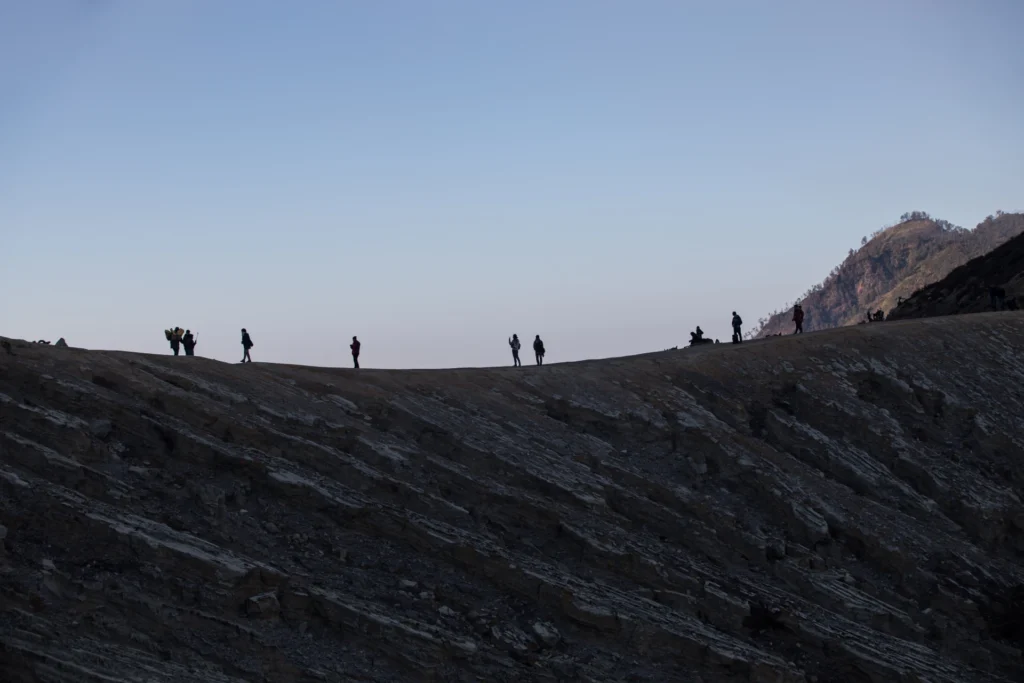
Shimla is our meeting point for the Buran Ghati trek, and it is at a distance of approximately 160 km from Janglik. From Shimla we will drive past Rohru in a scenic drive, Pabbar River flowing alongside the route. Driving past many quaint Himalayan hamlets, witnessing Himalayan culture and architecture, we will reach the pine covers in Tangdu and further past, we will arrive at Chirgaon. From here, it is mostly a dirt track but the journey is not very long.
Transportation to Janglik will be arranged at the pickup point in Shimla and we will drive to the closest roadhead to Janglik. We will have our lunch at Chirgaon. Also, keep in mind that the last ATM point is at Rohru, so if you want to withdraw cash, you need to do it from here. Also, the mobile coverage is available till Rohru, after that there is no mobile network. After reaching Janglik, we will check in at a local guest house or sleep in the campsite. Hot Dinner will be provided at the campsite/guesthouse. In case of bad weather road conditions turn bad so we might take a short hike of approx. 1.5 Km to reach base camp Janglik from Tangdu.
Janglik to Dayara Thatch
- Altitude : 3,400 m/ 11,150 ft.
- Altitude Gain : 600 m/ 1,950 ft.
- Trek Distance : 6-7 km | 5-6 hr.
- Grade : Moderate ascent.
- Water sources available on the way.
- Lunch and snacks are offered at the campsite.
- You will cross a few shepherd's hut on the way.
- Trek through pine, Oak, deodar forestshuts and meadows.
- In the evening climb some hillocks for better acclimatization.
- Stay in a tent (twin sharing).
Waking up to a beautiful valley view at Janglik, we will have a delicious breakfast with warm tea before we begin our journey ahead. Today is the most scenic day of the trek as you climb uphill, all the way to the Dayara Meadows. While it is a beautiful climb from Janglik to Dayara Thatch, with many picturesque vistas but you also gain altitude very rapidly.
We will ascend until we arrive at a forest cover of Oak and Pine. After walking for about 30 minutes through the forest cover, you will gradually begin to descend through the forest. As you come out of Janglik, you will see beautiful wheat fields lined by mud huts on the edges of the fields and soon we will leave these mud houses behind and begin climbing uphill.
After about an hour of trekking, you will step on to a ledge from where you can see spectacular views of Janglik, Tangdu and other surrounding villages. The ledge is beautifully set beneath a pine cover. We will rest here for a while, admiring the view and enjoying some refreshments. From here, the trail goes through a clearing and again ascends up into a forest. The trail is steep at the beginning but soon turns into a gradual ascend. About 30 minutes later, you will get out of the tree line and step into a vast expanse in front of you. We will turn left and climb uphill slowly getting out of the tree line. The trail here is broad and well-defined.
After about an hour, we will enter another coniferous forest cover. The trail here ascends gradually and soon we will trail out of the forest again and into the lush green meadows of Dayara, surrounded by snow-clad mountains on all sides. Our campsite for the night. In the evening, we will climb small hillocks nearby for better acclimatization as there is a rapid altitude gain. After we come back from acclimatization walks, a hot dinner will be served at the campsite, after which we will retire in our camps.
Dayara Thatch to Litham
- Altitude : 3,600 m/ 11,800 ft.
- Altitude Gain : 200 m/ 650 ft.
- Trek Distance : 4-5 km | 3-4 hrs.
- Grade : Easy gradual ascent and then descent.
- Major Attraction: Silver Birch trees and Chandrnahan waterfall, sights of Dhauladhar Range.
- Water sources available on the way.
- Hot lunch provided at the campsite.
- Stay in tents (Twin sharing).
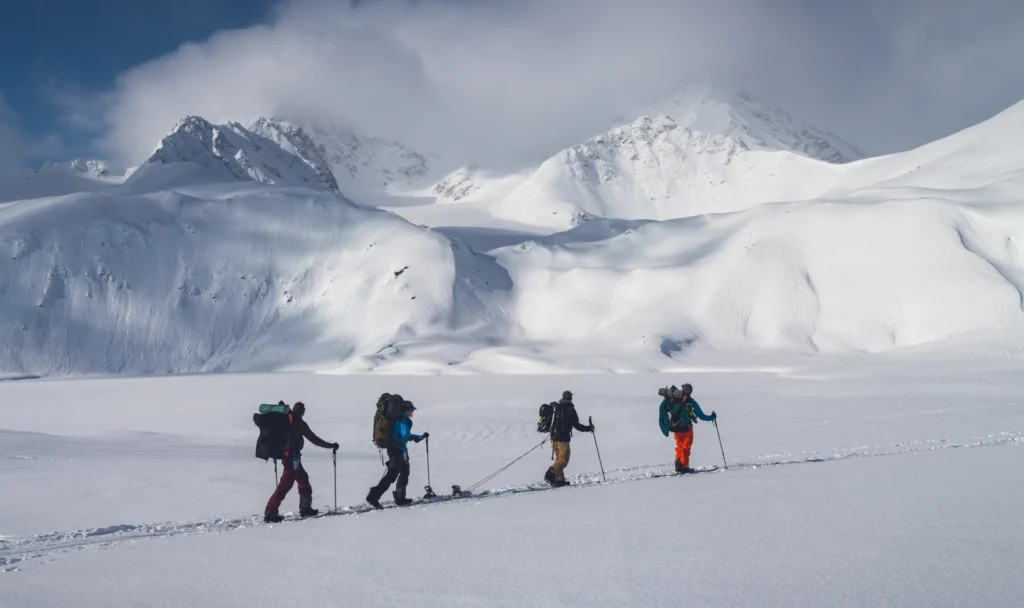
Starting the day early, exploring the Dayara Meadows after breakfast and the hot tea and begin our journey onward to Litham. In the morning rays of the sun, the meadows are simply captivating. You can soak in the morning freshness in the meadows and soothe your senses, leaving all worries behind. Photographers can capture some beautiful pictures of the morning rays of the sun in the vast meadows. The trek from Dayara Thatch to Litham starts with a gentle ascent and the trail will take you through forest covers, meadows and streams. We will walk for about 15 minutes, gently ascending to a point where we will come across a stream. Ascending through forest covers of Oak and Pine, followed by a beautiful meadow we will begin descending through a silver birch forest cover and again through some lush meadows. The entire trail is full of forest covers and meadows as well as some gushing streams, ample opportunities to refill your water bottles. Crossing the meadows we will trek towards the Guna Pass. A gentle ascent takes you to another forest cover and completely out of the Dayara campsite. We will cross a stream post which the trail climbs out of the thickets, with the Dhauladhar Range and Guna Pass coming into view.
Soon, we will come inside another forest of the Silver Birch trees. The silver birches are very old and you can see these ancient structures gnarled and majestic standing the test of time.
Acclimatization day, visit to Chandranahan Lake
- Altitude : 4,023 m/ 13,200 ft.
- Trek Distance : 6 km Both side | 6-7 hr.
- Grade : Difficult steep ascent and descent.
- Star early in the morning.
- Chandranahan is a group of 7 lakes and we will see 3 of them.
- Water sources available on the way.
- Hot lunch provided at the campsite.
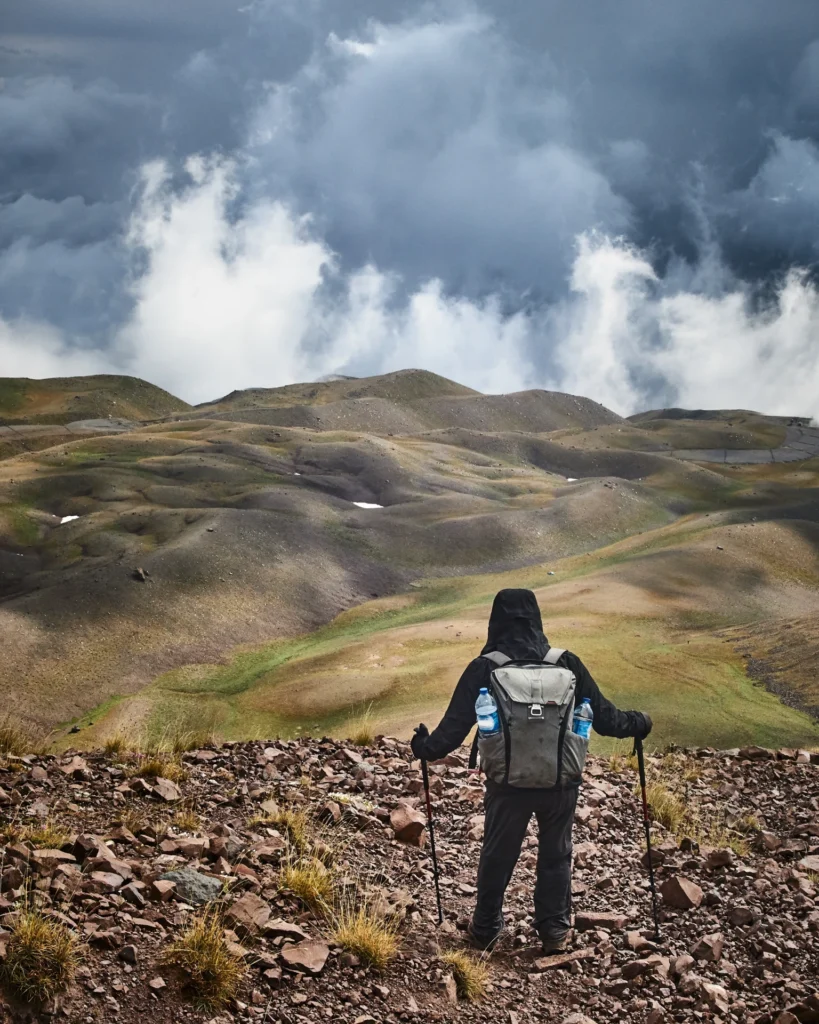
Today’s day is for acclimatization as we make our way to Chandranahan Lake and back to the Litham campsite. After having tea and breakfast, we will head out towards the Chandranahan Lake. It is a 8 km trek from Litham to Chandranahan Lake and back and you will get a lot of opportunities to click some stunning pictures.
The glacial lake of Chandranahan is fed by the mountains surrounding it. To reach the lake, we will cross the stream just before the Litham campsite and continue walking in an upstream direction until we reach the top of the ridge. From here, walk towards the snout of the waterfall. This is where the lake emerges. The walk to the snout takes about an hour and a half and the lake site is marked by stone cairns.
Many small waterfalls cascade down to the lake from all sides. You can spend some time here, absorbing the serenity and clicking some beautiful pictures. We will then head back to Litham in the same way that we came. We will have lunch at Litham and spend the rest of the day here and stay at camps in the nights.
Litham to Nalabansh
- Altitude : 4,000 m/ 13,100 ft.
- Altitude gain : 400 m/ 1300 ft.
- Trek Distance : 4-5 km | 4-5 hrs.
- Grade : Moderate with a mix of gradual and steep ascents.
- Water sources along the way.
- Pass is visible from the campsite.
- Stay in tents (Twin sharing).
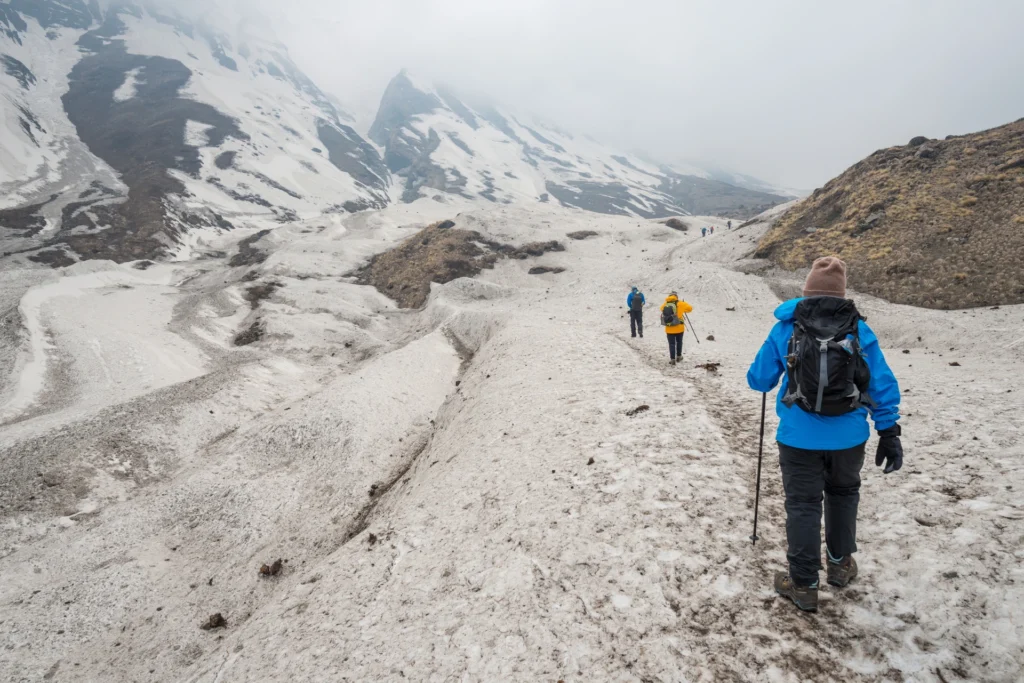
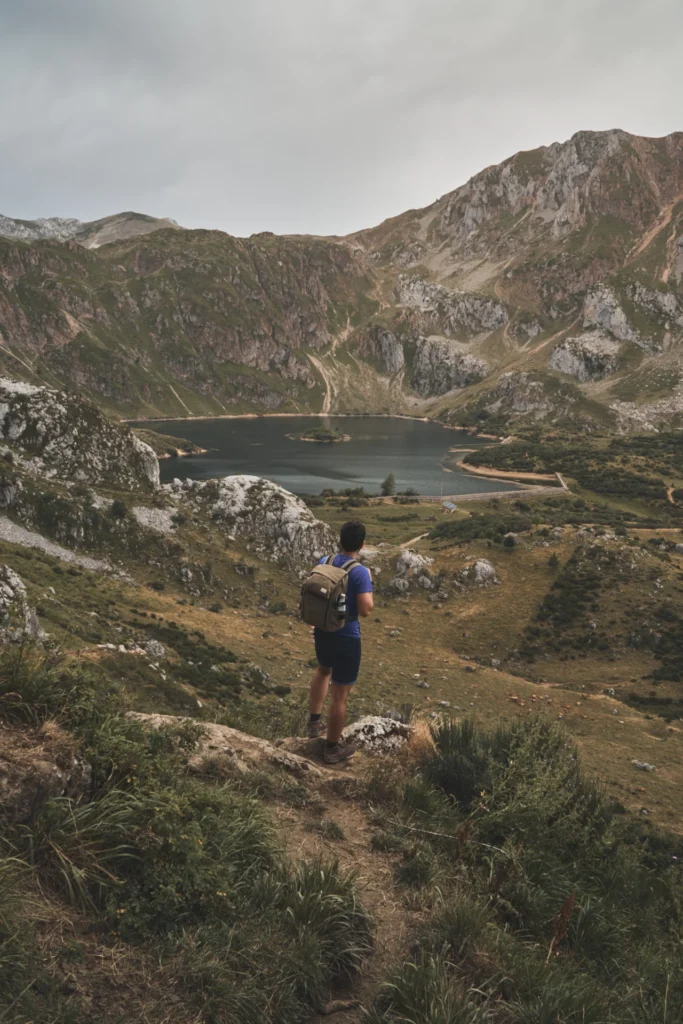
To reach Nalabansh from Litham it’s approx. 4 hrs climb and you will arrive at an elevation of 13100 ft. From here, you can witness the magnificent Dhauladhar Range. Nalabansh at 13100 ft offers the perfect setting for the summit of the Buran Ghati Pass. From here it’s only a two-hour climb to the Pass. The trail takes a sharp ascent as you continue along the banks of the Pabbar River, which is now a gushing stream. Soon you will arrive at a U-shaped gorge and get your first views of the Buran Ghati Pass. Take a moment to relish sight before moving onward.
Nalabansh to Munirang (River camp) via Buran Ghati Pass
- Munirang Campsite Altitude : 3,400 m/ 11,100 ft.
- Buran Ghatti Pass : 4,550 m/ 15,000 ft.
- Altitude loss : 600 m/ 2,000 ft.
- Trek Distance : 8 km (10 - 11 hrs approx).
- Grade : Difficult with steep ascent and descent, (Always be with Trek leader and other support staff).
- Carry 2 liters of water from the campsite.
- Another side valley is full of junipers and crested shrubs.
- Camp nearby the river and shepherd's hut.
- Stay in Camp by the River and Shepherd's hut.
Today is the most strenuous trekking day and you will have to trek for about 8-9 hours through both ascending and descending routes. From the Nalabansh campsite follow the ridge and you will have to cross some boulders as you move towards the base of the Pass. Once you reach the base of the pass, it will take an hour of uphill climbing to make it to the top of the Pass. The trail is mostly covered in snow and the top touches an altitude of 15000 ft. Once you reach the top, enjoy the enthralling views and while descending, it can be pretty risky to climb down without using ropes. It’s a very narrow ledge with steep drops on both sides. Follow your trek leaders’ instructions while descending.
Sliding down the ice walls makes the descent very quick. In about 2 hrs, you will get out of the snow line, losing as much as 3000 ft. Out of the snow line, you will now descend through a forest covers with junipers with the views of a lush valley in front of you.
Munirang to Barua village & Drive to Shimla
- Altitude : 2,300 m/ 7,700ft.
- Altitude Loss : 1,100 m/ 3,400 ft.
- Trek Distance : 5-6 km | 2-3 hr.
- Grade : Easy with a gradual descent. Well-marked trail, crossing through mixed forest.
- Carry 2 liters of water from the campsite, with only 3 water sources on the way.
- Reach Barua Village by noon 12 pm.
- Leave for Shimla by 1:00 PM, Reach Shimla between 10:00 PM to 11:00 PM.
- Make your hotel bookings at Shimla accordingly.
Today we will begin our descent towards Barua village, the last leg of our journey. Along the path, you will see many different vegetation and diverse natural scenery. From Munirang, take the path that follows towards the Barua Khas. the trail is quite broad and well-defined here.
We will descend quickly through pine covers and other coniferous trees. After about an hour and a half of descending, you will reach a gushing stream that meets the Barua Khas with a makeshift bridge across the stream.
Health Awareness
- Pulse rate at rest must be in between (60 to 100 beats per minute).
- Blood Pressure Reading must be in between (DIASTOLIC 75 – 85, SYSTOLIC 100 - 130 mm Hg).
- Respiratory rate at rest must be in between (12 to 20 breaths per minute).
- Should not have Liver and kidney issues.
- Should not have Diabetes Mellitus, Bronchial Asthma, Heart problems, Hypertension, etc.
- No pacemaker implant.
- People with Sinus issues, Epilepsy please contact to trek coordinator before booking the trek.
- If your BMI is not normal, Please contact our Trek coordinator before Trek booking.
Important Links
How to Reach:
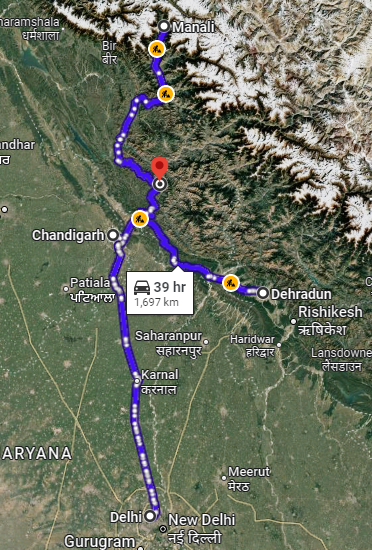
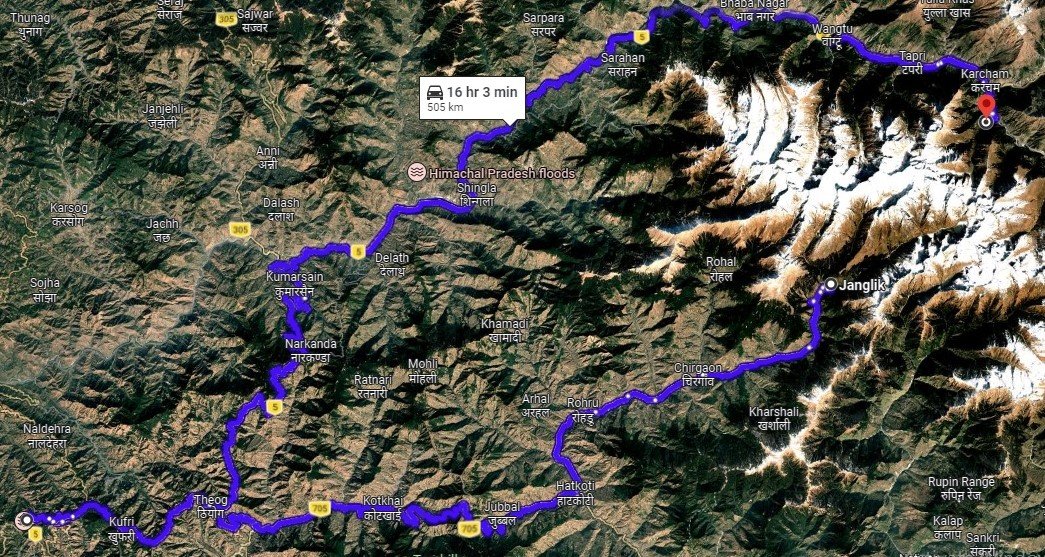
Pick-Up Information
- It is essential for everyone to arrive at Shimla (05:30 am)
- Meeting Place: Shimla Old Bus Stand.
- Once you have reached Shimla, WTM will manage the rest of your travel arrangements, if you have opted for WTM's pick-up service, you can select this option during the booking process by adding it as an add-on (book it at least 10 days before trek date)
- It is advisable to reach Shimla a day before to avoid any kind of delays.
Options to reach Shimla:
First, you can arrive at Chandigarh, Delhi, Kalka, or Shimla airport. The journey from these locations to Shimla is explained below.
First, you can arrive at Delhi, Dehradun airport or Chandigarh. The journey from these locations to Rishikesh is explained below.
- 1. Take overnight bus to Shimla from Delhi or Chandigarh, taking a bus from Chandigarh is the most ideal option.
- -Chandigarh to Shimla Bus Stand : 120 km | 4 hr.
- -Delhi to Shimla Bus Stand : 350 km | 10 hr.
- ( We strongly recommend going for the govt. Buses over the private ones outside the bus station as based on the experience we have found that there are very high chances of delay involved with private buses. Also, govt. Buses are always more reliable. Whichever bus you choose, just make sure to reach Shimla at least by 05:30 am. )
- 2. Take a Train to Kalka and drive to Shimla. One can take the pleasure of a toy train, If you're arriving by Train, then come one day in advance.
- 3. Take a flight to Shimla airport (Jubbarhatti airport) (22 km, 50 min). If you're arriving by air, then come one day in advance.
Drop-Off Information
- The designated drop-off point is Shimla old bus stand.
- Reach Shimla by 11:00 pm to 1:00 am, Please arrange your hotel and make further bookings in Shimla accordingly.
- It's highly advisable to keep a buffer day in your travel plan. If the buffer day is not needed, it can be used to explore Shimla.
- ( If you prefer to travel independently, you can either take a government bus or book a private cab. Your trek coordinator will provide guidance on how to arrange for the bus or cab booking. )
- WTM offers comfortable transportation through Tempo Traveler, Bolero, or equivalent vehicles. If you wish to upgrade your mode of transportation, please contact your trek coordinator for further assistance.
Cost Terms
1. Accommodation (as per the itinerary)
- Homestay on Day 1.
- Camping during the trek (Day 2 to Day 6).
2. Meals (Veg + Egg)
- All meals are from Janglik to Barua village .
3. Support
- 1 Versatile base camp manager who handles communication and deploys extra manpower in emergencies.
- 1 Mountaineering & First aid qualified professional trek leader.
- 1 Experienced high altitude chef.
- Local experienced guides (Number of guides depending on the group size).
- Enough support staff.
4. Trek Equipment
- Sleeping bag, Sleeping liners (if required), Mattress, Utensils.
- 3 men all season trekker tent (twin sharing), Kitchen & Dining tent, Toilet tent.
- Camping stool, Walkie talkie.
- Ropes, Helmet, Ice axe, Harness, Gaiters & cramponsup to (if required).
5. First Aid
- Medical kit, Stretcher, Oxygen cylinder, Blood pressure monitor, Oximeter, Stethoscope.
6. Mules/porters to carry the central luggage.
7. All necessary permits and entry fees, Upto the amount charged for Indian.
8. Services from Janglik to Barua village.
9. Trek completion certificate.
- Insurance (For non-Indian Nationals, NRI or OCI card holders).
- Transporation: (Shimla to Shimla)
- Food during the transit.
- Any kind of personal expenses.
- Mule or porter to carry personal luggage.
- Emergency evacuation, hospitalization charge, etc.
- Any extra costs incurred due to extension/change of the itinerary due to natural calamities roadblocks, vehicle breakdown, etc. factors beyond our control.
- Transportation (Shimla to Janglik & Barua village to Shimla, if not booked through WTM).
- Anything not specifically mentioned under the head Inclusion.
Trek Essentials
| Backpack with rain cover | (40 – 50 ltr) with comfortable shoulder straps |
| Day pack with rain cover | 20 – 30 ltr (If off-load opted) |
| Walking stick | Advisable (At least one) |
| Water Bottle / Hydration pack | 2 bottles of one liter each, People who use hydration pack 1 hydration pack and 1 bottle of one liter, Carry at least one thermos flask. |
| Small size tiffin/lunch box | 1 Nos |
| Snacks | Energy bars, dry fruits, electral/ors |
| Personal Medical Kit | Consult your doctor |
| T-Shirt (Synthetic quick dry) | 1 Full & 1 Half sleeves |
| Fleece T-shirt | 1 Nos |
| Fleece jacket | Not required |
| Windproof Jacket | 1 Nos |
| Down feather / Hollow jacket | 1 Nos |
| Thermal inner (Upper and Lower) | 1 Pair |
| Trek Pant (Synthetic quick dry) | 1 Nos |
| Fleece Pant | Not required |
| Waterproof gloves | Not required |
| Fleece / woollen gloves | 1 Pair |
| Poncho / waterproof Jacket and pant | 1 Nos |
| Head torch | 1 Nos. (Avoid Hand torch) |
| Sun cap | 1 Nos. (One that covers the neck as well) |
| Woolen cap | 1 Nos. |
| Balaclava | Not required |
| Buff / Neck-gaiters | 1 Nos. |
| Sunglasses | UV with dark side cover, People who wear spectacles – (A)- Use contact lenses | (B)- Photo chromatic glasses |
| Trekking shoes | 1 Pair (Water-resistant, high ankle with good grip) |
| Floaters / flip-flops | 1 Pair |
| Cotton socks | 6 pairs |
| Woollen socks | 1 pairs |
| Gaiters | 1 Pair (WTM provides when required) |
| Micro spikes | 1 Pair (WTM provides when required) |
| Sunscreen cream | 1 Nos |
| Moisturiser | 1 Nos |
| Chap-stick / Lip balm | 1 Nos |
| Toothbrush and toothpaste | 1 Nos |
| Toilet paper & Wipes | 1 Nos |
| Soap / hand sanitizers | 1 Nos |
| Antibacterial powder | 1 Nos |
| Quick dry towel | 1 Nos |
Gallery
Cancellation Terms
To request a cancellation, please email us at info@walkingthemountains.com using your registered email ID.
Cancellations prior to 28 days from the start of the Trip
Refund Options
- 5% deduction of trek fee
- 100% trek fee cash voucher for any trip until six months from the date of last trek.
- Transfer your trek (any trek, any date) to your friend
Cancellation between 27 days and 15 days to the start of the Trip
Refund Options
- 30% deduction of trek fee
- 100% trek fee cash voucher for same trip till one year
- 85% trek fee cash voucher for any trip till one year
Cancellation between 14 days and 8 days to the start of the Trip
Refund Options
- 50% deduction of trek fee
- 80% trek fee cash voucher for same trip till six months.
- Book the same trek, in the same season, with any other batch
- Transfer your trek (same trek, any date) to your friend
Cancellation less than 7 days to the start of the trek.
Refund Options
- No cash refund
- 20% trek fee cash voucher for the same trip until six months.
Itinerary and Modifications
- WTM reserves the right to modify, shorten, or cancel any part of the Trip due to transportation delays, weather, health emergencies, or other unforeseen circumstances including Force Majeure.
Cancellations and Refunds
- No refunds or vouchers, partial or otherwise, shall be provided for voluntary withdrawal, non-utilisation of services, or removal from the Trip.
- If WTM cancels the Trip before arrival at the designated pick-up point due to unforeseen circumstances or Force Majeure, the Participant may choose from:
- An alternate Trip/date.
- A credit voucher valid for one (1) year.
- Transfer to another Trip, with cost differences payable by the Participant.
- If the Trip is abandoned post-arrival at the designated pick-up point, no cash refund or voucher shall be issued. The Trek Again Policy may apply at WTM’s discretion.
- WTM shall not be liable for any associated travel costs such as flights, accommodation, or visa fees.
Force Majeure
- Events beyond its control including but not limited to earthquakes, landslides, strikes, curfews, war, pandemic, government restrictions, heavy rainfall or snowfall, windstorms, road blockages, trail disruption, or withdrawal of permits, WTM shall not be held liable for any cancellation, delay, or service modification caused by Force Majeure.
FAQ’S
The best time to do the Buran Ghati trek is during the months of Summer and Autumn. Specifically in the months of May, June, September, and October. During these months, the weather is typically clear, with pleasant daytime temperatures and cool nights, so you can enjoy your trek. During these specific months, the snow is also very less, making the trails more accessible.
The Buran Ghati Trek is considered a moderate to difficult grade trek. The steep ascents, high altitudes, and unpredictable weather conditions add challenges to the trek. The terrain can be quite demanding, and trekkers need to be prepared for tough conditions as they climb through dense forests, snowfields, and rocky paths. The trek also requires a good level of physical fitness and mental preparation.
Yes, WTM will provide sleeping bags, tents, and mattresses to every trekker. It is among the central equipment.
Yes, prior trekking experience is highly recommended for the Buran Ghati Trek. This trek is best suited for those who have previously done moderate-level treks and are accustomed to walking long distances, dealing with challenging terrains, and coping with high altitudes. While beginners may find it possible with preparation and physical fitness, having previous trekking experience will help you better manage the difficult sections and enjoy the trek to its fullest.
No, there are no electricity charging points available throughout the trek. The only place where you can charge your devices is in Janglik, at the start of the trek.
Yes, acclimatisation day is included in the Buran Ghati pass trek itinerary. Day 4 in the itinerary is kept for acclimatisation, on this day you will take a short acclimatisation walk to the beautiful Chandarnahan Lake.