
Tarsar Marsar Trek

Region
Kashmir

Duration
7 days

Max. Altitude
13500 ft.

Trek Distance
48 kms

Grade
Moderate
 Due to unclear situations, trek permissions in Kashmir are still awaited this year. Explore the alternative Buran Ghati Trek in Himachal Pradesh. Click here to explore Buran Ghati Trek
Fixed Departures
July - 2026
- 15 July - 21 July
- Closed
- 22 July - 28 July
- Closed
August - 2026
- 1 Aug - 7 Aug
- closed
- 8 Aug - 14 Aug
- closed
- 15 Aug - 21 Aug
- closed
- 23 Aug - 29 Aug
- closed
₹16600
+5% GST / Person
Highlights
- Services from Aru to Aru.
- Pickup & Drop Location (if transport opted ) : Tourist Reception Center, Rajbag, Srinagar
- Pickup : 12:00 PM | Drop : 6:30–7:30 PM (weather/road dependent) Keep a buffer day and arrive a day early to avoid delays.
- Please note that prepaid sim cards do not work in Kashmir.
- Don’t forget your ID proof in original and 2 photocopies.
Add-ons
- Transport
- Rs 1600/- Per Person
- Offload
- Rs 4600/- Per Person
Add on information
- Insurance is mandatory.
- It is available for Indian citizens only.
- Non-Indians have to take insurance on their own.
- The cancellation policy will be implemented in accordance with the trek cancellation policy.
- Transportation: Srinagar to Aru & return is optional.
- Choose add-ons during booking. If missed, you can contact us to book the same.
- Book transportation at least 10 days before the trek.
- Cancellation 6 or more days before the start of the trip results in a 100% cash refund.
- Cancellation less than 4 days from the start of the trip results in a 50% cash refund.
- Cancellations made on the trip date are not eligible for a refund.
- Backpack offload is optional.
- Choose add-ons during booking. If missed, you can contact us to book the same.
- Book off-load at least 10 days before the trek.
- For offline bookings at the base camp, a variable convenience fee may apply. (It differs from trek to trek)
- Offload can't weigh more than 10kg. Offload should have a waterproof cover. Suitcases/trolleys will not be allowed.
- In the event that you choose to cancel your trek prior to the departure date, you will receive a full refund.
- Note : The bag weight should not exceed 10 kg.
Tarsar Marsar Trek Overview
- Trek Name : Tarsar Marsar Trek
- Days : 7
- Adventure : Trekking
- Base Camp : Aru
- Season : Monsoon
- Months : July | August
- Country : India
- Altitude : 13500 FT
- Grade : Moderate
- Trail Type : Circle trail | Camping in various locations, starting and ending at the same point.
- Food : Meals while on trek & at Hotel/Guesthouse (Veg & Eggs)
- Location : Kashmir
- Distance : 48 km
- Rail Head : Jammu
- Stay : Camping (Twin sharing) & Hotel/Guesthouse (Separate for male & Female)
- Airport: Srinagar (sheikh ul-alam international)
Why Tarsar Marsar is a Must-Do Trek
Imagine, waking up in the meadows of Kashmir on your trek to Tarsar Marsar, that moment, your entire life is going to dissolve into a distant dream. As though you have just crossed the threshold and come to heaven. The famous couplet of the Persian poet shall ring true— if there is a paradise on earth, it is here, it is here, it is here! Kashmir’s inherent classical romanticism aside, there are some things exclusively special to trekking and the Tarsar Marsar twin lakes trek brings all of them together.
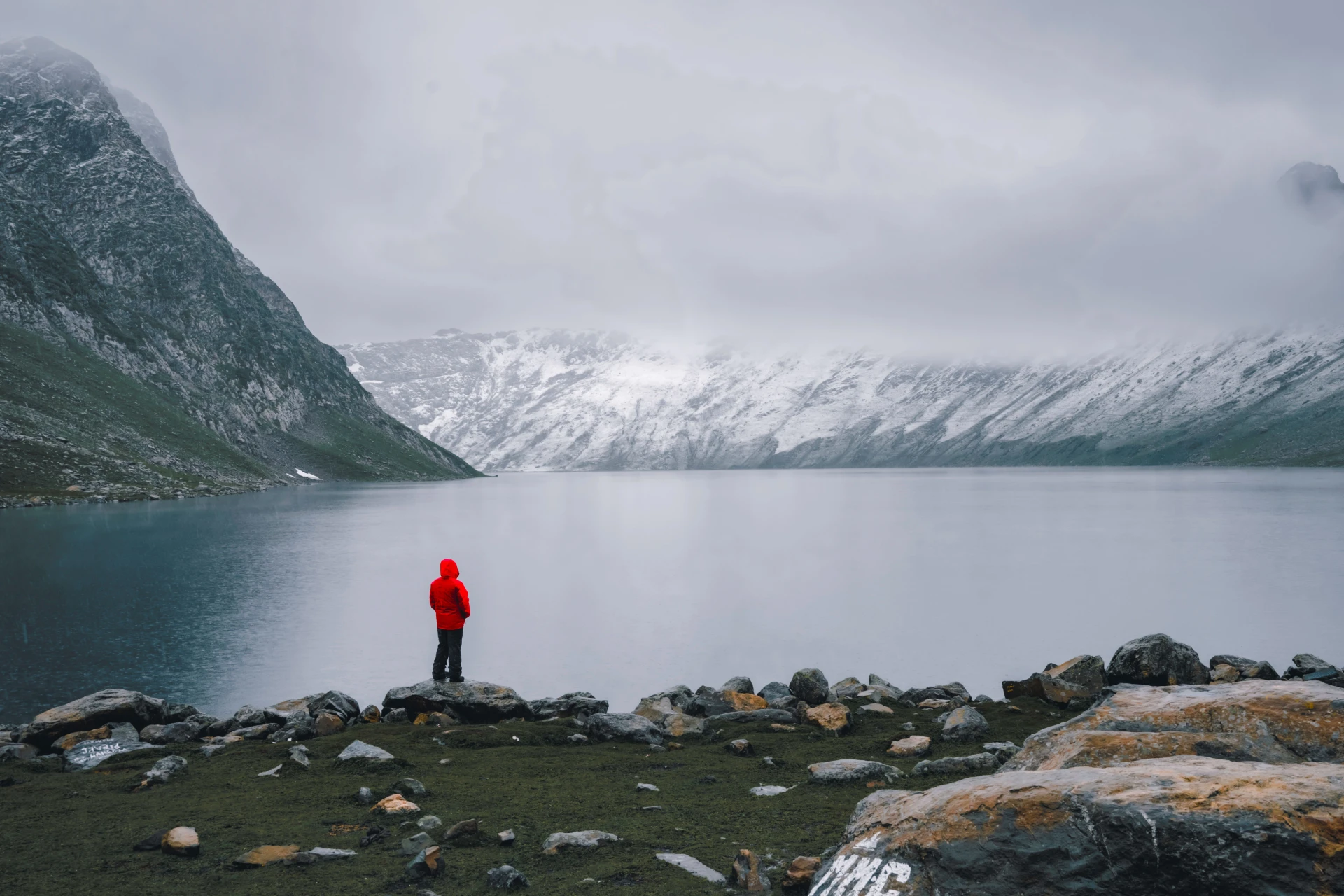
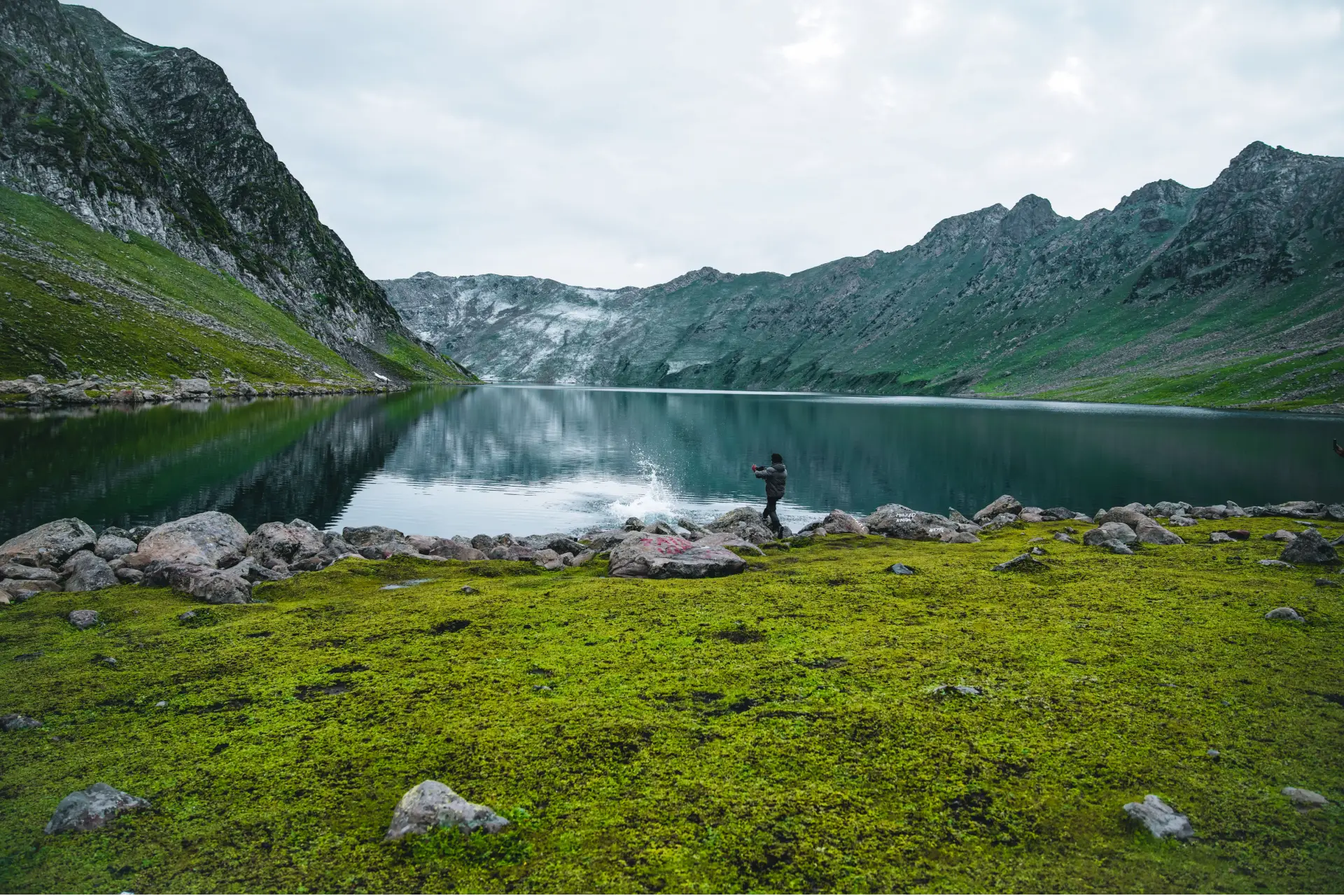
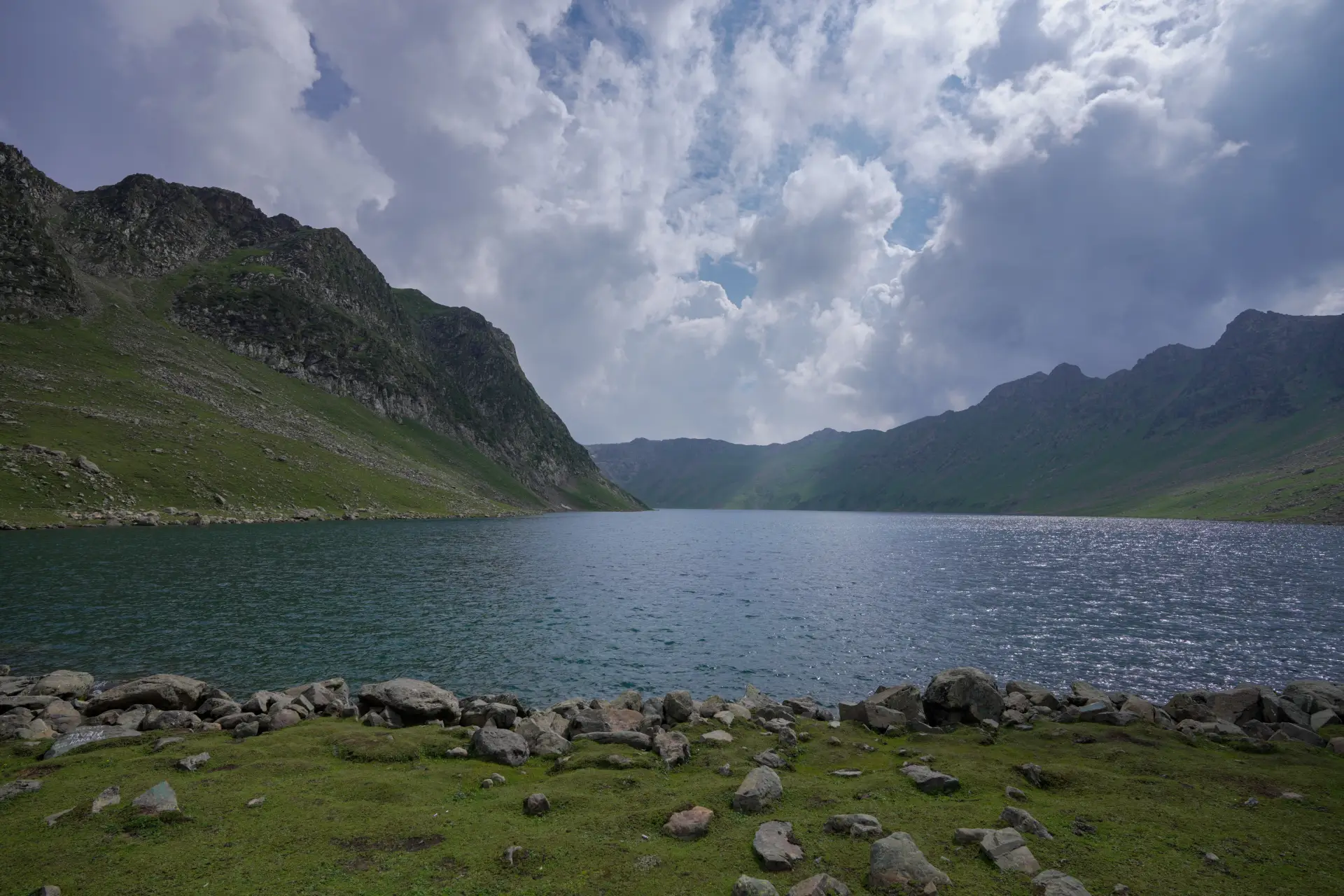
Grasslands like velvet, walking through hovering pine trees that are beautiful and fragrant, little thatched roofed hamlets peopled by beautiful humans, the perfect stillness of azure waters, and camping by the glacial lakes that give the trek its name.
Eligiblity for Tarsar Marsar Trek
- Age Requirement : Minimum 12 years
- First-timers are welcome, though prior trekking experience is preferred. Good fitness is a must.
- Fitness Criteria :
- The Trekker should have sufficient stamina to cover 5 km of distance by jogging in 33 minutes without stress or 10 km of distance in 75 minutes without stress
- If the trekker prefers cycling he/she should be able to cycle 15 km of distance in 45 minutes.
- If the trekker wants to carry a backpack then he/she should be able to carry a 10-12 kg backpack. If opt Off-load option then the trekker should be able to carry 3-5 kg backpack.
- If a trekker's BMI is more or less than the normal range (18-28), please consult our Trek Coordinator before booking.
Tarsar Marsar Trek Itinerary
01. Srinagar To Aru Base Camp
- Altitude: 2,400 m/ 7,950 ft.
- Drive Distance(Srinagar To Aru): 112 km.
- Drive Time: 4 hrs.
02. Aru To Lidderwat
- Altitude: 2,800 m/ 9,150 ft.
- Trek Distance: 10 km | Duration: 6 - 7 hrs.
03. Lidderwat To Shekwas
- Altitude: 3,350 m/ 11,000 ft.
- Trek Distance: 6 km | 5 hrs.
04. Shekwas To Tarsar And Explore Tarsar
- Altitude: 3,800 m/ 12,500 ft.
- Trek Distance: 4 km | 3 - 4 hrs.
05. Tarsar To Sundarsar
- Altitude: 4,000 m/ 13,000 ft.
- Trek Distance: 6 km | 5 hrs.
06. Visit Marsar And Then Homwas
- Altitude: Marsar Ridge: 4,100 m/ 13,100 ft | Homwas: 3,500 m/ 11,500 ft.
- Trek Distance: 11 km | 7 hrs.
07. Homwas To Aru And Drive Srinagar
- Altitude: 2,400 m/ 7,950 ft.
- Trek Distance: 13 km trek | 6 - 7 hrs.
- Drive Distance: 112 km | 4 hrs.
Note:
- Please note that prepaid sim cards do not work in Kashmir.
- Don’t forget your ID proof in original and 2 photocopies.
Srinagar To Aru Base Camp
- Altitude : 2,400 m/ 7,950 ft.
- Drive Distance(Srinagar To Aru) : 112 km.
- Drive Time : 4 hrs.
First day begins with Aru valley, that’s on the banks of Lidder river situated 12 km off Pahalgam. Aru is regarded as the main base for two well-loved treks – the Tarsar Marsar and Kolahoi Glacier Trek, the destination of the latter being the origin of the Lidder-Aru Rivers. From Pahalgam, two routes go towards Aru, one through the village of Anantnag and one through Bijbhera. Bhijbera route is a tourist trail that presents the beautiful rural scenery of Kashmir with apple orchards, apricot, and walnut trees. Since a steady telephonic network cannot be confirmed at Aru, you need to wrap up your communication at Pahalgam itself. At Aru, you will be welcomed at a riverside camping zone, off the touristy hub, by the sweet-flowing Lidder. There are lots of activities around the town at Aru– from trout fishing in Lidder, and the Aru Biosphere Reserve to horseback riding and heliskiing in winter.
- Since there are no shops around ensure that you have all you need already.
- Please note that prepaid SIM cards don’t work in Kashmir.
- Pahalgam is the last point where you get a mobile network.
- Last ATM is in Pahalgam.
- Stay in a lodge/guest house.
- Don’t forget to carry your ID proof in original and 2 photocopies.
Aru To Lidderwat
- Altitude : 2,800 m/ 9,150 ft.
- Trek Distance : 10 km | Duration: 6 - 7 hrs.
- Altitude Gain : 400 m/ 1,200 ft.
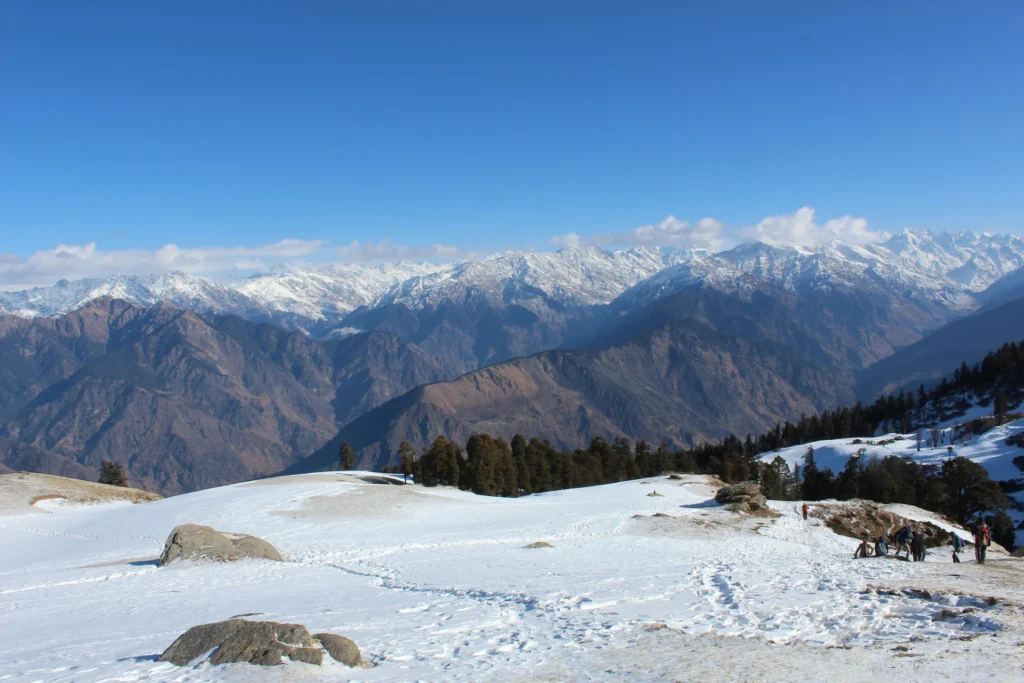
The trail starts right out of the village and follows the course of the river. It is a long but gentle climb to Lidderwat. After about 9 to 10 km the trail moves up soft slopes, entering a thicket of conifers, revealing a sweeping view of the Aru Valley down below on the left side. We continue venturing through the forest shade before we arrive at a clearing filled with Gujjar huts. This is the Nandekai Village, inhabited by seasonal, migrating shepherd people, and agrarian, foraging Gujjar community. Here is a slice of idyll, picture-perfect, and a far call from life as we know it. We won’t be crossing through the heart of the village but rather get a priceless bird’s eye view of the picturesque setting as we move uphill. A little after we enter a tumbling meadow as the fir tree thickets completely ebbs away. This is still part of the Gujjar Village ecosystem and you are going to find horse-riding folks and cattle grazers.
The trail cuts across a couple of valley streams next as we go. We soon come across a crude log bridge over the second brook. The streams are very clear and it is safe to drink the water in the stream. This is the spot to refill our water and take some rest, maybe have the packed lunch carried from the last campsite. The Lidderwat locale is still an hour’s journey from here. The trail here curves into another wooded area of gorgeous firs before coming out into the meadows of Lidderwat, where the river flows clear watered.
Lidderwat To Shekwas
- Altitude : 3,350 m/ 11,000 ft.
- Trek Distance : 6 km | 5 hrs.
- Altitude Gain : 550 m/ 1,850 ft.
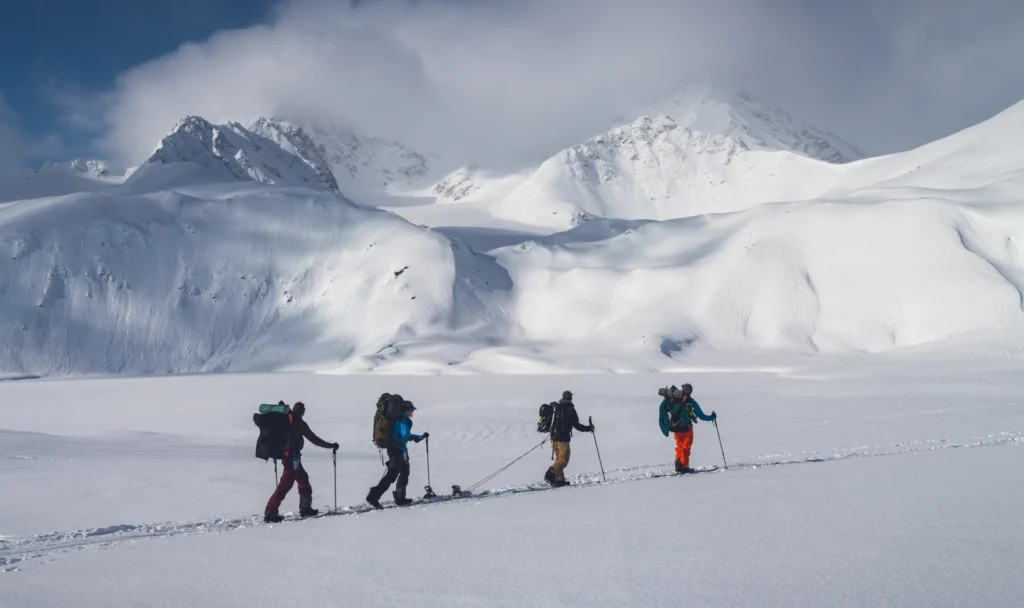
We trek approx.5 hours along a trail winding up directly from behind the PDA homes. The trail starts alongside the Lidder River and in a matter of half an hour you will find yourself inside a forest of pines, the Lidder River is now a distant shadow and the meadows have ebbed away. The woods are not very thick and occasionally open up to wide clearings.
The grasslands now merge such that it is no longer a single valley but a convergence of many valleys together. There will be multiple clear water streams cutting across our path where you can stop to refill your water bottles. Crossing the Homwas village, you will walk parallel to the crystal river before you enter a different grassy landscape. The walk from Homwas to Shekwas is a delight as you mostly walk on the soft grass. Soon you will arrive at Shekwas. The trail now follows in a south-westerly direction and enters a narrow valley where a beautiful river constantly keeps you company.
Shekwas To Tarsar And Explore Tarsar
- Altitude : 3,800 m/ 12,500 ft.
- Trek Distance : 4 km | 3 - 4 hrs.
- Altitude Gain : 450 m/ 1,500 ft.
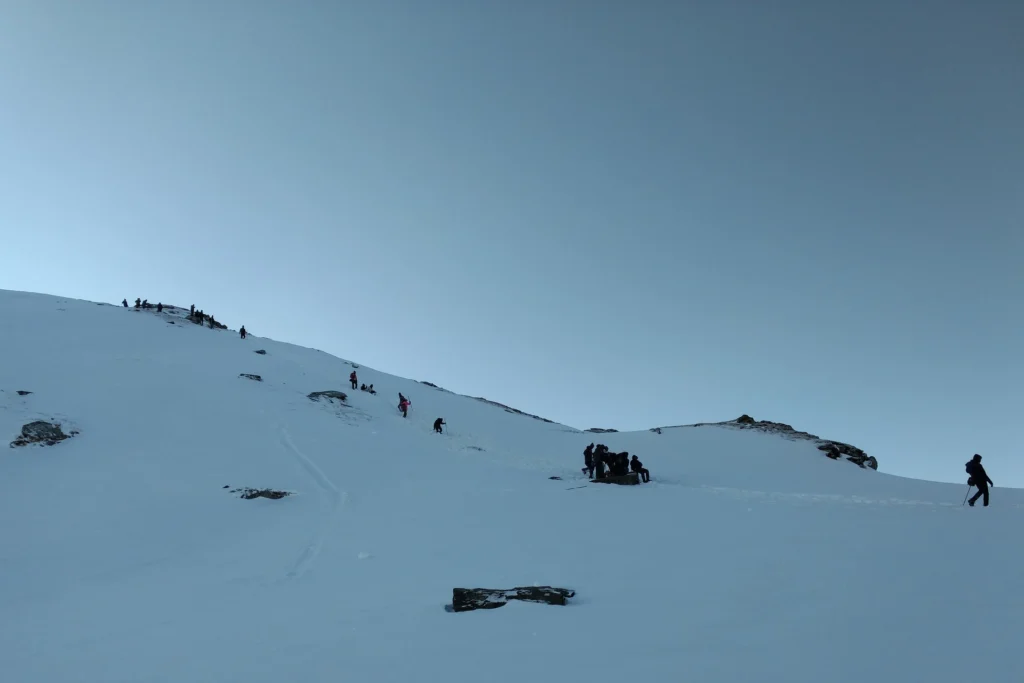
The green moors of Shekwas are best experienced with bare feet. Try this as you set out of Tarsar Lake today. The agenda today is the trek to the first lake, Tarsar. The trail moves through a silken lawn of nature for some time before climbing over a humpbacked hill and after crossing a few ridges you get a little peek of Tarsar’s magnetic blue waters. t takes a total of 5 hours to reach Tarsar from Shekwas, the view of the lake widening as we go down succeeding smaller ridges. Every ridge on the trail opens to a stupendous view. The views of the snow-clad peaks become grander as we get closer to the lake. You need to cross the stream, jumping from boulder to boulder adventurously before finally gliding into a verdant meadow around the lake where we will camp at night. Sink your feet deep into the soft grass and watch how the lake water reflects the passing hues of the sky as the day rolls on. Time seems to come to a standstill amid such beauty and silence.
Tarsar To Sundarsar
- Altitude : 4,000 m/ 13,000 ft.
- Trek Distance : 6 km | 5 hrs.
- Altitude Gian : 200 m/ 600 ft.
- Moderate to difficult terrain.
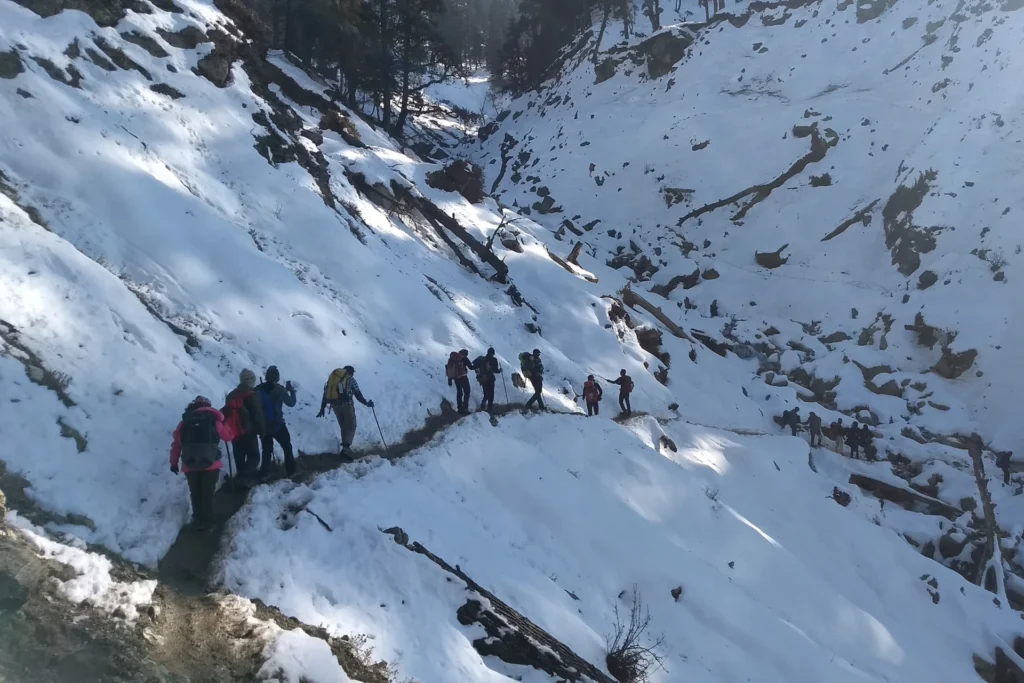
Today we will trek another 6 km to the adjoining Sundarsar Valley through Tarsar Pass. We delve into a connecting stretch first which joins the meadows of Shekwas and Sundersar Valley. Trekking through the Tarsar Pass is time-saving. Climbing the pass saves about 3 to 4 hrs of the trek. The Tarsar Pass presents beautiful views of the valley that spans out so beautifully. Past the knoll is the view of a lush meadow of such astounding beauty that it would inspire poets to emote poetry. Sheep and horses graze on the pastures unmindful of your presence. These are one of the most beautiful meadows with a large pond in the middle and in the backdrop, the snow-covered mountains enhance the scenery. You have to cross a ridge top and climb down to reach the green landscapes of Sundarsar. On the ascent to the pass, the trail gets steeper but then mellows down to a gentler slope to Sundarsar. The highlight of the stretch comes with a view of Tarsar Lake from the other side of the Pass.
Visit Marsar And Then Homwas
- Altitude : Marsar Ridge: 4,100 m/ 13,100 ft | Homwas: 3,500 m/ 11,500 ft.
- Trek Distance : 11 km | 7 hrs.
- Altitude loss : 500 m/ 1,600 ft
- Moderate terrain.
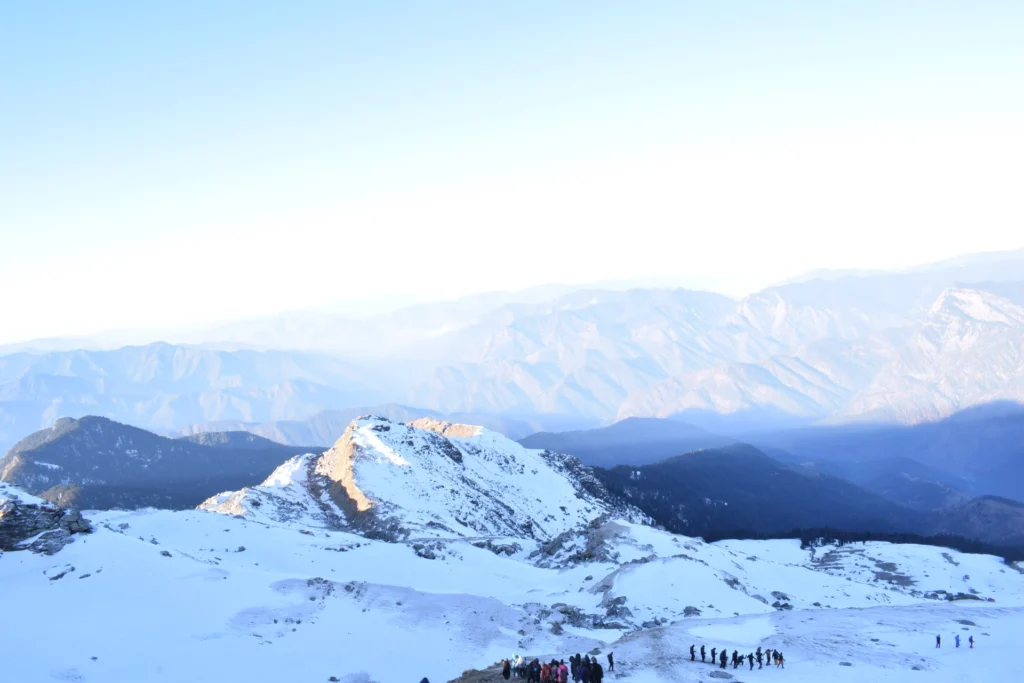
We will ascend higher up through Marsar Ridge. Kilting our way around Sundarsar shores, we will be directed to a boulder-smitten path. Two passes from Sundarsar will take you to Marsar Lake. The boulder-laden route that we take is the quicker one. You can expect slippery snow patched in these rock crevasses, just like the white-covered mountains at the end of the valley that we witnessed through our trek in the last few days. At midday, the snow will melt and it’s going to be a tricky walk. After covering a partly grass-covered, partly snow-sheeted rock trail over the pass, we slightly descend to a flatland that’s cut through by occasional water flows. The top of the ridge view reveals the translucent blue Marsar Lake lying somewhere down below. It has the same kind of almond-shaped outline as Tarsar and is almost as big. Snow-covered mountains line along the edge of the lake, offsetting its blueness. The lake happens to overflow on one side and go down in a sweeping glacial stream down to a valley below. The forest reserve climbs almost up to the lake shores. After spending some time at Marsar Lake we will get back to Sundarsar.
Homwas To Aru And Drive Srinagar
- Altitude : 2,400 m/ 7,950 ft.
- Trek Distance : 13 km trek | 6 - 7 hrs.
- Drive Distance : 112 km | 4 hrs.
- Easy terrain.
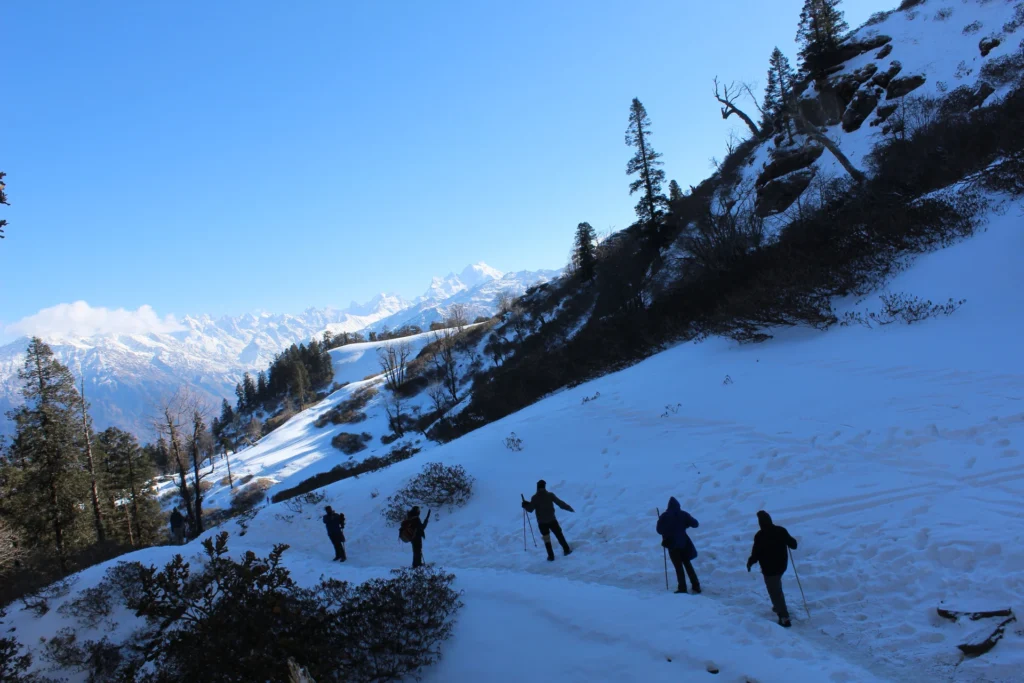
Today, we descend from Homwas to Aru, sweeping over the same enchanting meadowlands we had experienced on the first days, and the same Lidder River, now to be followed downstream. Descending through this trail will give you some sights that you missed previously when climbing up. This includes the views of the shrinking Kolahoi glacier and the pine forests of Lidderwat from a whole new perspective. We will stop at Lidderwat to rest and have lunch and then set off again, now towards Aru, 10 km from Lidderwat. It takes about 4 hours approx. to cover the distance.
Health Awareness
- Pulse rate at rest must be in between (60 to 100 beats per minute).
- Blood Pressure Reading must be in between (DIASTOLIC 75 – 85, SYSTOLIC 100 - 130 mm Hg).
- Respiratory rate at rest must be in between (12 to 20 breaths per minute).
- Should not have Liver and kidney issues.
- Should not have Diabetes Mellitus, Bronchial Asthma, Heart problems, Hypertension, etc.
- No pacemaker implant.
- People with Sinus issues, Epilepsy please contact to trek coordinator before booking the trek.
- If your BMI is not normal, Please contact our Trek coordinator before Trek booking.
Important Links
How to Reach:
Pick-Up Information
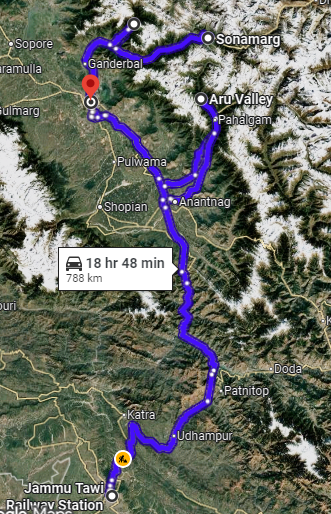
- Pick-up location: Tourist reception center, Raj Bagh, Srinagar.
- Once you have reached Srinagar, WTM will manage the rest of your travel arrangements, if you have opted for WTM's pick-up service, you can select this option during the booking.
- Do reach Srinagar one day before your trek date for a safer side.
- Pick-up Place & Time: Tourist reception center, Raj Bagh, Srinagar 12:00 noon.
Options to Reach Srinagar:
- 1. If you are planning to fly to Srinagar which is well connected to all major airports in India, you can reach the Tourist reception center, Raj Bagh in appx 40 min via taxi from the airport (approx 13 Km).
- 2. If you’re coming by train, there are two railway stations.
- Jammu railway station is about 260 km away and takes around 8 hours by bus.
- Udhampur is 200 km away and from there, it is a 6-hour bus journey to Srinagar.
- 3. If you are taking a bus from Jammu, then you have multiple options to take. There are two gates outside Jammu ISBT. You will get shared cabs from both of these gates.
- 4. If you are reaching the Railway Station, the share cabs to Srinagar will cost between Rs 700 to Rs 1000.
- 5. Shared cabs are more from the Jammu ISBT compared to the Railway Station. You can travel from the Railway station to the bus stand. The fare of the bus will be Rs 10. The auto will charge around Rs 80 to 120.
Drop-Off Information
- The designated drop-off point is Nishat Garden near the parking area, Srinagar.
- Arrive in Srinagar by 6:00 pm.
- If you have to make any arrangements for further travel from Srinagar, do it the next day.
- WTM offers comfortable transportation through Tempo Traveler, Bolero, or equivalent vehicles. If you wish to upgrade your mode of transportation, please contact your trek coordinator for further assistance.
Cost Terms
1. Accommodation (as per the itinerary)
- Guest house (Triple sharing).
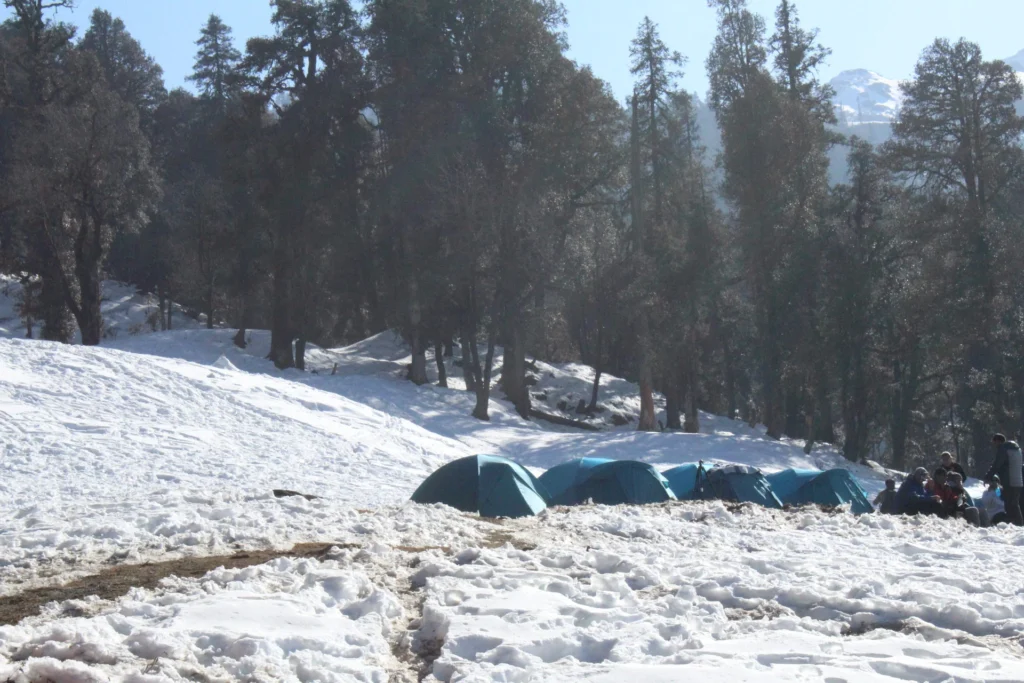
- Camping (Twin sharing basis).
2. Meals (Veg + Egg)
- Day 1 Dinner to Day 7 packed lunch as per the itinerary.
3. Support
- 1 Versatile base camp manager handles communication and deploys extra manpower in emergencies.
- 1 Mountaineering & First aid qualified professional trek Leader.
- 1 Experienced high altitude chef.
- Local experienced guides (Number of guides depending on the group size).
- Enough support staff.
4. Trek Equipment
- Sleeping bag, Sleeping liners (if required), Mattress, Utensils.
- 3 men all season trekker tent (twin sharing), Kitchen & Dining tent, Toilet tent.
- Camping stool, Walkie talkie.
- Ropes, Helmet, Ice axe, Harness, Gaiters & Crampon (if required).
5. First Aid
- Medical kit,Stretcher,Oxygen cylinder,Blood pressure monitor,Oximeter,Stethoscope.
6. Mules/porters to carry the central luggage.
7. Cloakroom facility available at the base camp for additional luggage.
8. All necessary permits and entry fees, Upto the amount charged for Indian.
9. Services from Aru to Aru.
10. Trek Completion Certificate.
- Insurance (For non-Indian Nationals, NRI or OCI card holders).
- Food during the transit.
- Any kind of personal expenses.
- Mule or porter to carry personal luggage.
- Emergency evacuation, hospitalization charge, etc.
- Any extra costs incurred due to extension/change of the itinerary due to natural calamities roadblocks, vehicle breakdown, etc. factors beyond our control.
- Hotel stay in Srinagar.
- Transportation (as per the itinerary):
- Transport from Srinagar to Aru & return : NON AC.
- Anything not specifically mentioned under the head Inclusion.
Trek Essentials
| Backpack with rain cover | (40 – 50 ltr) with comfortable shoulder straps |
| Day pack with rain cover | 20 – 30 ltr (If off-load opted) |
| Walking stick | Advisable (At least one) |
| Water Bottle / Hydration pack | 2 bottles of one liter each, People who use hydration pack 1 hydration pack and 1 bottle of one liter, Carry at least one thermos flask. |
| Small size tiffin/lunch box | 1 Nos |
| Snacks | Energy bars, dry fruits, electral/ors |
| Personal Medical Kit | Consult your doctor |
| T-Shirt (Synthetic quick dry) | 1 Full & 1 Half sleeves |
| Fleece T-shirt | 1 Nos |
| Fleece jacket | Not required |
| Windproof Jacket | 1 Nos |
| Down feather / Hollow jacket | 1 Nos |
| Thermal inner (Upper and Lower) | 1 Pair |
| Trek Pant (Synthetic quick dry) | 1 Nos |
| Fleece Pant | Not required |
| Waterproof gloves | Not required |
| Fleece / woollen gloves | 1 Pair |
| Poncho / waterproof Jacket and pant | 1 Nos |
| Head torch | 1 Nos. (Avoid Hand torch) |
| Sun cap | 1 Nos. (One that covers the neck as well) |
| Woolen cap | 1 Nos. |
| Balaclava | Not required |
| Buff / Neck-gaiters | 1 Nos. |
| Sunglasses | UV with dark side cover, People who wear spectacles – (A)- Use contact lenses | (B)- Photo chromatic glasses |
| Trekking shoes | 1 Pair (Water-resistant, high ankle with good grip) |
| Floaters / flip-flops | 1 Pair |
| Cotton socks | 6 pairs |
| Woollen socks | 1 pairs |
| Gaiters | 1 Pair (WTM provides when required) |
| Micro spikes | 1 Pair (WTM provides when required) |
| Sunscreen cream | 1 Nos |
| Moisturiser | 1 Nos |
| Chap-stick / Lip balm | 1 Nos |
| Toothbrush and toothpaste | 1 Nos |
| Toilet paper & Wipes | 1 Nos |
| Soap / hand sanitizers | 1 Nos |
| Antibacterial powder | 1 Nos |
| Quick dry towel | 1 Nos |
Gallery
Cancellation Terms
To request a cancellation, please email us at info@walkingthemountains.com using your registered email ID.
Cancellations prior to 28 days from the start of the Trip
Refund Options
- 5% deduction of trek fee
- 100% trek fee cash voucher for any trip until six months from the date of last trek.
- Transfer your trek (any trek, any date) to your friend
Cancellation between 27 days and 15 days to the start of the Trip
Refund Options
- 30% deduction of trek fee
- 100% trek fee cash voucher for same trip till one year
- 85% trek fee cash voucher for any trip till one year
Cancellation between 14 days and 8 days to the start of the Trip
Refund Options
- 50% deduction of trek fee
- 80% trek fee cash voucher for same trip till six months.
- Book the same trek, in the same season, with any other batch
- Transfer your trek (same trek, any date) to your friend
Cancellation less than 7 days to the start of the trek.
Refund Options
- No cash refund
- 20% trek fee cash voucher for the same trip until six months.
Itinerary and Modifications
- WTM reserves the right to modify, shorten, or cancel any part of the Trip due to transportation delays, weather, health emergencies, or other unforeseen circumstances including Force Majeure.
Cancellations and Refunds
- No refunds or vouchers, partial or otherwise, shall be provided for voluntary withdrawal, non-utilisation of services, or removal from the Trip.
- If WTM cancels the Trip before arrival at the designated pick-up point due to unforeseen circumstances or Force Majeure, the Participant may choose from:
- An alternate Trip/date.
- A credit voucher valid for one (1) year.
- Transfer to another Trip, with cost differences payable by the Participant.
- If the Trip is abandoned post-arrival at the designated pick-up point, no cash refund or voucher shall be issued. The Trek Again Policy may apply at WTM’s discretion.
- WTM shall not be liable for any associated travel costs such as flights, accommodation, or visa fees.
Force Majeure
- Events beyond its control including but not limited to earthquakes, landslides, strikes, curfews, war, pandemic, government restrictions, heavy rainfall or snowfall, windstorms, road blockages, trail disruption, or withdrawal of permits, WTM shall not be held liable for any cancellation, delay, or service modification caused by Force Majeure.
FAQ’S
The best time to do Tarsar Marsar Trek is during monsoon (Jul - Aug) and autumn (Sep - Mid Nov).
During the Tarsar Marsar Trek, the accommodation is arranged in guesthouses in base villages and during the trek in camps (twin-sharing).
Yes it is. However, The safety of any trekking expedition, including the Tarsar Marsar Trek, depends on various factors such as weather conditions, individual fitness levels, preparedness, and adherence to safety guidelines. While trekking in remote areas always carries inherent risks, taking necessary precautions can help mitigate potential dangers.
For TMT, you are required to obtain a few permits and permissions like the Inner Line Permit, and Wildlife Permit. When you trek with us, we take care of all the necessary permits for you.
Tarsar Marsar Trek is an easy to moderate grade trek.
Here are some of the essentials you should carry for the trek:
- Trekking shoes:A good pair of trekking shoes is essential for a comfortable trek. Make sure your shoes are well-fitted, sturdy and provide good grip on the trail.
- Warm Clothing:The weather can be unpredictable in the mountains, so it's important to carry warm clothing, including thermal innerwear, fleece jackets, down jacket, and waterproof jacket.
- Trekking pants:Carry comfortable and quick-drying trekking pants that are suitable for the weather conditions.
- Backpack:A good quality backpack with a capacity of 40-50 liters is ideal for carrying your essentials during the trek.
- Sleeping bag:A good quality sleeping bag is essential for a comfortable stay during the camping nights.
- Headlamp/Flashlight:Carry a good quality headlamp or flashlight with extra batteries for trekking during early morning or late evening hours.
- Water bottle:Carry a reusable water bottle and stay hydrated throughout the trek.
- Snacks:Carry energy bars, dry fruits, and snacks for instant energy during the trek.
- First aid kit:Carry a basic first aid kit, including band-aids, antiseptic cream, pain relief spray, and medicines for altitude sickness.
- Sun protection:Carry sunscreen lotion, sunglasses, and a hat to protect yourself from the harsh sun rays.
- Trekking poles:Trekking poles can help in maintaining balance and reduce the strain on your knees while trekking.